
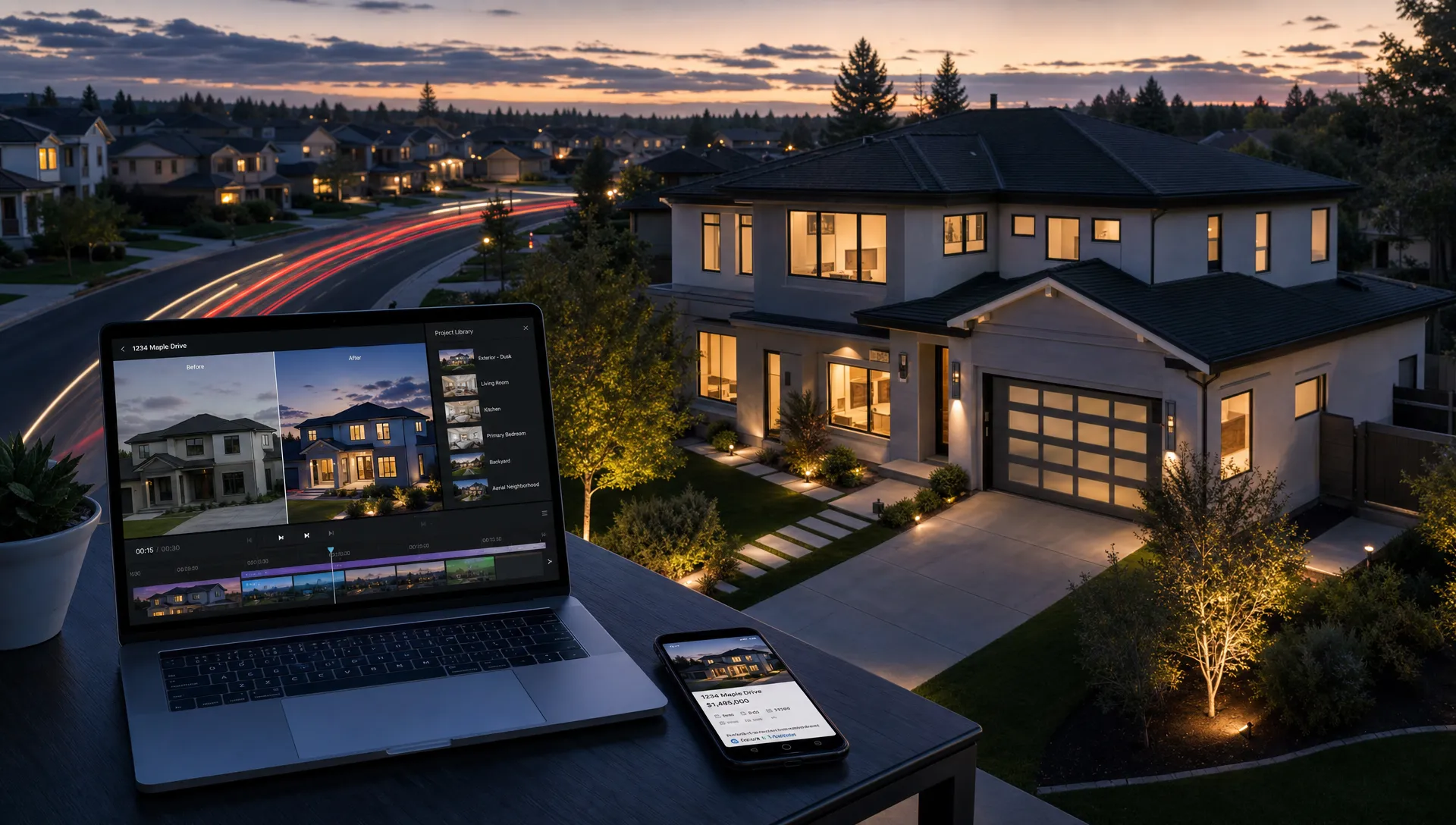
How AI for Real Estate Turns Listings Into Scroll-Stopping Videos
Most property listings begin as a familiar bundle: a headline, a few paragraphs of description, a price, a location, and a photo gallery. That format still matters, but it was not built for the way buyers browse today. On social feeds, people decide in seconds whether to stop, swipe, save, or share. A great listing video gives them a reason to pause before they ever click through to the full property page.
That is where AI for real estate has become genuinely useful. Not as a replacement for the agent, but as a production layer that turns existing listing assets into polished, story-driven videos faster than a traditional editing workflow. Instead of starting with a blank timeline, agents can start with the listing itself, then let AI structure the narrative, generate narration, match visuals to the script, and package the final result for social media, portals, email, and ads.
The opportunity is simple: if your listing already has photos, features, and a buyer profile, it already contains the raw material for video. AI helps assemble that material into something people actually want to watch.
Why real estate listings need video in a feed-first market
Real estate has always been visual. Buyers want to understand light, flow, finishes, proportions, curb appeal, neighborhood context, and the feeling of moving through a home. Static photography can do a lot, but it often asks the buyer to build the story in their own head.
Short-form video does the opposite. It guides the viewer through a property in a deliberate order. It can open with the strongest emotional hook, move through the most marketable rooms, call out practical details, and close with a clear next step. That structure is especially powerful on mobile, where buyers are often discovering homes between meetings, during commutes, or while casually scrolling at night.
The National Association of Realtors has repeatedly highlighted how central digital channels have become in the home search process. For agents and agencies, that means listing content needs to work beyond the MLS. It needs to perform in vertical feeds, Stories, Reels, paid social placements, listing portals, and follow-up messages.
A scroll-stopping real estate video is not just a slideshow with music. It has pacing, hierarchy, narration, visual contrast, and a reason to keep watching. AI makes that level of production more accessible, especially for teams managing multiple listings at once.
How AI turns a listing into a video
The best AI real estate video workflows follow a logical sequence. They begin with structured property information, then turn that information into a script, visual plan, narration, and final edit.
| Listing asset | What AI can help create | Why it matters |
|---|---|---|
| Property description | Short video script and scene order | Gives the video a clear narrative instead of random photo sequencing |
| Listing photos | Visual pacing, room grouping, cinematic movement | Helps the video feel dynamic even when starting from still images |
| Key features | On-screen callouts and narration highlights | Makes upgrades, amenities, and differentiators easier to remember |
| Agent branding | Branded intro, outro, colors, and contact cues | Builds recognition across every listing video |
| Audience or market | Tone, language, and format choices | Helps match the video to first-time buyers, luxury clients, investors, or renters |
1. Importing the listing details
The first bottleneck in video production is usually not creativity. It is setup. Someone has to gather the photos, copy the description, confirm property details, and organize everything before editing begins.
AI platforms can reduce that friction by pulling listing information directly into the video workflow. For example, Diane lets agents import listing details and photos from an existing property page, which means the creative process can start from assets the team has already published.
That matters because speed is part of the marketing advantage. A listing that gets a compelling video early in its launch window has more chances to earn attention while the property is fresh.
2. Identifying the strongest selling points
A good listing video does not treat every detail equally. It prioritizes. AI can scan the property description and extract the details most likely to matter in a short video: natural light, outdoor space, renovated kitchen, primary suite, parking, views, proximity to transit, investment potential, or move-in readiness.
The agent still decides what is strategically important, but AI can create a first draft of the story. That first draft is especially useful when the listing description is long, technical, or written for a portal rather than a social feed.
3. Writing a narration script
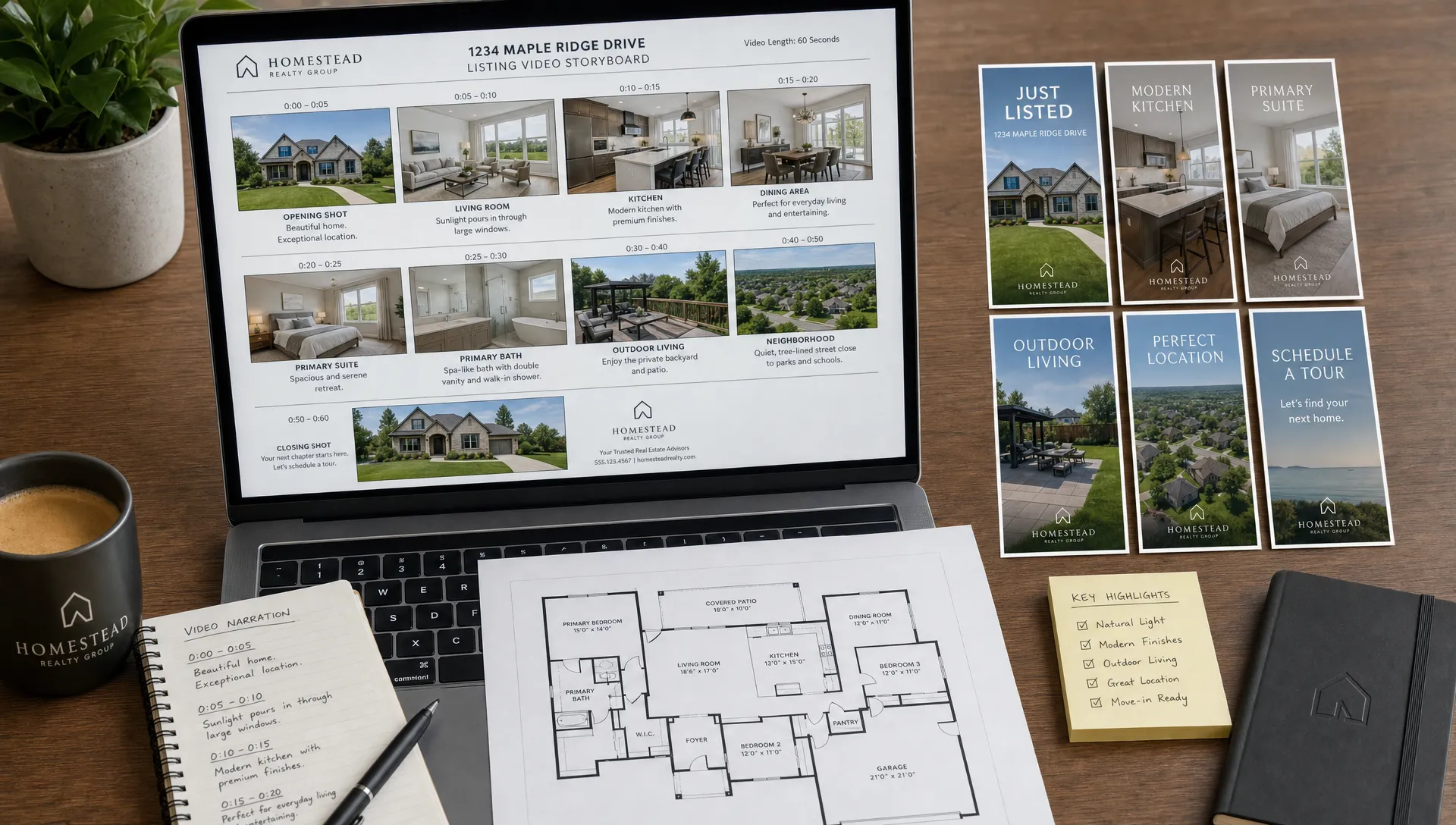
Real estate video scripts need to be concise. A 30-second video might only have 70 to 90 spoken words, depending on pacing. AI can convert listing copy into a short, conversational script that sounds like a guide rather than a brochure.
For example, a traditional listing sentence might say, “This three-bedroom residence features an open-concept living and dining area with floor-to-ceiling windows and premium finishes throughout.”
A video script might turn that into: “Step into a bright open living space, framed by floor-to-ceiling windows and designed for easy everyday entertaining.”
The second version is more visual, more active, and better suited to video.
4. Adding narration, avatar presentation, and brand consistency
Narration gives a listing video structure. It tells viewers what to notice and why it matters. AI narration can help teams create voiceovers quickly, including multilingual versions for different buyer audiences.
Some platforms also support AI avatar presentation or voice cloning, which can help agents keep a consistent personal presence across listing videos without recording every script from scratch. This is valuable for agencies that want polished content at scale, but it should always be used with consent, brand guidelines, and careful review.
The goal is not to make every video feel artificially perfect. The goal is to create a repeatable standard: professional, clear, recognizable, and accurate.
What makes a real estate video scroll-stopping?
The first few seconds matter most, but the entire video needs to earn attention. A strong real estate video usually combines emotional appeal with practical information. It shows the property beautifully, but it also helps the viewer decide whether the home fits their needs.
| Video segment | Purpose | Example approach |
|---|---|---|
| Opening hook | Stop the scroll | “A sunlit loft two blocks from the waterfront” paired with the strongest exterior or living room shot |
| Visual tour | Build interest | Move from curb appeal to living area, kitchen, bedrooms, outdoor space, and standout amenities |
| Feature callouts | Improve recall | Add short on-screen text for square footage, renovation, parking, view, or location highlights |
| Lifestyle framing | Create desire | Show how the home supports entertaining, remote work, family routines, or low-maintenance living |
| Clear CTA | Drive action | Invite viewers to book a showing, request details, or save the listing |
The best hooks are specific. “Beautiful home for sale” is easy to ignore. “A renovated Craftsman with a private garden in the heart of the neighborhood” gives buyers a reason to keep watching.
The best pacing also varies by platform. A listing video for Instagram Reels or TikTok may need quick visual movement and captions. A video embedded on a listing page can be calmer and more descriptive. A video sent directly to a qualified lead can be more specific, with details about floor plan, commute, or financing context.
Where AI saves real estate teams the most time
AI is most valuable when it removes repetitive production work. Agents still need to win listings, advise sellers, understand buyers, negotiate, and protect the transaction. But they do not need to spend hours manually turning every listing into a video from scratch.
The biggest time savings usually come from script creation, media organization, voiceover generation, format resizing, and visual editing. These tasks are important, but they are also repeatable. Once an agency knows the kind of listing video it wants, AI can help produce variations quickly while keeping the brand consistent.
This is especially useful for teams with multiple property types. A downtown condo, a suburban family home, a luxury waterfront property, and an investment duplex should not all sound the same. AI can adjust tone, pacing, and emphasis while staying within the agency’s broader brand.
Multilingual video support is another major advantage in markets with international buyers, relocation clients, or multilingual communities. Translating a listing description is helpful, but a narrated video in the viewer’s language can feel more personal and accessible.
Virtual staging and cinematic editing: powerful, but use carefully
AI can also enhance the visual side of listing videos. Virtual home staging can help buyers understand the potential of an empty space. Cinematic effects can create motion from still images, add smooth transitions, and make a property feel more immersive.
Used well, these tools help buyers imagine scale and lifestyle. Used carelessly, they can create confusion or damage trust.
Agents should review AI-generated visuals for accuracy before publishing. If a room is virtually staged, make sure the representation is reasonable and compliant with local MLS rules, brokerage policy, and advertising standards. Avoid edits that materially misrepresent the property, such as hiding structural issues, changing views, exaggerating room dimensions, or making permanent features look different than they are.
Fair housing language also matters. Listing videos should describe the property, amenities, and location accurately without implying that the home is intended for a particular protected class. The U.S. Department of Housing and Urban Development provides an overview of the Fair Housing Act, and brokerages should maintain their own review process for marketing content.
The rule of thumb is simple: AI can make a listing more compelling, but it should not make it less truthful.
A practical checklist before publishing an AI-generated listing video
Before a video goes live, agents should treat it like any other marketing asset. It needs a quick but serious review for accuracy, clarity, and compliance.
- Confirm that price, location, bedrooms, bathrooms, square footage, and availability match the current listing.
- Review narration for exaggerated claims, unsupported superlatives, or outdated details.
- Check that photos, staging, and effects do not misrepresent the property.
- Make sure any voice clone, avatar, or agent likeness is authorized for use.
- Add captions or on-screen text so the video works without sound.
- Format the video for the channel where it will be published, especially vertical feeds.
- Include a clear call to action, such as booking a showing or requesting the full listing.
This review does not need to slow the workflow down. In fact, having a repeatable checklist makes it easier to publish confidently and consistently.
How to measure whether your listing videos are working
A real estate video does not need to “go viral” to be successful. The better question is whether it moves the right buyers closer to action.
For social platforms, watch metrics such as three-second views, average watch time, completion rate, saves, shares, comments, profile visits, and link clicks. For listing pages and email campaigns, look at click-through rate, inquiry volume, showing requests, and how often the video is used in follow-up conversations.
It also helps to compare video types over time. For example, an agency might test:
- Agent-led videos versus AI avatar presentations
- Narrated videos versus music-only edits
- 15-second teasers versus 45-second tours
- Lifestyle hooks versus feature-led hooks
- English-only videos versus multilingual versions
The goal is to build a feedback loop. AI makes it easier to create more videos, but performance data helps you create better ones.
How Diane fits into the AI real estate video workflow
Diane is built for agents and agencies that want to turn property listings into ready-to-publish marketing reels without rebuilding the process for every home. The platform uses listing information, photos, and property details to create narrated real estate videos with options such as AI avatar presentation, voice cloning narration, multilingual support, virtual staging, cinematic editing, custom branding, social media formats, and direct publishing.
That combination is useful because real estate marketing is rarely one-and-done. A single listing may need a teaser for Instagram, a more detailed walkthrough for a portal, a branded version for the agency page, and a localized version for a different buyer audience. AI helps create those variations without forcing the team back into a manual editing cycle each time.
For agents, the benefit is not simply “making videos faster.” It is making video a normal part of every listing launch, not an occasional extra reserved for premium properties.
Frequently Asked Questions
How is AI for real estate used in listing videos? AI for real estate can help turn listing descriptions, photos, and property details into video scripts, narration, visual sequences, branded edits, captions, and social-ready formats. The agent still reviews the final video for accuracy and strategy.
Can AI create a real estate video from an existing listing? Yes. With the right workflow, AI can use an existing listing as the starting point, including the description, photos, and key property information. This reduces setup time and helps agents create videos soon after a listing goes live.
Are AI avatars appropriate for real estate marketing? AI avatars can be useful when agents want a consistent presenter-style format without filming every video manually. They work best when the presentation is transparent, professional, and aligned with the agent’s brand.
Should virtually staged listing videos be disclosed? Disclosure requirements vary by MLS, brokerage, and local rules, but transparency is always the safest approach. If a room is virtually staged or materially enhanced, agents should review applicable rules and avoid misleading buyers.
What length should a real estate listing video be? For social feeds, many listing videos work well between 15 and 45 seconds. More detailed listing page videos can be longer if the pacing remains strong and the information is useful.
Turn your next listing into a video buyers want to watch
AI will not replace local expertise, pricing strategy, seller relationships, or buyer trust. But it can remove the production bottleneck that keeps many listings from becoming strong video content.
If your team already has listing photos and property details, you already have the foundation for a compelling reel. With Diane, agents and agencies can turn that foundation into polished real estate videos with narration, avatars, branding, cinematic edits, and social-ready formats, all designed to help listings stand out where buyers are scrolling.