
How a Real Estate Agent Can Market a Price Reduction
A price reduction needs more than a new number on the listing. Buyers who dismissed the home need a reason to reconsider it, buyers in a lower search bracket need to discover it and the seller needs to understand what happens next. For a real estate agent, the goal is to turn the adjustment into a coordinated marketing relaunch without making the property sound distressed.
The strongest approach combines a defensible price, updated marketing assets, targeted follow-up and a clear review date. Here is how to put that approach into practice.
Set a relaunch goal before changing the price
Start by identifying the problem the reduction should solve. A listing with plenty of views but few showings presents a different challenge from one that attracts showings but no offers.
Review comparable active listings, recent sales, competing price changes and the feedback you have collected. Separate pricing objections from problems such as limited showing access, weak photography or uncertainty about the property's condition. A lower price will not automatically fix those issues.
Then consider how buyers search. In a hypothetical adjustment from $625,000 to $599,000, the home becomes eligible for searches capped at $600,000. That is a concrete distribution benefit, although it does not guarantee additional inquiries or establish that $599,000 is the right market value.
Define success before launch: more qualified showing requests, renewed interest from previous visitors or an offer that supports the seller's priorities. Avoid treating extra impressions alone as proof that the change worked.
What a real estate agent should confirm with the seller
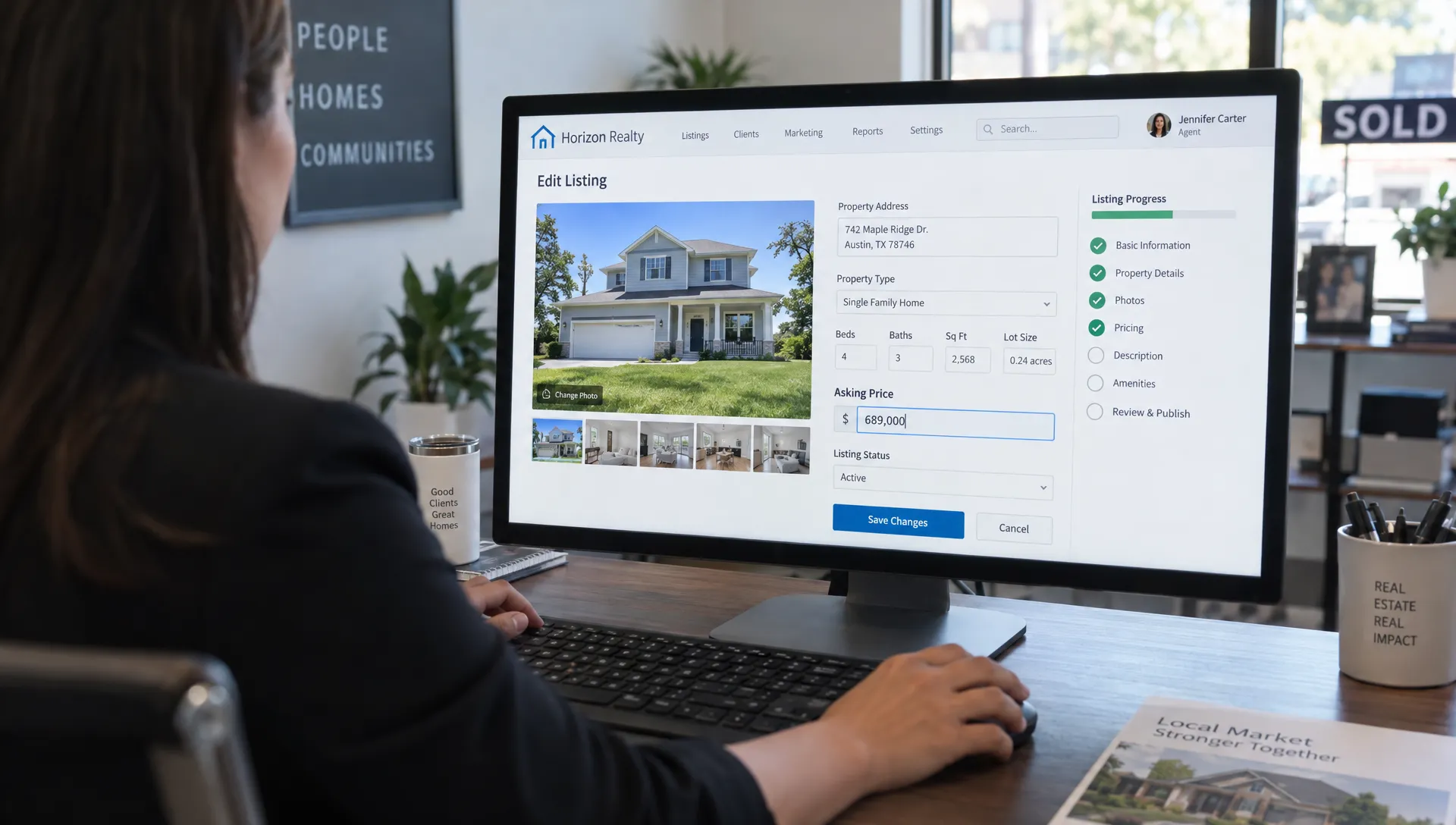
Agree on the new asking price and obtain the authorization required by your brokerage, listing agreement and local rules. Keep a written record of the approved amount, effective date and marketing plan.
The conversation should also establish what you may communicate publicly. A price change does not give you permission to describe the seller as desperate, disclose personal circumstances or imply that they will accept substantially less.
Confirm these four decisions before publishing:
- The approved price: The exact amount that will appear across every channel.
- The public explanation: A factual message about the revised price and the property's value.
- The relaunch activity: Updated listing assets, buyer follow-up, video and any planned advertising.
- The review date: A scheduled discussion based on the next round of buyer activity.
Explain that changing the asking price does not automatically change the seller's position on repairs, closing dates or concessions. Those remain separate negotiation decisions.
A useful seller update sounds like this: “We will publish the revised price on Tuesday, contact previous prospects once the listing is accurate and review showing activity together the following week.” That gives the seller a plan they can evaluate, rather than a vague promise of more exposure.
Write the new-price message around buyer value
The message should answer three questions quickly: What changed, why is the home worth another look and what should the buyer do next? A real estate agent can communicate all three without using pressure language or making predictions about future offers.
Lead with the current asking price, then connect it to two verified property strengths. Avoid unsupported phrases such as “best deal in town,” “instant equity” or “won't last.” A reduced price is not proof that a property is below market value.
Copy you can adapt for different channels
Social caption: “Now offered at $599,000. This three-bedroom home includes a covered patio and a dedicated home office. If the previous asking price put it outside your search, take another look at the updated listing and request a private showing.”
Email to an interested buyer: “You previously asked about 14 Willow Lane. The asking price has changed from $625,000 to $599,000. If it now fits your budget, I can arrange another visit and share the current property details.”
Message to a buyer's representative: “The asking price for 14 Willow Lane is now $599,000. Your clients viewed it last month, so I wanted to share the update. Please let me know whether they would like to revisit or need clarification on anything from their first showing.”
These are illustrative examples, not descriptions of an actual listing. Replace every property feature and price with approved information. Keep the call to action specific and make sure the linked destination displays the same amount.
Refresh the listing without inventing a new story
A real estate agent should use the relaunch to address weaknesses in the original presentation, not simply add a “price reduced” graphic to unchanged materials.
Look at the first photo, opening description and order of images. Does the lead image show the property's strongest feature? Does the description explain the layout and usable spaces, or rely on adjectives that could describe almost any home?
Bring forward details that help buyers compare properties: a measured room dimension, documented renovation, covered outdoor space or verified parking arrangement. Do not add unconfirmed claims about permits, school eligibility, rental income or development potential.
Neighborhood information can add practical value when it is specific. For a listing in Robina, Queensland, for example, The Dental Lounge Robina could be referenced as a local dental practice after checking its location relative to the property. Apply the same verification standard to groceries, transit and other everyday services. Do not imply a business partnership or describe an amenity as walkable without checking the route.
Keep location copy focused on services and access rather than the type of person who should live there. For US listings, review fair housing requirements and your brokerage's advertising guidance.
A stronger presentation gives returning buyers useful information. It should not disguise the listing's history or suggest that the home itself has changed when only the price has.
Update every buyer-facing touchpoint
Before announcing the reduction, a real estate agent should check that the current price is consistent wherever a buyer might encounter the property. Conflicting amounts create avoidable questions and can undermine confidence in the listing.
Use a simple channel audit:
| Touchpoint | What to update or check |
|---|---|
| MLS or primary listing system | Approved asking price, remarks and applicable price-change fields |
| Property landing page | Price, description, downloadable materials and inquiry links |
| Syndicated portals | Whether the new price has appeared correctly |
| Social media | Active ads, pinned posts, captions and price graphics |
| Video assets | Narration, captions, opening frames and closing cards |
| Email and printed materials | Saved campaigns, brochures and showing handouts |
Update the primary listing source first when it supplies other channels. Syndication timing varies, so verify the destination pages rather than assuming every portal changed immediately.
Check scheduled posts and active paid campaigns separately. An old video can continue circulating after its caption has been corrected, especially if the price appears in the footage or narration.
If an older post cannot be edited, stop promoting it and publish a clearly current version. Follow applicable recordkeeping requirements rather than deleting materials indiscriminately.
This is also a useful moment to review listing visibility across real estate marketing sites. A revised price needs accurate distribution, not just a larger number of posts.
Create a short video that makes the update clear
Video gives returning buyers a quick way to reassess the property without rereading the entire listing. The production does not need to be elaborate. A real estate agent needs a clear opening, an accurate property story and a next step that viewers can act on.
For a concise listing reel, introduce the revised price early. Follow it with a few visuals that show the home's strongest verified features, then close with an invitation to view the full listing or schedule a showing.
An illustrative narration could be: “Now offered at $599,000, this three-bedroom home includes a dedicated office and covered patio. Explore the updated listing for full details and contact us to arrange a private showing.”
Make the current price legible on mobile and review captions for accuracy. If you include the previous price, label both amounts clearly. The old number should never be mistaken for the current asking price.
Diane can create narrated property videos from listing information, photos and details, with options including AI avatars, voice cloning and social media formats. Whatever production method you use, review the finished video before publication. AI-generated narration still needs to match the approved listing.
If you use virtual staging, follow applicable disclosure requirements and avoid presenting generated furnishings or alterations as existing features. For production guidance, these techniques for short-form listing videos can help structure the visual sequence.
Run a focused 72-hour relaunch
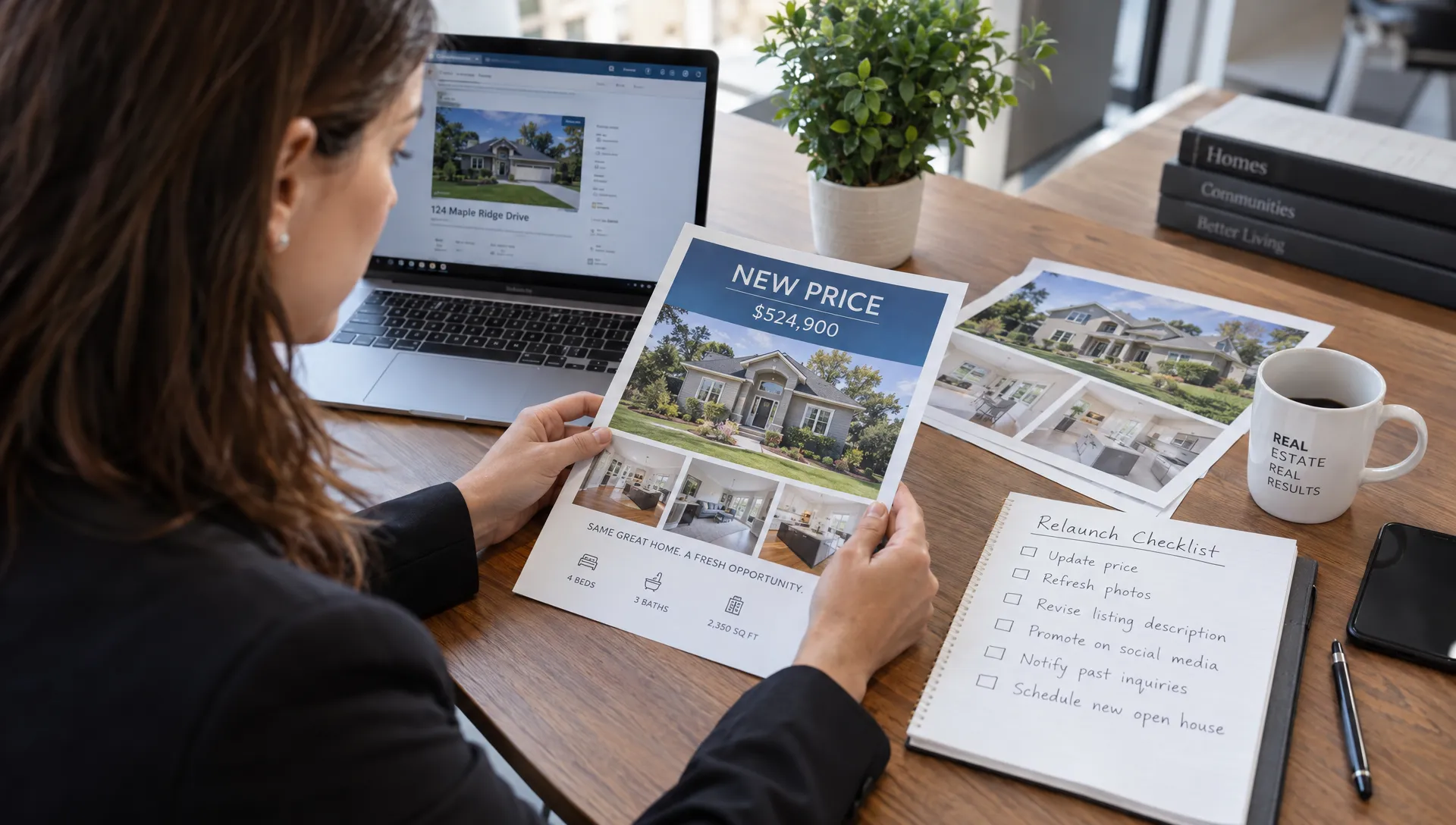
The following schedule is a practical workflow, not a promise of results within three days. A real estate agent can compress or extend it according to seller approval, portal update times and the property's showing availability.
Day one: Publish accurate information
Update the listing source and owned channels, then check the destinations that buyers use most. Prepare the revised video, email and social copy using the same approved price. Confirm that inquiry forms work and that showing instructions remain current. Do not send a campaign into a landing page that still displays the old amount.
Day two: Reconnect with relevant prospects
Contact buyers who previously inquired, visitors whose feedback mentioned price and representatives with a plausible client match. Personalize the message around their earlier interest. Ask whether the change warrants another look, rather than assuming it does. Respect contact permissions, opt-outs and applicable communication rules, and record responses so follow-up does not become repetitive.
Day three: Broaden distribution selectively
Publish the refreshed reel and consider paid distribution if it fits the approved budget. Check housing-advertising restrictions before choosing targeting settings. If an open house is appropriate, promote its verified date and time alongside the current price. Coordinate showing coverage so renewed attention does not lead to unanswered messages or unavailable appointments.
Keep the campaign centered on one accurate message. Reposting the same reduction repeatedly is less useful than making it easy for an interested buyer to get answers and visit.
Measure qualified interest and report it to the seller
Compare activity before and after the adjustment using similar time windows. A real estate agent should distinguish greater visibility from stronger buying intent, especially when advertising spend or showing availability changed at the same time.
Track listing views alongside inquiries, scheduled showings, completed showings, repeat visits and offers. Where you can identify the source reliably, note whether prospects came from portals, social content, email or direct outreach.
The most useful interpretation is specific. More views with no additional inquiries may suggest that the price change expanded exposure without resolving a presentation or value concern. More showings with repeated objections about condition may point to a different obstacle. Neither pattern proves a single cause, but both help frame the next conversation.
Give the seller a short report that separates actions from outcomes: what you updated, whom you contacted, how buyers responded and what objections remain. Do not attribute an offer to the video unless you have evidence connecting it to that source.
At the agreed review date, compare the property's position against current competition again. Avoid recommending another automatic reduction simply because a few days passed. The next decision should reflect qualified feedback, competing inventory and the seller's objectives.
Frequently asked questions
Should a real estate agent advertise the amount of the reduction? It can be useful when the difference is meaningful and the previous price is accurate. Lead with the current asking price so buyers do not have to calculate it. Avoid presenting the reduction as proof of a bargain or guaranteed equity.
Should you call the property a new listing after reducing the price? Do not imply that an existing listing is newly available just because its price changed. Follow MLS and brokerage rules on status changes, relisting and days-on-market reporting. “New price” communicates the update more accurately.
Will a price reduction automatically notify buyers on property portals? Some portals provide price-change notifications, but delivery depends on the platform and the buyer's settings. Check the tools available to you and follow up directly with relevant prospects where you have permission to contact them.
Should an agent replace every photo when the price changes? Not necessarily. Keep images that represent the property well and improve weak or misleading ones. A better lead photo or clearer image order may be more useful than replacing an entire set without a reason.
How soon should the seller expect an offer? There is no reliable universal timeline. Set a review date for buyer activity rather than promising an offer by a particular day. Pricing, competition, condition and access all affect the response.
Turn the revised price into a consistent video campaign
For a real estate agent managing several listings, a price change can mean revising multiple marketing assets at once. Start with approved information, keep the message consistent and make the buyer's next step easy.
Diane helps turn listing details and photos into narrated marketing reels with customizable real estate branding and social media formats. Use it to produce a refreshed property video, then check the price, visuals and narration before publishing it as part of your relaunch.