
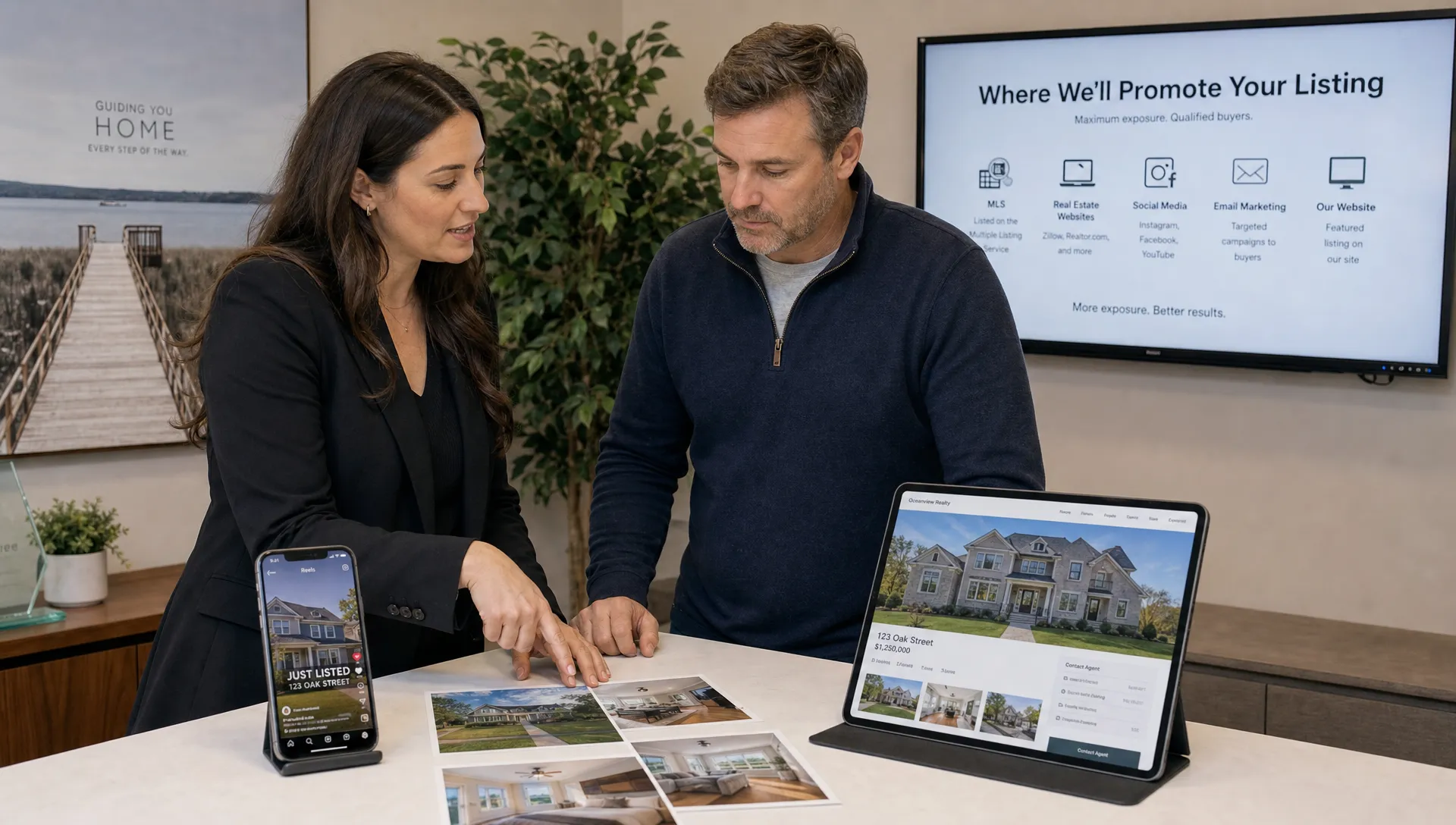
How Real Estate Marketing Sites Support Listing Visibility
A property can be priced well, photographed beautifully and still underperform if buyers do not see it in the right places. That is where real estate marketing sites matter. They give a listing more surface area across search engines, property portals, brokerage websites, social feeds and niche buyer communities.
For independent agents and agency owners, the goal is not to post everywhere for the sake of activity. The goal is to build a connected visibility system where each site plays a clear role: helping buyers discover the property, trust the presentation and take the next step.
What Counts as a Real Estate Marketing Site?
Real estate marketing sites include any online destination that helps promote a listing, generate buyer attention or support seller confidence. Some are built primarily for active property search, while others help listings travel through social discovery, local search or referral traffic.
The most common categories include property portals, MLS-fed listing pages, agent websites, brokerage websites, single-property pages, social platforms, video platforms, local directories and paid advertising landing pages. A strong marketing mix usually combines several of these rather than relying on one channel.
| Site type | Visibility role | Best use case | Content that matters most |
|---|---|---|---|
| Listing portals | Capture active buyers already searching | New listings, price changes, open houses | Photos, price, specs, map data, description |
| Agent or agency website | Build owned traffic and brand trust | Lead capture, seller proof, local SEO | Full listing page, video, contact paths, neighborhood context |
| Single-property page | Give one listing a focused destination | Premium listings, ads, QR codes, email campaigns | Hero media, key features, floor plan, CTA |
| Social media profiles | Create repeat exposure and sharing | New listing announcements, behind-the-scenes content, short video | Vertical reels, captions, thumbnail hooks |
| Video platforms | Help buyers understand layout and lifestyle faster | Listings with strong visual appeal or complex flow | Walkthroughs, narrated reels, highlights |
| Local directories and community sites | Support neighborhood discovery | Relocation buyers, hyperlocal leads | Local expertise, accurate business details, helpful answers |
The best mix depends on your market, inventory type and buyer behavior. A downtown condo, a rural acreage property and a luxury waterfront home may all need different marketing emphasis.
How Real Estate Marketing Sites Improve Listing Visibility
Real estate marketing sites support visibility in several ways. The first is simple distribution. A listing published only on one website depends on one audience. A listing adapted for portals, your own site, social channels and email has more chances to appear where buyers already spend time.
The second is search exposure. Property pages can surface in search results for address queries, neighborhood searches, school district searches and specific property features. Even when buyers first discover a home on a large portal, they may search the address, agent name or brokerage before submitting an inquiry. Your own website can help capture that research moment.
The third is repetition. Buyers rarely act after seeing a property once. They may notice it on a portal, see a reel later on Instagram, receive it through an email alert, then visit your listing page for details. Each touchpoint increases familiarity and can reduce friction before an inquiry.
The fourth is trust. Consistent listing details, polished visuals and clear agent branding make the property feel professionally represented. In competitive markets, that can affect whether a buyer saves the listing, shares it with a partner or asks for a showing.
Visibility Is Not the Same as Better Marketing
A listing can get views without getting serious inquiries. That usually happens when the distribution is strong but the presentation is weak. Marketing sites create opportunity, but the listing still needs to convert attention into action.
Strong visibility depends on three layers working together: the site, the listing content and the follow-up path. If a portal drives traffic but the photos are confusing, the visibility is wasted. If a social reel gets attention but the caption does not explain how to book a showing, the engagement may not become a lead. If your website has a beautiful property page but no clear next step, motivated buyers may leave.
This is why agents should treat marketing sites as part of a workflow rather than a checklist. Before publishing, confirm that the core details are accurate, the first image or video thumbnail creates interest, the description answers likely buyer questions and the contact path is obvious.
For more tactical ideas on improving the listing itself before distribution, Diane’s guide to making real estate listings stand out online breaks down presentation choices that influence buyer attention.
Build a Hub and Spoke System for Every Listing
The cleanest way to use real estate marketing sites is to choose one central hub and use other channels as spokes. For many agents, the hub is the listing page on their own website or brokerage site. For some campaigns, it may be a single-property page.
The hub should contain the most complete version of the listing: full description, photo gallery, video, floor plan if available, showing request path, agent details and local context. The spokes then point buyers toward that hub. These spokes can include portal links, short-form videos, social posts, email campaigns, paid ads, QR codes on print materials and community posts.
This approach has several benefits. It keeps your listing information consistent. It gives every campaign a destination. It also helps you measure which channels are creating useful traffic instead of guessing from likes or impressions alone.
A simple campaign structure might look like this:
| Marketing asset | Primary job | Where it sends traffic |
|---|---|---|
| Portal listing | Reach active property searchers | Showing request or agent contact |
| Agent website page | Provide complete listing context | Lead form, call button or booking link |
| Social reel | Create fast discovery and repeat exposure | Listing page or direct message |
| Email feature | Re-engage warm contacts | Listing page or open house signup |
| Paid ad landing page | Target a defined audience | Focused inquiry form |
You do not need a complex tech stack to start. You need a clear source of truth and a repeatable process for adapting the listing to each site.
Match the Site to the Buyer’s Intent
Not every marketing site attracts the same kind of buyer. Portals usually serve high-intent visitors who are actively comparing properties. Social platforms often reach earlier-stage buyers who may not be searching every day but are open to the right home. Your website supports both buyers and sellers who want to evaluate your professionalism.
This difference should shape the content you publish. A portal listing should make the essentials easy to scan: price, location, property type, beds, baths, square footage, key upgrades and showing access. A social video should lead with the strongest visual or lifestyle hook. A website page can go deeper with neighborhood information, a narrated tour and reasons the home stands out.
Community and discussion-based platforms can also reveal demand signals. If relocation buyers are asking about commute times, school access or neighborhood feel, that language can inform your listing copy and video scripts. For agents who include Reddit in their prospecting or research workflow, tools like Redditor AI can help surface relevant conversations, though outreach should always respect community rules and avoid spam.
Why Video Makes Marketing Sites Work Harder
Most real estate marketing sites are crowded with similar-looking listings. Video helps separate your property from the feed because it gives buyers a faster sense of flow, scale and atmosphere. Photos show rooms. A good listing video connects those rooms into a story.
Video also adapts well across channels. A vertical reel can introduce the property on social media. A horizontal or embedded version can support the listing page on your website. Short clips can be reused in email, paid ads or open house reminders. This gives one listing more visibility without requiring the agent to rebuild the campaign from scratch every time.
The key is to match the video to the site. A portal or website video can be more informative, with narration that explains layout, features and neighborhood advantages. A social video needs a sharper opening, stronger pacing and a format built for mobile viewing. If you want a deeper breakdown of how these channels work together, Diane’s guide on using video alongside real estate listing sites covers the role each format plays.
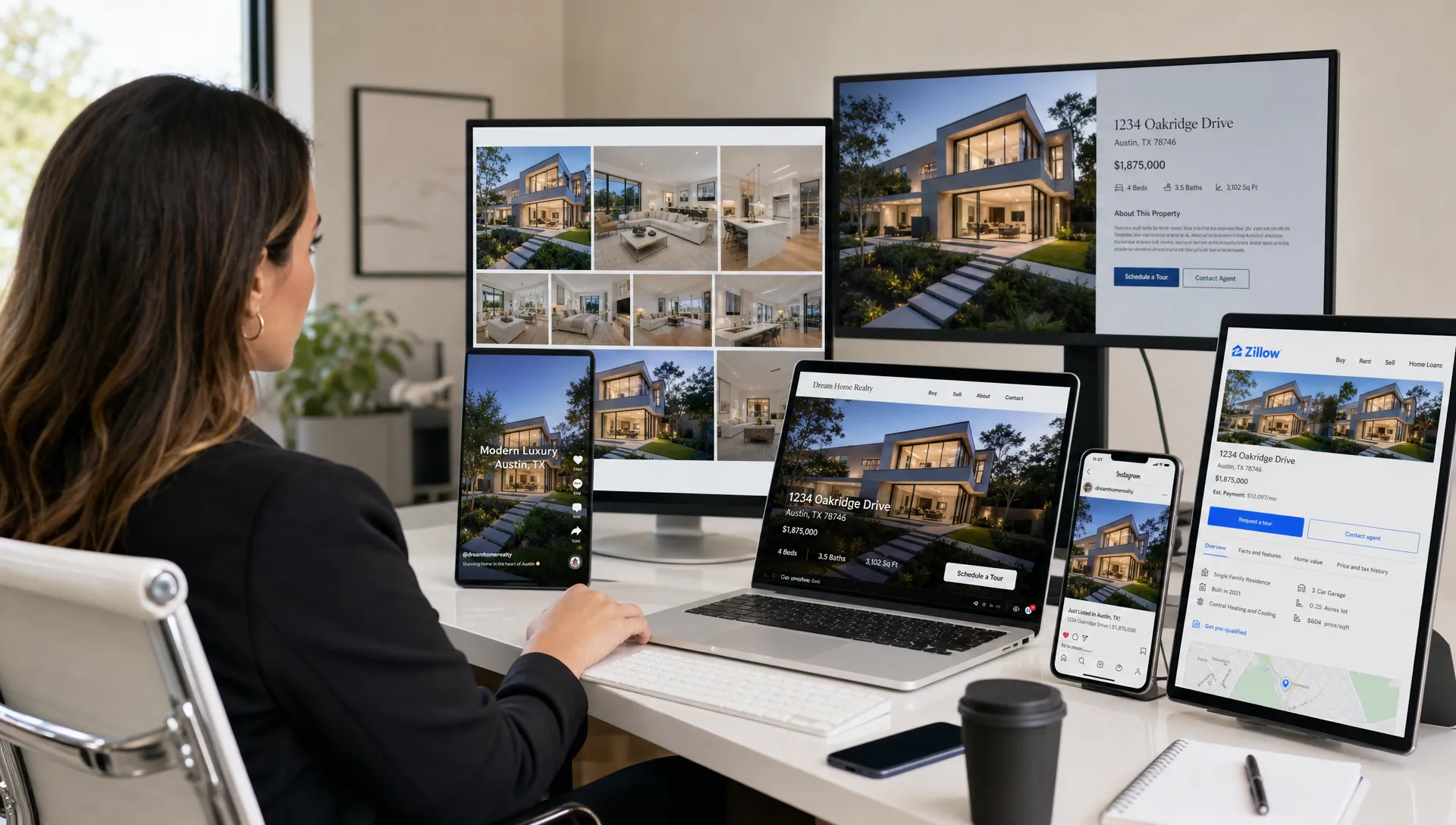
For busy agents, the production bottleneck is often the hard part. Traditional video can mean scheduling, editing delays, voiceovers and multiple exports. AI video tools reduce that friction by turning listing materials into publishable assets faster. Diane, for example, is built to create real estate videos from listing details, photos and property information, with options such as AI narration, avatars, multilingual support and social media formats.
If speed is the issue in your marketing process, learning how to create real estate videos for marketing in minutes can help you make video a standard part of every listing launch rather than a premium add-on.
Use Your Website to Own More of the Buyer Journey
Large portals are useful because they aggregate buyer attention. The tradeoff is that your listing appears next to many competing homes and often within a platform experience you do not control. Your own website gives you more control over the buyer journey.
An agent or agency website can support listing visibility by giving each property a polished destination that reinforces your brand. It can also help with local search, especially when your site consistently publishes detailed property pages, neighborhood content and market expertise.
A strong listing page should do more than repeat portal data. It should answer the questions a serious buyer is likely to ask after the photos catch their attention. What is the layout like? What updates matter? What makes the location convenient? What should they know before booking a showing?
Adding video to your own site is especially useful because it keeps engaged buyers in your environment. Instead of sending them from a portal to a generic contact box, you can give them a richer property experience and a direct way to reach you.
Avoid the Common Visibility Traps
Real estate marketing sites can create a false sense of progress. A listing may be published in many places but still feel invisible because the campaign lacks focus. The most common traps are easy to avoid once you know what to look for.
- Posting the exact same caption and media everywhere, even when each site rewards different formats
- Using weak thumbnails that do not make the home recognizable or compelling in a crowded feed
- Letting outdated pricing, availability or open house details remain live across channels
- Measuring success only by views rather than saves, shares, inquiries, showings and qualified conversations
- Sending all traffic to a page that lacks video, contact options or clear next steps
The fix is not to abandon distribution. It is to tighten the connection between visibility and buyer action. Every site should have a job, every asset should fit the channel and every interested buyer should know what to do next.
A Practical Listing Visibility Checklist
Before you launch your next property campaign, review the marketing system rather than only the listing copy. This helps you catch gaps before the listing goes live.
- Confirm that the primary listing page is complete, accurate and easy to share
- Choose the first photo or video thumbnail based on scroll-stopping value, not file order
- Create at least one short video version for social channels and one informative version for the listing page if possible
- Adapt captions for each platform instead of pasting the same text everywhere
- Add clear calls to action for showings, questions, open houses or private tours
- Track which sites create meaningful inquiries, not just impressions
For solo agents, this checklist can become a repeatable launch template. For agency owners, it can become part of a shared listing marketing standard that keeps quality consistent across negotiators or sales agents.
Frequently Asked Questions
What are real estate marketing sites? Real estate marketing sites are online platforms that help promote property listings, attract buyer attention or support agent branding. They include listing portals, agent websites, brokerage sites, single-property pages, social platforms, video platforms and local directories.
Do I still need my own website if my listings are on major portals? Yes, in most cases. Portals help you reach active buyers, but your own website gives you more control over branding, property presentation, lead capture and local search visibility.
How does video improve listing visibility? Video can increase engagement by helping buyers understand the layout, flow and lifestyle of a property faster than photos alone. It also gives agents adaptable content for websites, social media, email and paid campaigns.
Which real estate marketing site matters most? The best site depends on the listing and buyer profile. Portals are strong for active search demand, social platforms are useful for discovery, and your own website is important for trust, lead capture and a complete property experience.
How often should I update listing content across sites? Update content whenever price, availability, showing access, open house timing or key property details change. Inconsistent information can reduce trust and create unnecessary back-and-forth with buyers.
Turn Listing Visibility Into Buyer Action
Real estate marketing sites can put your listing in more places, but visibility only becomes valuable when the property presentation is strong enough to earn attention and clear enough to prompt action.
Diane helps agents and agencies turn listing details, photos and property information into ready-to-publish real estate videos with AI narration, avatars, cinematic editing and social formats. If video is the missing piece in your listing visibility workflow, Diane can help you create polished assets faster and use them across the sites where buyers are already looking.