
How Zillow Premier Agent Pricing Works for Growing Teams
Zillow Premier Agent pricing is rarely a simple line item for a growing real estate team. Unlike a software subscription with a public monthly fee, it is shaped by local buyer demand, competition among agents and the amount of visibility your team wants in specific markets. That makes it powerful, but also easy to overbuy if you treat it like a generic lead source instead of a market-by-market investment.
For independent agents, agency owners and team leads, the real question is not “What does Zillow cost?” It is “How much should we spend in the right ZIP codes, and can our team convert those contacts profitably?” This guide explains how the pricing model generally works, what to ask before signing or scaling and how to support paid leads with better listing content.
How Zillow Premier Agent pricing works at the market level
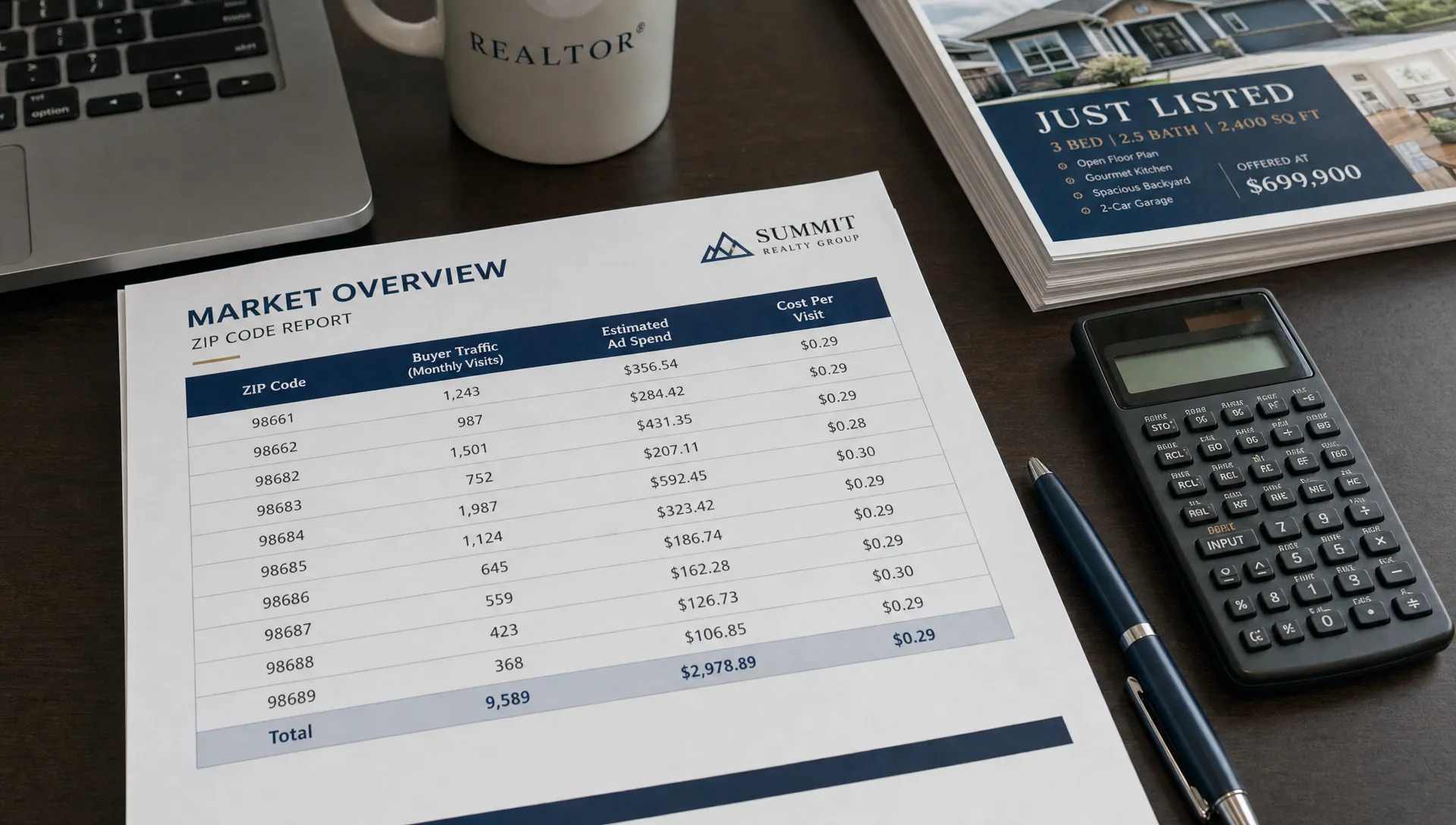
Zillow does not publish one universal rate card for every agent in the United States. Premier Agent advertising is tied to local markets, most often ZIP codes, where buyer traffic, home values, competition and available ad inventory can differ sharply.
In practical terms, a ZIP code with heavy buyer activity and many agents competing for visibility will usually be more expensive than a slower market with less advertiser demand. This is why two teams in the same metro area can receive very different budget recommendations, even if they have similar headcount.
What your spend is meant to buy
Premier Agent is best understood as a way to compete for buyer connections, not as a guarantee of closed deals. Your budget influences how much exposure you may receive in the areas you select, but your conversion rate depends on response speed, agent fit, follow-up systems and the strength of your local reputation.
The practical implication of Zillow Premier Agent pricing is that your team is buying a chance to start more conversations in chosen markets. The revenue comes later, after qualification, nurturing, showings, offers and closings.
Why growing teams feel the model differently
A solo agent can often judge the channel by personal bandwidth. A growing team has a more complex question: can several agents respond quickly, work leads consistently and avoid overlap?
If your team is adding agents, you may be tempted to increase spend immediately. That can work, but only if your operations are ready. Otherwise, the same budget that should create growth can expose weak handoffs, slow follow-up and inconsistent messaging.
The variables that affect your quote
Most pricing conversations come down to a few core inputs. Zillow may adjust specific packages, program structures and availability over time, so your representative's current quote matters more than any third-party estimate. Still, the underlying budget drivers are fairly predictable.
| Pricing variable | Why it matters | Team question to ask |
|---|---|---|
| ZIP code selection | Demand and competition vary by area | Are these markets aligned with our actual service area? |
| Buyer traffic | More active search behavior can raise competition | Do we have agents ready to answer fast? |
| Home values | Higher-price areas may justify higher acquisition cost | What gross commission can this market support? |
| Competitive demand | More advertisers can reduce available visibility | Are we entering a crowded ZIP too late? |
| Budget share | Higher spend can increase potential exposure | Can we convert enough to justify the share? |
| Contract terms | Commitments can affect flexibility | Can we test before scaling? |
For a growing team, Zillow Premier Agent pricing should be evaluated alongside capacity. If you only have one strong buyer agent available during peak inquiry times, a larger budget may create waste instead of growth.
Build a simple ROI model before you scale
Before increasing spend, create a conservative model that connects budget to appointments and closings. You do not need a complicated spreadsheet. You need clarity on the few numbers that decide whether the channel is profitable.
Start with your monthly spend, expected number of buyer connections, appointment rate, buyer agreement rate, closing rate and average gross commission. Then add one more line for agent split or team split, because gross commission alone can make a campaign look healthier than it is.
| Metric | Conservative question | Why it matters |
|---|---|---|
| Monthly ad spend | What are we committed to spending? | Sets your break-even point |
| Contact-to-appointment rate | How many contacts become real conversations? | Measures lead quality and response quality |
| Appointment-to-client rate | How many buyers commit to working with us? | Shows sales skill and fit |
| Client-to-closing rate | How many clients actually close? | Connects pipeline to revenue |
| Net commission after split | What does the team keep? | Prevents inflated ROI assumptions |
A useful rule is to model three scenarios: conservative, expected and strong. If the conservative scenario is painful but the expected scenario is attractive, start smaller and prove your process before expanding.

Budget guardrails for growing teams
A team budget should not be decided only by the maximum amount Zillow says is available in a market. It should be decided by your operating rhythm. If your agents miss calls, delay texts or lack a clear nurture plan, the first fix is process, not spend.
Treat your initial budget as a test of both demand and execution. Give the test enough time to capture meaningful lead flow, but set review dates in advance. If you wait until the budget feels uncomfortable, you are more likely to make emotional decisions.
Some team owners also apply a values-based lens to business spending, especially when deciding how aggressively to pursue growth. If stewardship is part of how you think about money and work, resources on biblical stewardship and everyday faith can offer a broader framework for disciplined decision-making.
Questions to ask before signing
You should leave the sales conversation with clear answers, not just a monthly number. Ask which ZIP codes are included, how availability is determined, whether your team can shift budget later and what reporting you will receive.
It is also fair to ask how your visibility is expected to change at different spend levels. You are not looking for a promise of closings. You are looking for enough clarity to decide whether the opportunity matches your team's capacity and market strategy.
How to route Zillow leads inside a team
The way you distribute leads can make the same budget perform very differently. Round robin routing feels fair, but it is not always the best choice if some agents respond faster, know a ZIP code better or have stronger buyer consultation skills.
Treat Zillow Premier Agent pricing as only half the equation. The other half is assigning each inquiry to the person most likely to convert it without damaging response time.
A growing team can use several routing rules:
- Route by ZIP code expertise when agents have clear geographic strengths.
- Route by availability when speed is the top priority.
- Route by price band when certain agents handle luxury, entry-level or investor buyers better.
- Route by language when multilingual service improves buyer confidence.
Keep the rules simple enough that the team follows them under pressure. If your routing logic requires manual debate every time a lead arrives, it will slow down the moment you need speed most.
Track performance by agent and source
Team leaders should measure more than total leads. Track response time, appointment rate, signed clients and closed transactions by agent. This helps you see whether the channel is weak or whether the follow-up process is uneven.
If one agent converts at twice the rate of another, the answer is not always to send all leads to the top performer. Sometimes it is better to coach the rest of the team using call reviews, scripts and structured follow-up sequences.
Why listing content still matters when you pay for leads
Paid buyer leads do not replace strong listing marketing. They work better when your brand looks competent everywhere a prospect checks you. A buyer who speaks with your team may still look at your active listings, recent videos, social profiles and reviews before deciding whether to keep engaging.
If Zillow Premier Agent pricing starts to look expensive, do not only negotiate the spend. Improve the assets that help each lead trust you faster. Short property videos, clean listing pages and consistent team branding can raise the value of every contact you already paid to earn.
For example, a Zillow listing can become more persuasive when the agent adds a focused video that helps buyers understand the layout, condition and lifestyle of the property. If that is part of your workflow, this guide on how a Zillow listing agent can add video to a new listing is a practical next step.
For teams, consistency matters even more. If every agent publishes videos with different colors, intros and messaging, the brokerage looks fragmented. A shared approach to real estate team branding for listing videos helps make paid lead generation and organic content feel connected.
Where AI video fits into the budget conversation
Video is not a substitute for lead follow-up, but it can make your marketing system more efficient. Growing teams often struggle because every new listing creates a burst of admin: writing captions, creating social clips, formatting assets and keeping branding consistent.
Diane helps real estate agents and agencies turn property listings into ready-to-publish marketing reels using listing details, photos, AI narration, avatars, voice options, multilingual support and branded social formats. For a team paying for buyer attention, that kind of content workflow can support both seller marketing and lead conversion.
The point is not to spend more on tools for the sake of it. The point is to make sure every paid channel is supported by credible content. When a buyer or seller checks your team online, the marketing should reinforce the same level of professionalism promised in your ads.
Common mistakes that make the channel feel too expensive
Many teams blame the platform before they audit their process. Sometimes the issue is the ZIP code or the budget level, but often the problem is operational.
| Mistake | What it causes | Better approach |
|---|---|---|
| Buying too many areas at once | Thin coverage and unclear attribution | Start with priority ZIP codes |
| Slow first response | Lower appointment rates | Set response expectations by minute, not by day |
| Weak lead notes | Poor handoffs between agents | Standardize CRM fields and call outcomes |
| No nurture plan | Long-term buyers go cold | Use scheduled follow-ups and market updates |
| Measuring only closings | Late feedback on performance | Track each step from contact to client |
When Zillow Premier Agent pricing becomes part of a larger team system, you can diagnose performance more accurately. A high cost per closing may come from poor ZIP selection, but it can also come from weak qualification, uneven scripts or a lack of retargeting content.
When to scale, pause or renegotiate
Scaling makes sense when your team can show consistent conversion from contact to appointment and from appointment to signed client. You do not need perfect attribution, but you should have enough evidence that more lead volume will not overwhelm the team.
Pausing or reducing spend makes sense when agents cannot keep up, when selected ZIP codes do not match your real service strengths or when the team has no clear follow-up process. Renegotiation makes sense when market conditions change, when availability opens in a better area or when your team wants to consolidate spend around proven ZIP codes.
A strong review meeting should compare spend, lead volume, response time, pipeline value, signed clients and closings. Keep seller-side benefits separate. A buyer lead campaign may also create brand visibility, but do not use vague awareness to justify a budget that fails basic pipeline math.
Frequently Asked Questions
Is Zillow Premier Agent pricing the same in every ZIP code? No. Pricing can vary by market because buyer activity, competition, home values and available advertising inventory differ by location.
Does paying more guarantee more closings? No. A larger budget may increase potential visibility or lead opportunities, but closings depend on response speed, qualification, agent skill, follow-up and market fit.
How should a growing team decide its first budget? Start with the ZIP codes where you already have expertise, estimate your break-even point using conservative conversion rates and make sure agents can respond quickly before you expand.
Should team leads route all Zillow leads to the best closer? Not always. The best routing model balances speed, local expertise, availability and coaching goals. Overloading one agent can create missed opportunities.
Can listing videos improve ROI from paid leads? They can help. Videos make listings easier to understand and give prospects more evidence of your marketing quality, which can support trust after the first contact.
Turn paid attention into stronger listing marketing
Zillow can help growing teams reach active buyers, but the budget only works when your follow-up, branding and content are ready. Before you scale, make sure every lead has a clear path from first contact to confident client.
If your team wants polished property videos without adding more production admin, Diane can help turn listings, photos and property details into branded real estate videos for social media and listing marketing. Better content will not fix a weak lead process, but it can make every serious prospect more likely to trust your team once they find you.