
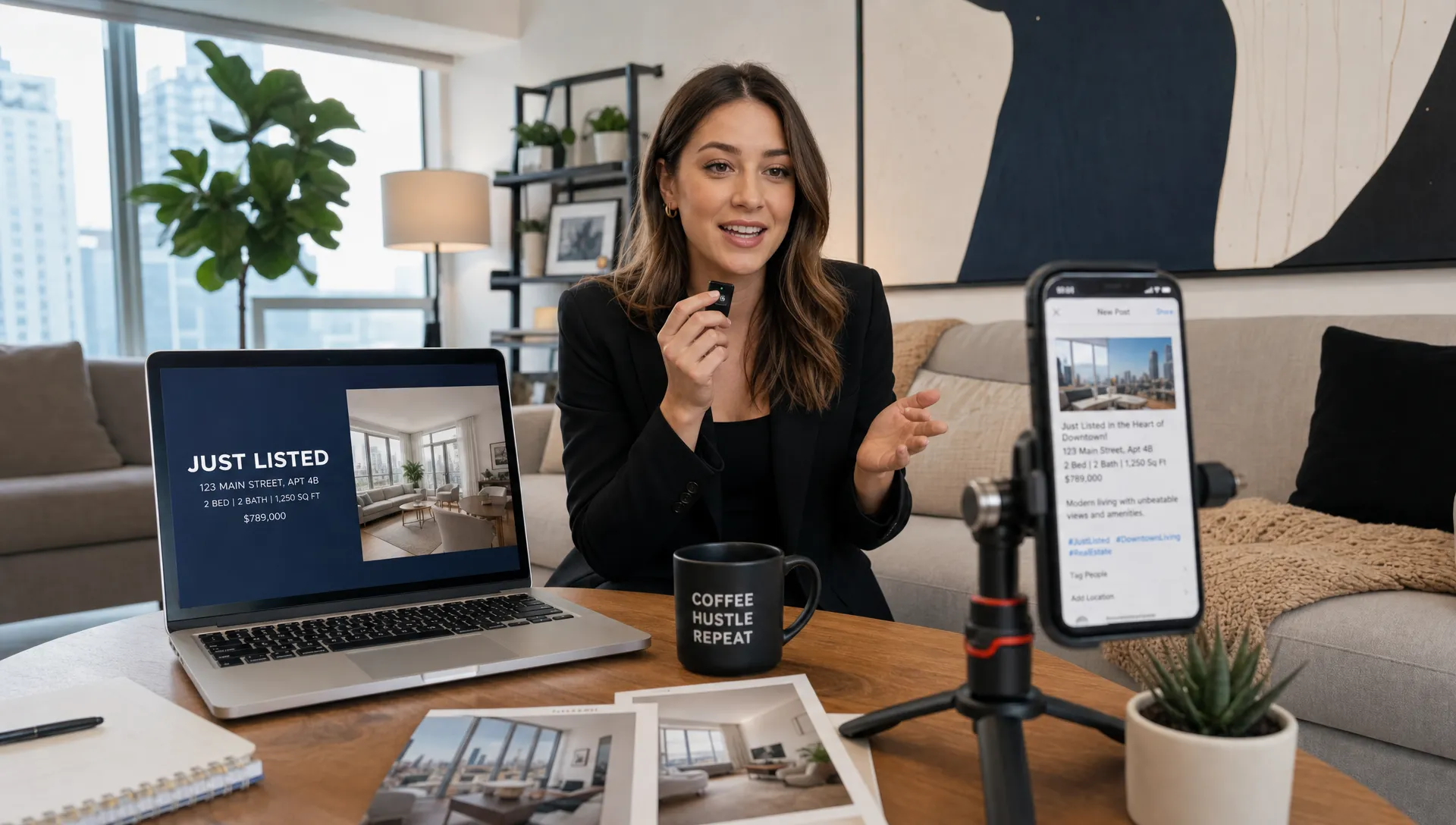
Instagram Real Estate Reels That Turn Listing Photos Into Leads
A listing photo gallery already contains most of what a buyer needs to feel interested: light, layout, finishes, curb appeal and a sense of lifestyle. The problem is that most buyers do not discover those photos by patiently clicking through a listing page. They discover homes while scrolling.
That is why Instagram real estate reels can be one of the most efficient ways to turn static listing photos into leads. You do not need a full film crew for every property. You need a short, well-structured video that answers buyer questions quickly, makes the home feel worth a closer look and gives the viewer an easy next step.
The difference between a Reel that gets likes and a Reel that creates leads is not usually the transition effect. It is the strategy behind the sequence, caption, voiceover and call to action.
Start with the lead you want
Before choosing music or effects, decide what action the Reel should create. A listing Reel can push for a showing request, a DM conversation, a saved post, a comment, a website visit or a buyer consultation. Those are different goals, and they need different creative decisions.
A new listing Reel should usually reduce friction. The viewer should understand the home type, area, price range and strongest selling point within seconds. A luxury property Reel may need to build emotion and exclusivity. A first-time buyer property might need clarity around payment, location and practical features. A vacant property may need staging, narration or an agent presence to make it feel warmer.
Treat every Reel like a small landing page. It should have one audience, one message and one next step. If you try to sell the entire listing, the neighborhood, your personal brand and your full service offering in 30 seconds, the Reel becomes background noise.
Build the Reel around buyer questions
The strongest Instagram real estate reels do not simply show rooms. They answer the questions a buyer is already asking while scrolling.
A good structure is simple:
- Hook: Lead with the reason someone should stop, such as price point, location, rare feature or lifestyle benefit.
- Orientation: Give the buyer enough context to understand what they are seeing, including home type, area and bedroom count when appropriate.
- Proof: Show the photos that support the promise in the hook, not every photo in the gallery.
- Action: Tell the viewer exactly what to do next, such as DM for the address, comment for details or tap the listing link.
This sequence keeps the Reel buyer-focused. Instead of saying, we are proud to present, it says, this is why this home may solve your problem.
If you want to go deeper on the broader structure of short property videos, Diane has a separate guide on how to turn property listings into videos buyers want to watch. For Instagram specifically, the same principle applies, but the pacing needs to be faster and the CTA needs to fit how people use the app.
Choose listing photos that move the buyer forward
Not every listing photo belongs in a Reel. MLS galleries often include duplicates, utility shots and angles that help serious buyers later in the journey. Instagram needs a tighter selection.
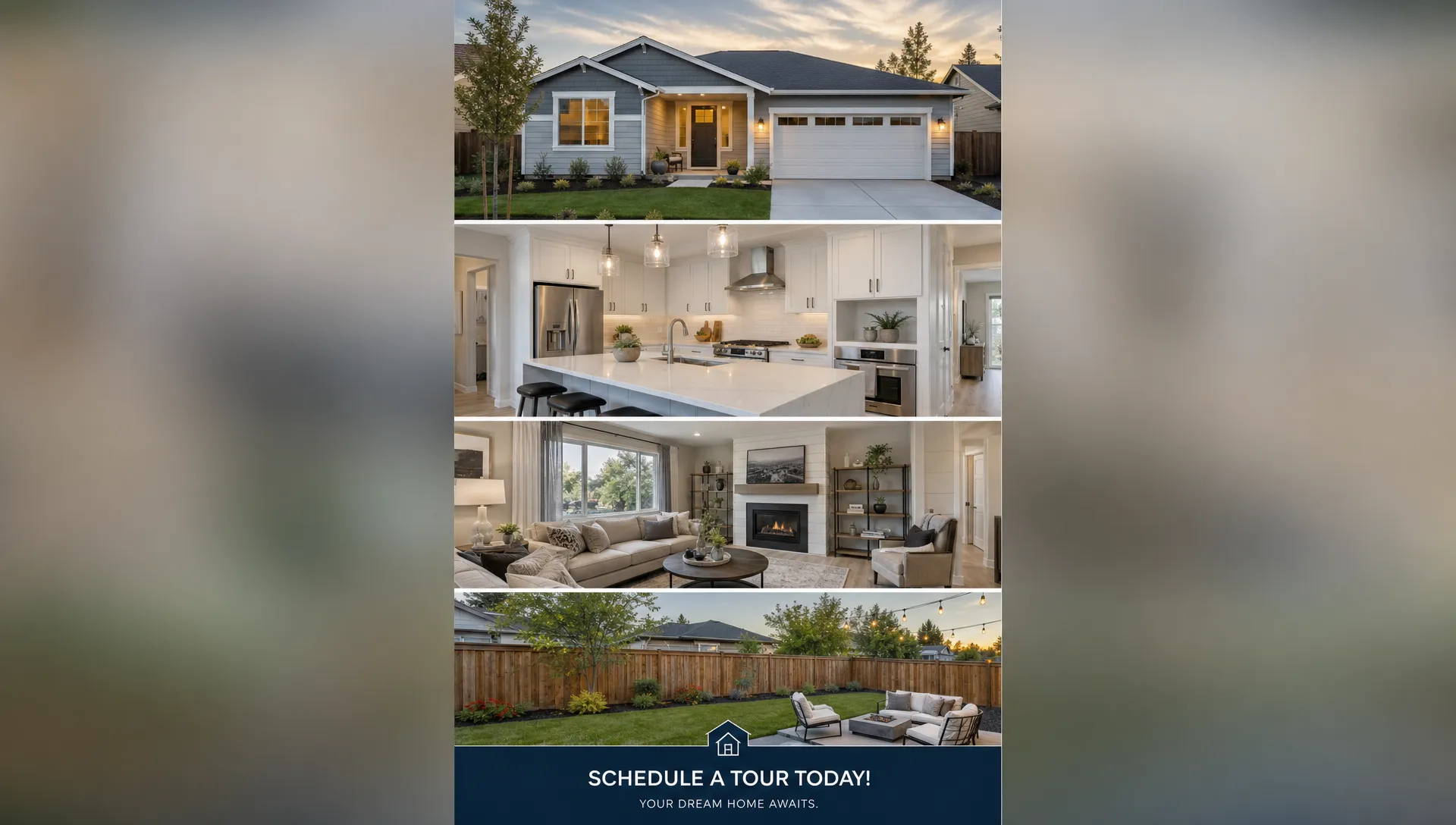
Choose 7 to 12 strong images for most short Reels. Start with the image most likely to stop the scroll, then move through the property in a way that feels natural. The goal is not to recreate a full walkthrough. The goal is to create enough confidence for a buyer to ask for more.
| Photo type | What it communicates | Best use in a Reel |
|---|---|---|
| Exterior hero shot | Curb appeal, style and first impression | Opening frame or cover image |
| Kitchen | Finish level and lifestyle value | Early proof after the hook |
| Living space | Volume, light and flow | Transition from first impression to daily living |
| Primary bedroom | Comfort and privacy | Midpoint emotional cue |
| Outdoor area | Entertaining, pets, family use or relaxation | Strong closing visual |
| Detail shot | Quality, upgrades or design personality | Quick cut for polish |
| Floor plan or layout visual | Practical understanding | Use briefly if it is clear on mobile |
Avoid using dark photos, near-identical angles or images that need too much explanation. If a photo requires a long caption to make sense, it probably does not belong in the main Reel.
Turn the photos into a story, not a slideshow
The most common mistake agents make is dropping photos into a template and letting them play in sequence. That creates movement, but it does not create a reason to respond.
A better approach is to write the story first. What is the one thing this listing has that the right buyer will care about most? Maybe it is the walkable location. Maybe it is the renovated kitchen. Maybe it is the backyard. Maybe it is value under a specific price point.
Once you know the story, every photo has a job. The first image earns attention. The second confirms the promise. The next few images build desire. The final image supports the call to action.
For example, a suburban listing with a large backyard might open with a text hook like: Backyard space is the reason buyers will remember this one. The Reel can then move from exterior to living room to kitchen to patio to yard, with narration that connects the layout to real life. That is stronger than a generic room-by-room tour because it gives the buyer a reason to care.
Use narration and captions to qualify the lead
On Instagram, many viewers watch with sound off at first. Others turn sound on only if the first few seconds feel relevant. That means captions and narration should work together, not duplicate each other word for word.
Use on-screen text for essential information: location, property type, standout feature and CTA. Use narration for context, emotion and guidance. A narrated Reel can explain why a feature matters instead of merely naming it.
For instance, do not just say large kitchen. Say the oversized island keeps the kitchen connected to the living area, which matters for buyers who host or want open daily living. That type of narration helps a viewer self-qualify.
This is where AI video tools can save time. Diane can turn listing details and photos into ready-to-publish real estate videos with AI narration, voice cloning, AI avatars, multilingual support and custom branding. For agents who do not want to appear on camera every time, an avatar or cloned voice can keep videos personal without slowing down production.
Reel formulas that work from listing photos
You do not need to reinvent the format for every property. A small set of repeatable Reel formulas can cover most listings while still feeling specific.
The new listing teaser
This format is best for the first 24 to 72 hours after a listing goes live. Open with the strongest visual, show 5 to 8 supporting photos and end with a clear showing CTA. Keep the copy direct. Buyers should know what the home is, where it is and why it is worth asking about.
The feature-led Reel
Use this when the property has one standout feature: a pool, view, renovated kitchen, guest suite, large lot, historic details or strong natural light. The hook should name the feature first, then the photos should prove it. This format often performs better than a general tour because the viewer immediately understands the reason to keep watching.
The lifestyle Reel
This works well for homes where the surrounding lifestyle is part of the value. Pair listing photos with short references to morning coffee on the patio, an easy commute, nearby dining or space for hosting. Keep the claims factual and avoid promising a lifestyle that the property does not truly support.
The objection-solver Reel
Some homes have a common hesitation that photos can overcome. Maybe the exterior is modest but the interior is updated. Maybe the home is compact but the layout is efficient. Maybe it is vacant but has strong proportions. Start with the objection and use the Reel to resolve it visually.
The niche inventory Reel
Specialized property categories need specialized messaging. A buyer looking at manufactured homes, acreage, condos, investor properties or new construction often has different questions than a buyer browsing standard resale homes. For example, someone researching manufactured homes in San Antonio may care about model options, affordability, financing help and community location, so a Reel should surface those points instead of relying only on interior photos.
Make the Reel feel native to Instagram
A listing video that looks like a recycled horizontal tour will usually underperform on Instagram. Reels are vertical, fast and text-driven. The creative should fit the feed.
Use a 9:16 vertical format and crop photos deliberately. A wide kitchen photo may need a slow pan rather than a static full-frame image. A tall exterior may need the opposite: hold the full facade long enough for the viewer to understand the home. Motion should guide the eye, not make the viewer dizzy.
Keep on-screen text large enough to read on a phone. Place key text away from the bottom and right edges, where Instagram interface elements can cover it. Use captions for narration, especially if your Reel includes details like price, square footage, school district references or showing instructions.
Your cover frame matters too. A strong cover can help profile visitors browse your listing content later. Use the clearest hero image and add a short label, such as New listing in East Austin or 4-bed home with pool. Avoid cluttered covers with too much small text.
Hashtags can help categorize content, but they will not fix a weak Reel. Use a few specific tags tied to location, property type and buyer intent. Local keywords usually matter more than broad real estate tags because the lead you want is tied to a market.
Create calls to action that start conversations
A lead-generating Reel needs a CTA that feels natural inside Instagram. Asking viewers to call immediately may work for hot buyers, but many people will take a smaller step first. DMs, comments and saves can be valuable if you have a follow-up process.
| CTA | Best for | Example wording |
|---|---|---|
| DM for details | Buyers who want privacy | DM me TOUR and I will send the full listing |
| Comment keyword | Boosting engagement and starting public interest | Comment FLOORPLAN if you want the layout |
| Save this post | Early-stage buyers | Save this if you are comparing homes in this area |
| Tap link in bio | Driving traffic to listing page | Full photos and showing info are linked in my bio |
| Book a showing | High-intent listing traffic | Message me to schedule a private tour this week |
The CTA should match the property and the buyer stage. A hot new listing in a competitive price range can use a direct showing CTA. A neighborhood education Reel might perform better with a save or DM CTA. A luxury property may need a more discreet invitation.
For a stronger channel strategy beyond Instagram, see Diane's guide to video strategies for lead generation in real estate. Reels are powerful, but they work best when they connect to your website, CRM, email follow-up and listing presentation process.
Keep compliance and accuracy in the edit
Short-form video still needs professional standards. The faster the format, the easier it is to oversimplify or accidentally mislead.
Use current listing information. If price, availability or square footage changes, update your caption or remove outdated content. Do not imply features that are not shown or confirmed. If you use virtual staging, disclose it clearly so buyers understand what is digitally furnished or enhanced.
Fair housing also matters. Focus your copy on the property, location facts and objective features. Avoid language that implies a preferred type of buyer or resident. Instead of saying perfect for young families, describe the fenced yard, bedroom count or nearby parks if those details are accurate and relevant.
Accuracy builds trust. A Reel that creates a lead but disappoints the buyer at the showing is not good marketing. The best listing Reels attract the right prospects, not the most prospects at any cost.
Build a repeatable production workflow
The agents who win with Instagram real estate reels are rarely the ones who spend hours editing every video. They are the ones who create a repeatable workflow.
A practical workflow can look like this:
- Select the listing goal and target buyer before editing.
- Choose the 7 to 12 photos that support the main story.
- Write a one-sentence hook and one clear CTA.
- Generate or record narration that adds context.
- Export in vertical format with captions and branding.
- Publish, respond to comments and track lead quality.
This is the kind of process Diane is built to speed up. The platform turns property listings into AI-powered real estate videos using listing imports, photos and property details. Agents can create narrated videos with their voice, their face or an AI avatar, adapt content for social formats, support multiple languages and publish polished listing videos faster than traditional production allows.
If your goal is to produce more consistent listing content without spending your week inside editing software, you can explore Diane's AI-powered real estate video platform and see how listing photos can become branded, ready-to-publish reels.
Measure the signals that matter
Views are useful, but they are not the final measure of success. A Reel with fewer views but three qualified showing requests is more valuable than a viral post from people outside your market.
Track metrics that connect to lead intent:
| Metric | What it can indicate | How to use it |
|---|---|---|
| Saves | Buyers want to revisit the property | Test more practical details and location context |
| Shares | Viewers think someone else may be interested | Highlight price point, lifestyle or unique features |
| Profile visits | The Reel created agent or listing curiosity | Make sure your bio and listing link are clear |
| Comments | Viewers have public questions | Reply quickly and invite serious buyers to DM |
| DMs | The Reel opened a direct conversation | Use scripts and saved replies to qualify leads |
| Showing requests | The Reel reached high-intent buyers | Compare formats and repeat the winners |
Review performance by property type, neighborhood, hook style and CTA. Over time, you will learn which angles produce the best leads in your market. For one agent, it may be price-point Reels. For another, it may be neighborhood lifestyle content. For a listing specialist, it may be seller-facing proof that every property gets professional video marketing.
Common mistakes to avoid
The first mistake is making the Reel too generic. If the same caption could apply to any home in your city, it is not specific enough. Name the property advantage clearly.
The second is hiding key details. Some agents avoid mentioning location or price range because they want DMs. That can create more messages, but many will be low quality. Strategic clarity often produces fewer but better leads.
The third is treating Instagram as a storage place for MLS media. A Reel should be edited for how people behave in the feed. That means faster pacing, clearer text and a stronger first frame than a standard listing video.
The fourth is failing to follow up. If your CTA asks viewers to DM and you respond a day later, the moment is gone. Prepare message templates, listing links and showing availability before the Reel goes live.
Frequently Asked Questions
Can I make Instagram real estate reels with listing photos only? Yes. Strong listing photos, clear captions, motion effects, narration and a focused CTA can create an effective Reel without new video footage. The key is to sequence the photos like a story rather than a slideshow.
How long should an Instagram real estate Reel be? Many listing Reels work well in the 15 to 35 second range. Use enough time to show the main value of the property, but avoid adding every photo from the listing gallery.
What should the first frame show? Use the most scroll-stopping image, often the exterior, kitchen, view, pool, living space or another standout feature. Add short text that tells buyers why the property is relevant.
Should I include price in the Reel? Include price or price range when it helps qualify buyers and fits your market strategy. If pricing changes often, keep the number in the caption or update the post quickly when needed.
Do agents need to appear on camera for Reels to generate leads? Not always. A clear voiceover, branded captions or an AI avatar can add personality without requiring the agent to film themselves for every listing.
Turn listing photos into lead-generating Reels
Instagram real estate reels work when they respect the buyer's attention. A photo gallery becomes a lead source when it is edited around one strong hook, one clear story and one next step.
For agents and agencies, the opportunity is not just to make prettier videos. It is to publish more consistent listing content, respond faster to new inventory and turn every property into a social media asset that can start conversations.
With Diane, you can turn listings, photos and property details into professional real estate videos with AI narration, avatars, cinematic editing, multilingual support and social-ready formats, helping you move from static photos to polished Reels in minutes.