
Do You Need a Real Estate Studio for Listing Videos?
A real estate studio sounds like the natural next step when you start taking listing videos seriously. Better lighting, better sound, a professional backdrop, a place to record agent introductions and a controlled environment can all improve your content.
But for most listing videos, the home is the main set. Buyers want to understand the space, the flow, the light, the finishes and the feeling of moving through the property. A studio can support that story, but it is not always the most efficient way to tell it.
The better question is not whether a real estate studio is “professional.” It is whether it helps you publish better listing videos more consistently, without slowing down your sales workflow.
What a real estate studio actually means
When agents talk about building a real estate studio, they usually mean one of two things.
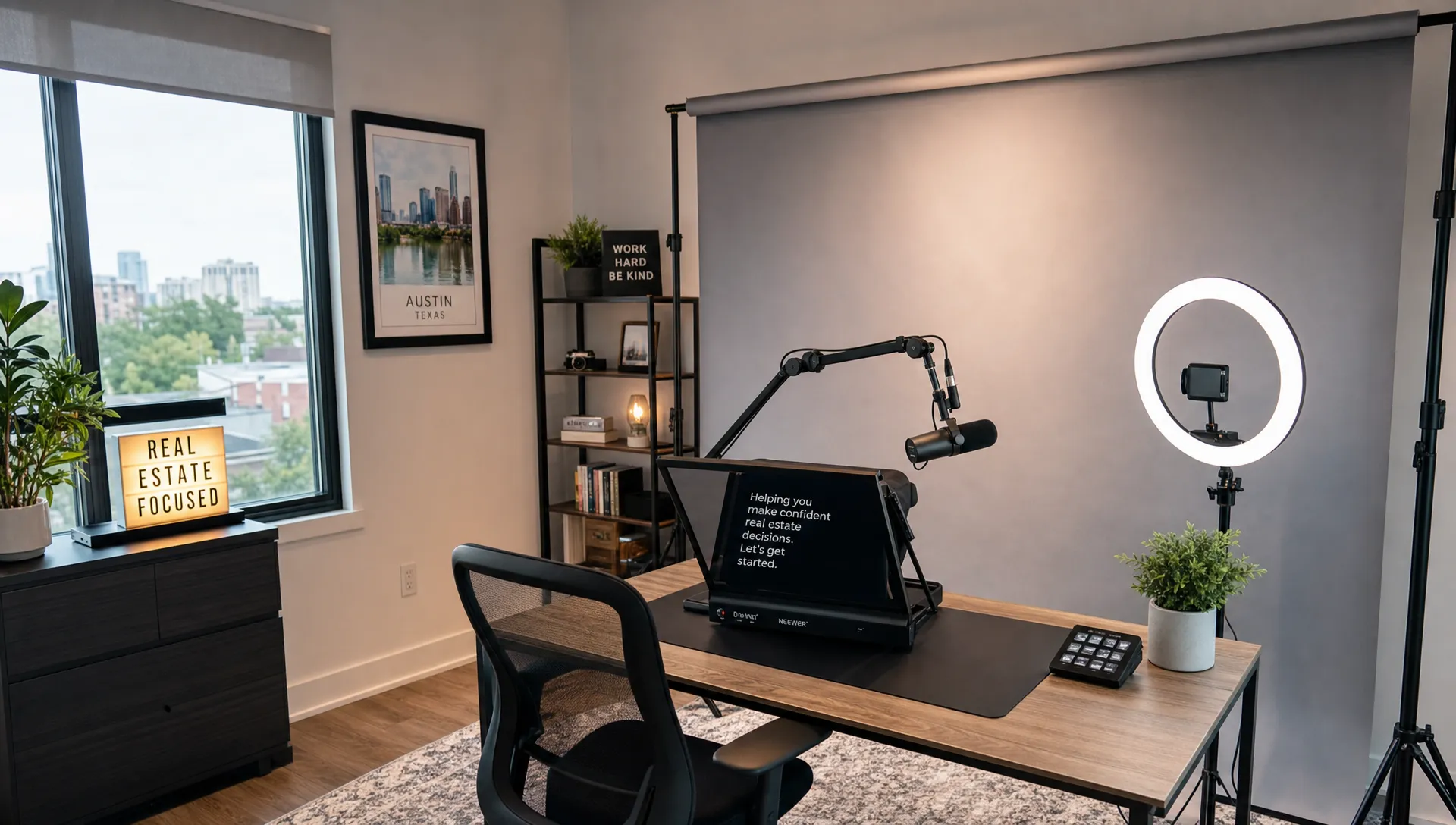
The first is a physical filming space. This might include a camera, lights, microphones, a branded backdrop, a teleprompter, a tripod, a desk setup and an editing station. It is useful for agent introductions, market updates, seller education videos, listing teasers and social media clips where the agent is on camera.
The second is a production workflow. This is less about the room and more about the system: how listing materials are collected, how scripts are written, how videos are edited, how branding is applied and how content is published. For many independent agents and smaller agencies, this second version is far more valuable.
A physical studio gives you control. A repeatable workflow gives you output. Listing marketing needs both quality and speed, but if you have to choose, speed with consistency usually wins for everyday listings.
What listing videos need to do
A listing video is not a short film. It is a sales asset designed to help a buyer decide whether the property is worth a showing, a save, a share or a deeper look.
Strong listing videos usually answer a few practical questions:
- What type of home is this and who is it likely to suit?
- How do the main rooms connect?
- What features should a buyer notice first?
- What is the mood of the property: bright, quiet, spacious, cozy, refined or practical?
- What should the viewer do next?
None of those answers require a studio by default. They require good source material, a clear script, sensible pacing and a format that matches where the video will be published.
A studio-recorded intro can add authority, especially if your personal brand matters in your market. Still, the property should remain the focus. If the first 15 seconds are mostly about the agent, many buyers will swipe before they see the kitchen, view, layout or outdoor space.
When a real estate studio makes sense
A studio can be a smart investment if video is already a core part of your marketing, not an occasional experiment. It is most useful when you need a reliable place to record content that is not tied to a specific room inside a listing.
For example, a studio is useful for agent-led content. If you regularly record listing introductions, seller advice, neighborhood explainers, market updates or short educational clips, a controlled setup saves time. You do not have to fight bad lighting, echo, clutter or background noise every time you film.
It also helps when you run a team or boutique agency with a clear visual identity. A consistent backdrop, framing and audio setup can make your videos feel more recognizable. That matters when you are trying to build trust with sellers before the listing appointment.
A studio may also be worthwhile for luxury or high-touch listings where presentation is part of the service promise. In that case, the studio does not replace property footage. It gives you a polished way to introduce the home, explain the positioning and speak directly to qualified buyers or sellers.
The important distinction is that a studio helps you film the agent. It does not automatically create a better property video. You still need strong listing assets, good sequencing and an edit that respects the buyer’s attention.
When you probably do not need one
If your main goal is to publish a professional video for every new listing, a physical studio may be unnecessary. Most agents are not blocked by the lack of a filming room. They are blocked by slow editing, inconsistent scripts, format resizing, voiceover recording, branding and last-minute seller approvals.
That is especially true for solo agents and independent agency owners. A dedicated studio introduces setup time, equipment decisions, maintenance and sometimes a new layer of self-consciousness. If you dread being on camera, the studio may sit unused while your listings still need video.
For many listings, the faster path is to turn existing assets into a polished video. Photos, listing descriptions, property facts and portal information can provide enough material for a clean narrated reel. That is where AI-powered workflows can be more practical than a physical room.
If speed is the priority, you may get more value from a process that helps you produce, review and publish listing videos quickly. Diane, for example, is built around this kind of workflow: it turns property listings, photos and details into ready-to-publish real estate videos with narration, avatars, voice options, multilingual support, branding and social formats.
For a step-by-step look at that production approach, see this guide on creating real estate videos for marketing in minutes.
Studio setup vs AI listing video workflow
The right choice depends on what you are trying to produce. A studio and an AI video workflow solve different problems, so comparing them side by side makes the tradeoff clearer.
| Need | Physical real estate studio | AI listing video workflow |
|---|---|---|
| Agent on camera | Strong fit for intros, advice and market updates | Possible with avatars or voice, depending on the platform |
| Property-first listing videos | Helpful only for short intros or outros | Strong fit when built from listing assets and photos |
| Speed for new listings | Depends on filming and editing availability | Designed for faster production from existing materials |
| Consistent branding | Strong if the setup is standardized | Strong if templates, colors and formats are saved |
| Multilingual content | Requires extra recording or post-production | Easier if multilingual video support is included |
| Social media formats | Requires editing for each channel | Easier when formats are generated for social use |
| Cost structure | Equipment, space, time and editing | Software workflow and review time |
A studio is a content environment. AI listing video software is a production system. If you can afford both and have the volume to justify them, they can work together. If you need to choose one first, start with the bottleneck that most often delays your videos.
The minimum studio setup for agents who want to appear on camera
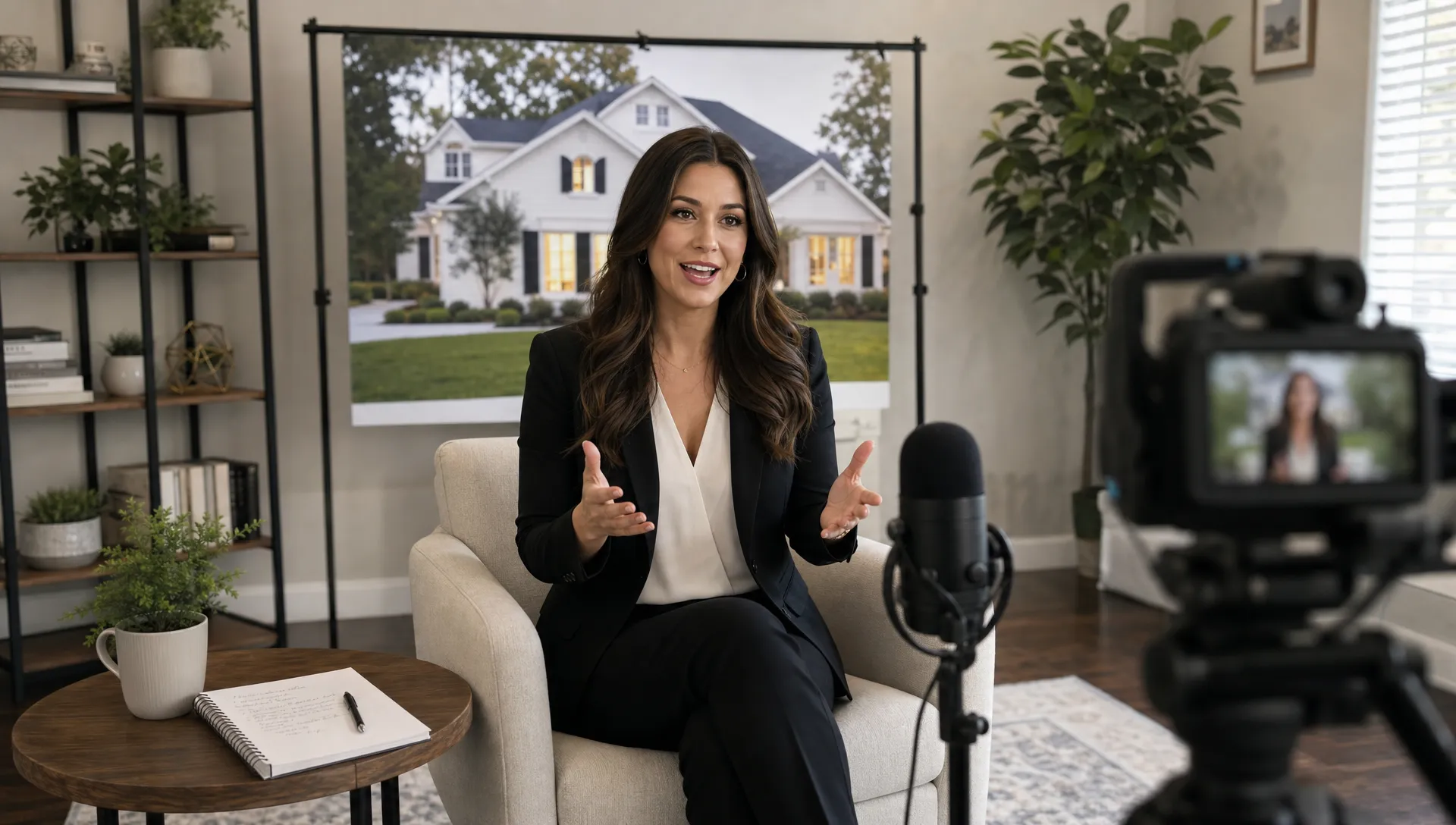
If you do want agent presence in your videos, you do not need a full production room on day one. A small, repeatable setup can get you most of the benefit with far less friction.
Focus first on sound. Viewers will forgive a simple background before they forgive echo, wind or muffled speech. A basic external microphone can make an agent video feel more professional immediately.
Lighting comes next. A window can work, but it changes throughout the day. A simple soft light gives you more control and helps your face look clear without harsh shadows. Keep the background tidy and neutral, ideally with one subtle brand cue such as a sign, color accent or framed local image.
Your phone may be enough if it records in good quality and stays stable on a tripod. The goal is not to build a film set. The goal is to remove excuses so you can record a 20 to 40 second intro when it adds value.
A practical starter setup looks like this:
| Element | What matters most | Why it helps |
|---|---|---|
| Camera or smartphone | Stable framing and clean image quality | Keeps the focus on your message |
| Microphone | Clear voice with minimal echo | Makes the video feel credible |
| Light source | Even light on your face | Improves trust and watchability |
| Backdrop | Clean, simple and consistent | Supports your brand without distraction |
| Script prompt | Short bullet points or a teleprompter | Reduces rambling and retakes |
This kind of setup is enough for intros, seller tips and local commentary. For the listing itself, rely on the best property visuals you have, then edit those assets into a buyer-focused sequence.
A decision framework for agents and agency owners
Before spending money on a studio, ask what type of video you need to produce most often. Your answer should guide the setup.
| Your situation | Do you need a physical studio? | Better first move |
|---|---|---|
| You publish occasional listing videos | Usually no | Use a repeatable video workflow first |
| You record weekly market updates | Possibly yes | Create a small on-camera setup |
| You manage multiple agents | Maybe | Standardize scripts, branding and approvals |
| You handle luxury listings | Sometimes | Combine property footage with polished agent intros |
| You need videos in multiple languages | Not necessarily | Look for multilingual video support |
| You avoid being on camera | Probably no | Use narration, voice cloning or an avatar-based format |
This is also where platform choice matters. If your goal is to make listing video part of every listing package, look beyond visual style and ask how the tool fits your intake, editing, approval and publishing routine. This guide on choosing a real estate platform for listing video explains what to evaluate before committing.
How to build a listing video process without a studio
The easiest way to avoid overinvesting in equipment is to define the workflow first. Once the workflow is clear, you can see whether a studio would improve it or merely add another step.
Start by standardizing your inputs. Every listing video needs property photos, key features, location context, price positioning where appropriate and any seller-approved language. If you import from portals or keep a consistent listing intake process, you reduce the blank-page problem.
Next, decide the video angle. A downtown condo might lead with convenience and light. A family home might lead with flow, storage and outdoor space. A renovated property might lead with finishes, systems and move-in readiness. One angle per video is usually stronger than trying to mention everything.
Then create a short script. Good listing narration should sound like a guided preview, not a property brochure read aloud. Use plain language, point out what matters and avoid claims that could create compliance issues. Always review final scripts against brokerage policy, fair housing rules and local advertising standards.
Video is only one repeatable marketing task in an agent’s week. If seller updates, showing follow-ups or other client letters are also taking too long, an AI letter generator can help you draft polished communication faster, as long as you still review it for accuracy and tone before sending.
Finally, publish in the formats your audience actually uses. A vertical reel may work best for Instagram, TikTok and YouTube Shorts. A landscape version may suit your website, listing presentation or certain portals. A square or vertical teaser can drive attention, while a longer version can support serious buyers who want more context.
What sellers expect from listing video
Sellers rarely ask whether you own a studio. They care whether their property will be presented well, promoted quickly and positioned competitively.
A studio can impress during a listing presentation if it supports a broader marketing system. But if the seller asks how you will market the home, a clear answer about video distribution, social formats, narration, branding and turnaround is often more persuasive than a tour of your equipment.
This is where a software-based production workflow can strengthen your pitch. You can explain that the listing will not wait in an editing queue for days. You can show how photos and listing details become a polished video asset. You can also describe how the same content can be adapted for social channels and property pages.
If your process includes AI avatars, voice cloning or multilingual narration, position those features carefully. The value is not novelty. The value is that the seller’s home can be presented clearly to more buyers, in a format that matches how people browse property today.
The best answer: build a studio only when it removes friction
A real estate studio is worth it when it helps you produce more useful content with less effort. It is not worth it if it becomes a room full of equipment that delays the real work: getting listings seen, understood and acted on.
For most independent agents, the first investment should be a repeatable listing video system. Once that system is running, you can add a small filming setup for agent intros and local content. If your volume grows, your brand becomes more video-led or your team needs consistent on-camera production, then a dedicated studio starts to make more sense.
Think of the studio as an upgrade, not a prerequisite. Professional listing videos can come from a physical filming space, but they can also come from strong listing assets, clear narration, thoughtful editing and a workflow designed for speed.
Frequently Asked Questions
Do I need a real estate studio to make listing videos? No. A studio can help with agent-led clips and branded content, but most listing videos can be made from property photos, listing details, narration and editing. The workflow matters more than the room.
Is a studio useful for luxury real estate videos? It can be useful for polished introductions, market positioning and agent commentary. Luxury listing videos still need strong property visuals, careful pacing and a presentation style that fits the home.
Can AI replace a real estate videographer? AI can replace parts of the production process for many everyday listing videos, especially scripting, narration, formatting and editing from existing assets. A videographer may still be valuable for complex shoots, cinematic walkthroughs or high-end campaigns.
What is the cheapest way to start filming agent intros? Use a smartphone on a tripod, an external microphone, a simple light and a clean background. Keep the intro short and connect it directly to the property or buyer need.
How long should a listing video be? Short social listing videos often work well in the 30 to 90 second range, depending on the property and channel. Longer videos can be useful on a property page or in follow-up communication with serious buyers.
A simpler way to create listing videos
If you want professional listing videos without building a full studio, Diane helps turn listings, photos and property details into ready-to-publish real estate videos. Agents and agencies can use AI narration, avatars, voice options, multilingual support, virtual staging, cinematic editing, branded formats and direct social publishing to create polished videos faster.
A studio may become useful later. A repeatable video workflow can start helping on your next listing.