
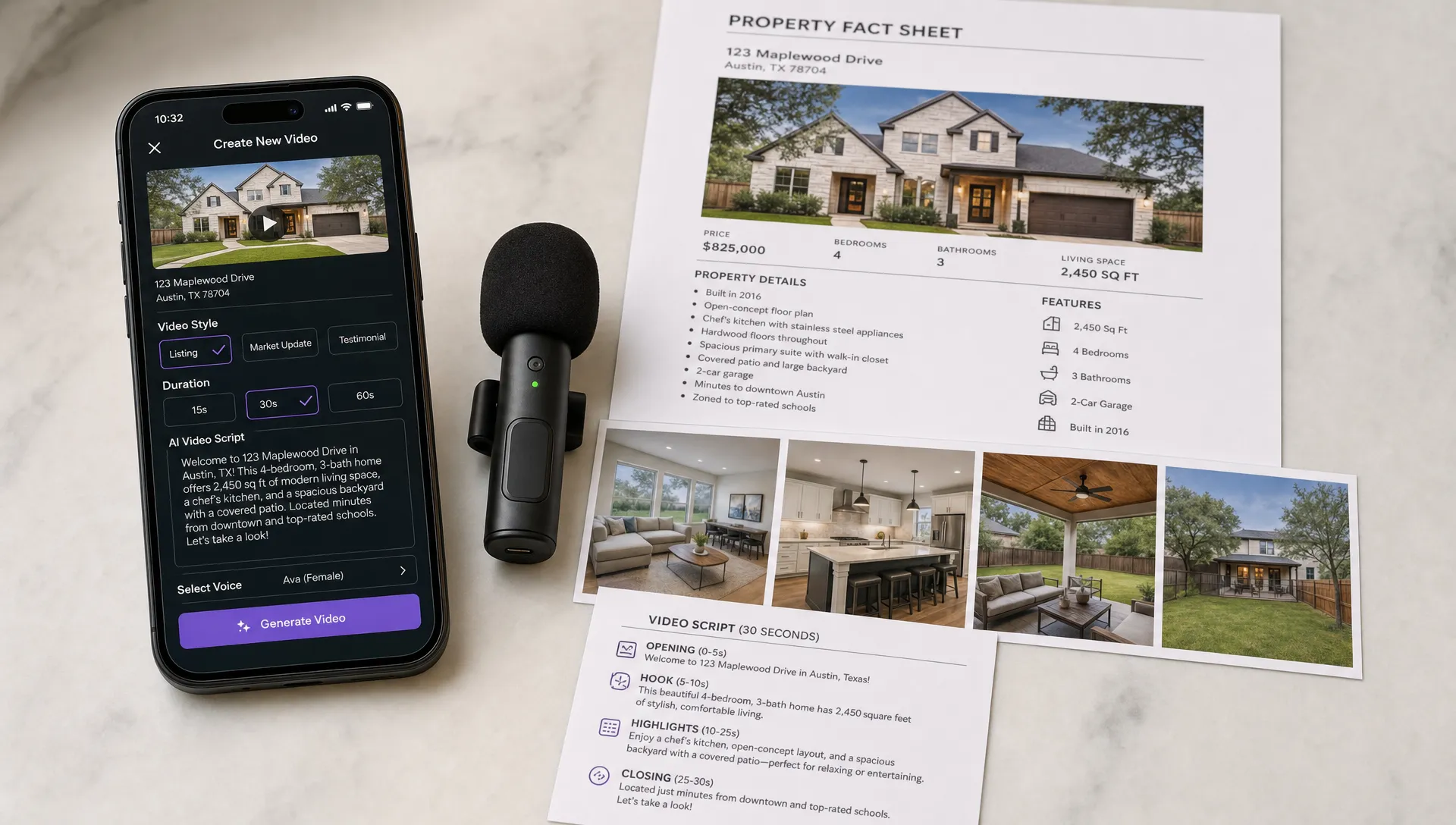
How to Improve Marketing to Real Estate Agents With Video
Real estate agents live in one of the noisiest marketing environments in business. They are pitched lead-generation tools, portal upgrades, CRMs, coaching programs, photographers, lenders, home service partners, and agency opportunities every week. A generic email or static ad rarely gets much attention because it asks a busy agent to imagine the outcome.
Video changes that dynamic. It lets you show the outcome quickly: a polished listing reel, a seller-facing pitch, a local market insight, a client success story, or a simple workflow that saves the agent time. The strongest marketing to real estate agents does not just say, we can help you win more business. It demonstrates what better marketing looks like in motion.
Whether you are an agency owner recruiting agents, a marketing lead supporting a sales team, or an independent agent trying to stand out with sellers, video can make your message more believable, more memorable, and easier to act on.
Why video works when agents are the audience
Real estate agents are already visual sellers. They sell homes through photos, walk-throughs, lifestyle cues, neighborhood context, and emotional first impressions. That means they understand the value of visual communication faster than most audiences.
But agents are also practical. They do not respond to video simply because it looks modern. They respond when a video answers one of three questions: Will this help me win listings? Will this help me market properties faster? Will this make me look more professional to clients?
This is why video is especially powerful for agent-facing marketing. It turns claims into proof. Instead of telling an agent that your brokerage offers better listing marketing, show a 30-second example of a listing launch campaign. Instead of saying your team supports agents, show the assets an agent receives before a property goes live.
The broader market supports this shift. Online property search is now central to buyer behavior, and NAR's Profile of Home Buyers and Sellers consistently highlights how important digital discovery is in the home search process. Agents know this, so a video-led message feels aligned with the way buyers and sellers already behave.
Start with the agent's job, not the video format
A common mistake is starting with the platform: Instagram Reels, LinkedIn, YouTube Shorts, email, or landing pages. The smarter starting point is the agent's daily pressure. Agents need appointments, seller trust, buyer engagement, repeat referrals, and enough time to manage active deals.
When your video speaks to one of those pressures, it feels useful instead of promotional.
| Agent-facing goal | Video angle that works | Strong format | Best call to action |
|---|---|---|---|
| Recruit productive agents | Show the marketing support an agent receives | Brokerage proof reel | Book a confidential conversation |
| Help agents win sellers | Show how a listing is presented online | Listing launch sample | Use this in your next seller appointment |
| Promote a service to agents | Demonstrate the time saved or result produced | Short workflow demo | Request a sample for one listing |
| Build trust with a local agent audience | Share market insight and practical advice | Talking-head or avatar-led market clip | Subscribe or ask for the local report |
| Support agency brand consistency | Show examples with the same visual identity | Branded video template reel | Standardize listing marketing |
This approach keeps the message grounded. Agents are less interested in abstract branding language and more interested in tools, systems, and examples that help them compete.
Build a video funnel around agent intent
Not every agent is ready to book a demo, switch brokerages, or change their marketing process today. Video works best when you match the content to the agent's level of awareness.
Awareness: prove you understand the agent's market
At the top of the funnel, your videos should show that you understand the realities of selling property now. Examples include short clips about why listings need more than a photo gallery, how sellers judge an agent's marketing plan, or what buyers expect before booking a viewing.
These videos should be educational, not sales-heavy. The goal is to make the agent think, this person understands my challenges.
Consideration: show proof and process
Once agents recognize the problem, they want to see how you solve it. This is where before-and-after examples, listing video samples, client stories, and quick production walkthroughs perform well.
For example, a 45-second video can show how a standard property listing becomes a narrated social reel. That kind of proof is more persuasive than a long feature list because it gives agents a clear mental picture of what they can use in their own business.
Decision: make the next step low friction
At the decision stage, agents need a simple reason to act now. A strong video might offer a sample listing video, a marketing audit, a seller-presentation asset, or a quick consultation. Keep the call to action specific. Agents are more likely to respond to send us one listing and we will show you what the video could look like than to a vague invitation to learn more.
Use listing video as the strongest proof asset
For most agents, the listing is the center of the business. It creates seller conversations, buyer inquiries, social proof, referral opportunities, and brand visibility. That makes listing video one of the most persuasive assets in any strategy for marketing to real estate agents.
A listing video shows practical value immediately. It helps an agent visualize how a property could be promoted across social media, portals, email, and seller updates. It also helps agency owners demonstrate a more premium marketing standard to both recruits and homeowners.
The best listing videos do more than animate photos. They create a guided experience. They explain the property in a logical sequence, highlight what makes the home different, and give viewers a reason to take the next step. If you want a deeper breakdown of what makes these assets engaging, Diane's guide on how to turn a property listing into a video buyers want to watch is a useful companion.
For agent-facing marketing, consider using listing videos in three ways. First, show a finished example to prove quality. Second, show the workflow to prove speed. Third, show how the asset can be repurposed for seller updates, social posts, and agency branding.
Make production repeatable with AI
The biggest obstacle to video marketing is not ideas. It is consistency. Agents and agencies often start with good intentions, then stop because filming, editing, captioning, resizing, and publishing take too long.
This is where AI-powered real estate video creation becomes useful. Diane, for example, is designed to turn listings, property photos, and listing details into ready-to-publish real estate videos with AI narration, animated avatars, cinematic editing, multilingual support, social media formats, and custom branding. For teams that already publish listings online, being able to import listing data and photos in one click removes much of the manual setup that usually slows video production down.
A repeatable workflow matters because agent-facing marketing needs fresh proof. One great brand video is helpful, but a steady stream of listing examples, market updates, and seller-facing clips is much more convincing. It shows agents that video is not a one-time campaign. It is a system they can actually use.
For a practical look at speed and workflow, this guide explains how agents can create real estate videos for marketing in minutes without building a traditional production process from scratch.
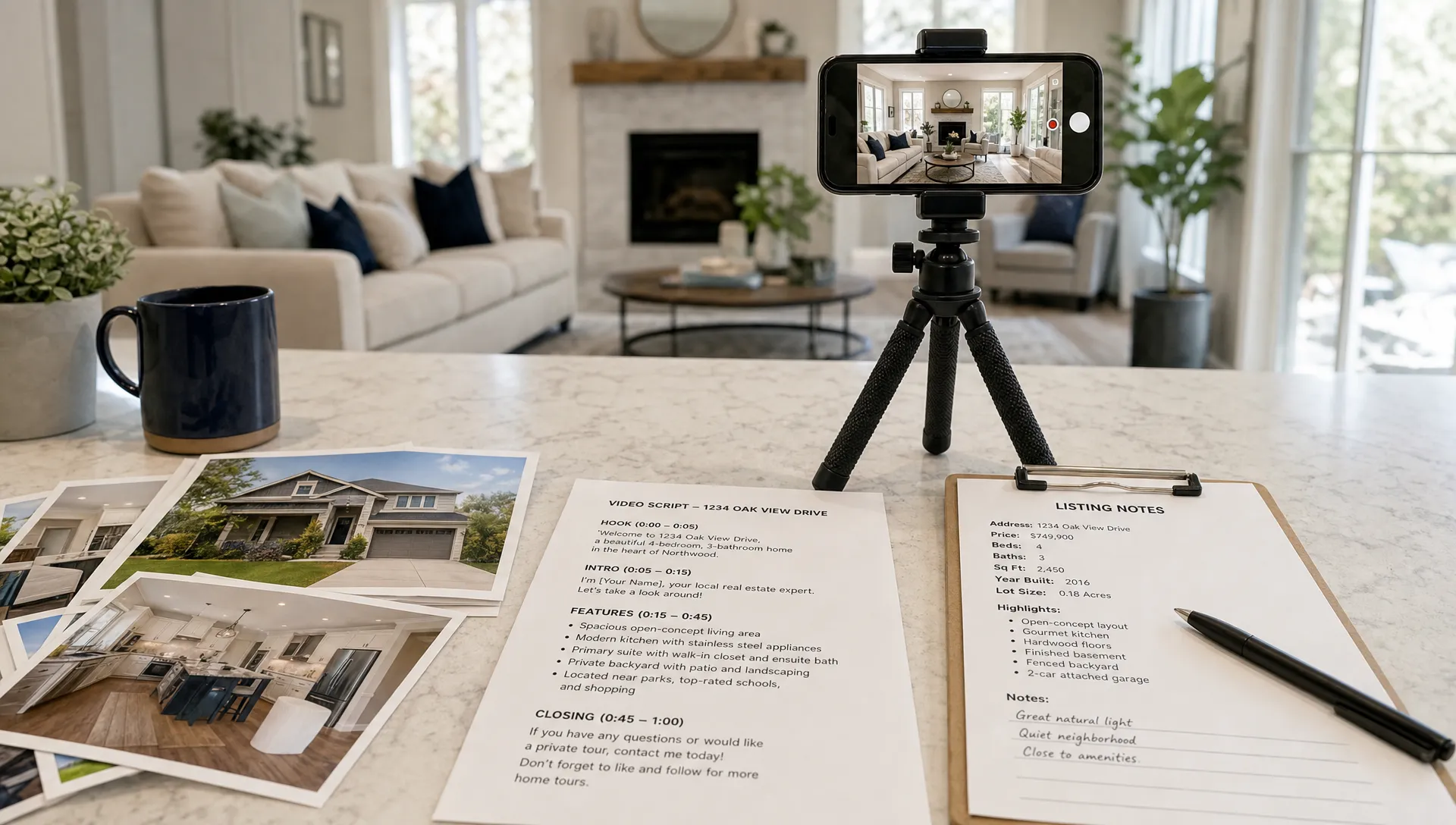
Distribute video where agents already pay attention
A strong video is only valuable if the right agents see it. Distribution should combine digital channels with the relationship-building channels agents already trust.
Email remains useful for direct communication, especially when the message is personalized by market, property type, or agent role. LinkedIn is strong for agency owners, brokers, and higher-value professional conversations. Instagram and Facebook work well for visual examples, local brand presence, and listing marketing ideas. Landing pages help when you want to collect leads from a campaign.
Offline channels can also reinforce the message. For example, a brokerage or marketing partner might send a printed seller-marketing checklist with a QR code that opens a listing video sample. If direct mail is part of the campaign, an omni-channel direct mail platform can help connect print, automation, tracking, and reporting so video does not sit in a separate silo.
| Channel | Best video type | Why it works for agents |
|---|---|---|
| Personalized listing sample or short demo | Feels direct and relevant when tied to the agent's market | |
| Market insight or agency proof video | Supports professional positioning and recruiting conversations | |
| Instagram Reels | Listing highlights and quick tips | Matches how agents already showcase properties and wins |
| Landing page | Full workflow explanation with examples | Helps agents evaluate the offer in one place |
| Direct mail with QR code | Printed teaser linked to a video sample | Combines physical attention with digital proof |
The key is to avoid treating video as a standalone asset. The same core video can support an email sequence, a social campaign, a landing page, and a seller presentation if it is planned with repurposing in mind.
Script videos for trust, not hype
Agents can spot exaggerated marketing quickly. They have heard plenty of promises about more leads, better branding, and effortless growth. A better script sounds specific, practical, and grounded in the agent's reality.
Use a simple structure that works across most agent-facing videos:
- Open with a specific pain point, such as slow listing launches or sellers asking for stronger online promotion.
- Show the visual proof, such as a finished listing video, a social format, or a branded campaign asset.
- Explain the practical benefit in plain language, such as saving time or giving sellers more confidence.
- Add local or role-specific context so the video feels made for the audience.
- End with one clear next step, such as requesting a sample, booking a conversation, or using the asset in a listing presentation.
For example, a weak message says your agents get premium marketing. A stronger video shows a property, the finished reel, the social caption, and the seller-facing explanation an agent can use during an appointment.
Personalize by agent segment
Marketing to real estate agents works better when you stop treating all agents the same. A solo listing specialist, a newly recruited negotiator, a luxury agent, and an independent agency owner may all care about video, but not for the same reason.
A solo agent may care most about looking polished without hiring an editor. An agency-employed sales agent may care about getting listing assets approved and published faster. An independent agency owner may care about brand consistency across the team. A multilingual agent may care about presenting properties clearly to more buyers and sellers.
This is one reason AI avatars, voice cloning, multilingual video support, and branded templates are valuable in real estate. They let teams adapt the message without rebuilding every asset manually. The more relevant the video feels to the agent's market, role, and client base, the more likely it is to earn attention.
Measure what matters
Agent-facing video marketing should be measured on more than views. Views can indicate reach, but they do not prove that the content is moving agents closer to action. A smaller audience of qualified agents who watch, click, reply, or request samples is far more valuable than a large audience that scrolls past.
| Metric | What it tells you | How to improve it |
|---|---|---|
| First 3-second retention | Whether the opening earns attention | Lead with a clear agent pain point or visual result |
| Average watch time | Whether the message stays relevant | Cut generic intros and move quickly to proof |
| Click-through rate | Whether the offer is compelling | Make the next step concrete and low friction |
| Reply or inquiry rate | Whether agents see personal relevance | Segment by location, role, or listing type |
| Sample requests | Whether the video creates buying intent | Show finished examples and reduce setup effort |
| Content reuse | Whether the workflow is sustainable | Build templates for listing, market, and seller videos |
Review performance by segment, not just campaign. If agency owners engage with proof videos but individual agents engage with workflow demos, that is a useful signal. It tells you how to adapt future content and offers.
Common mistakes to avoid
Video can improve agent marketing quickly, but only if it respects the way agents make decisions. Avoid these common mistakes:
- Making the video about your company before making it about the agent's problem.
- Using generic stock-style visuals instead of real listing examples or practical workflows.
- Asking for a big commitment before offering a simple next step.
- Creating one video and expecting it to work across every channel without editing the format.
- Measuring vanity metrics while ignoring replies, sample requests, and booked conversations.
The best videos feel like useful proof, not an interruption. They help agents picture how they can win more trust with sellers, market listings more effectively, and present themselves with more confidence.
Frequently Asked Questions
What is the best type of video for marketing to real estate agents? The best starting point is usually a short listing transformation video that shows how a property listing becomes a polished marketing asset. Agents immediately understand the value because it connects to their daily work.
How long should agent-facing marketing videos be? Most awareness and social videos should be 15 to 45 seconds. Workflow demos, landing page videos, and recruiting videos can be longer if they stay practical and show clear proof.
Should real estate marketing videos use an agent's face or an AI avatar? Both can work. An agent's face builds personal trust, while an AI avatar can help teams produce consistent, multilingual, or repeatable content faster. The best choice depends on the campaign goal and production capacity.
Can video help recruit real estate agents to a brokerage? Yes. Recruiting messages are stronger when they show the actual marketing support, listing assets, brand quality, and workflow an agent can expect. Video makes those benefits easier to believe.
How often should agents or agencies publish videos? Consistency matters more than volume. A realistic cadence might include a video for each new listing, regular market updates, and occasional proof videos for seller or recruiting campaigns.
Make video the center of your agent marketing advantage
Improving marketing to real estate agents is not about adding more noise to their inbox. It is about showing useful proof faster than a static message can.
Video helps agents see the finished result, understand the workflow, and imagine using the asset with sellers and buyers. When it is personalized, distributed across the right channels, and supported by a repeatable production system, it becomes more than content. It becomes a practical sales tool.
Diane helps agents and agencies turn property listings into ready-to-publish marketing videos with AI narration, avatars, voice options, cinematic editing, multilingual support, and social formats. If you want to make listing marketing more visual, scalable, and persuasive, video is the place to start.