
How to Make Home Listings More Memorable With Video
Most buyers do not remember a property because it had three bedrooms, a quartz countertop or a freshly painted hallway. They remember it because one detail stuck: the morning light in the kitchen, the private terrace above the street, the guest suite that solves a family problem or the calm walk from the front door to the main living space.
That is why video is so effective for home listings. It does not just show rooms. It gives buyers a sequence, a mood and a reason to recall the property after they have viewed ten similar listings in the same price range.
For real estate agents, the goal is not to make every listing video cinematic for the sake of it. The goal is to make the right details easier to notice, easier to understand and easier to remember.
Why video makes home listings more memorable
Photos are essential, but they ask buyers to assemble the property in their heads. They click from kitchen to bedroom to exterior, then try to imagine the layout, scale and flow. Video reduces that mental work.
A good listing video guides attention. It can move from the entrance to the living area, reveal the connection between indoor and outdoor space, pause on a standout feature and use narration to explain what matters. That combination of motion, sound and structure helps the property feel less like a set of separate images and more like a place someone can picture living in.
Memorability also comes from contrast. If most home listings in your market use the same photo order and the same description style, a buyer-focused video gives your listing a stronger identity. It becomes “the one with the garden office,” “the one with the open kitchen facing the terrace” or “the one that felt move-in ready.”
If you want a broader set of ways to make a listing stand out before adding video, Diane’s guide to making real estate listings stand out online is a useful companion to this article.
Start with one memory hook
Many listing videos become forgettable because they try to mention everything. A buyer does not need a narrated inventory of every room in the first ten seconds. They need a reason to keep watching and a simple idea to attach to the property.
Before creating the video, choose one memory hook. This is the main thing you want buyers to repeat after watching. It should be specific, relevant and easy to visualize.
Strong hooks often fall into a few categories:
- Lifestyle hook: “A quiet garden home built around outdoor dinners and weekend mornings.”
- Layout hook: “A family home where the kitchen, dining room and garden all connect in one open flow.”
- Location hook: “A bright apartment just minutes from the station, cafés and daily essentials.”
- Flexibility hook: “A home with a separate studio that works for guests, remote work or rental potential.”
Once you have the hook, use it to make editing decisions. Open with the shot that proves it. Let the narration reinforce it. Return to it near the end. Repetition is not a problem when it is purposeful. It is how buyers remember.
Build the video around the buyer’s day
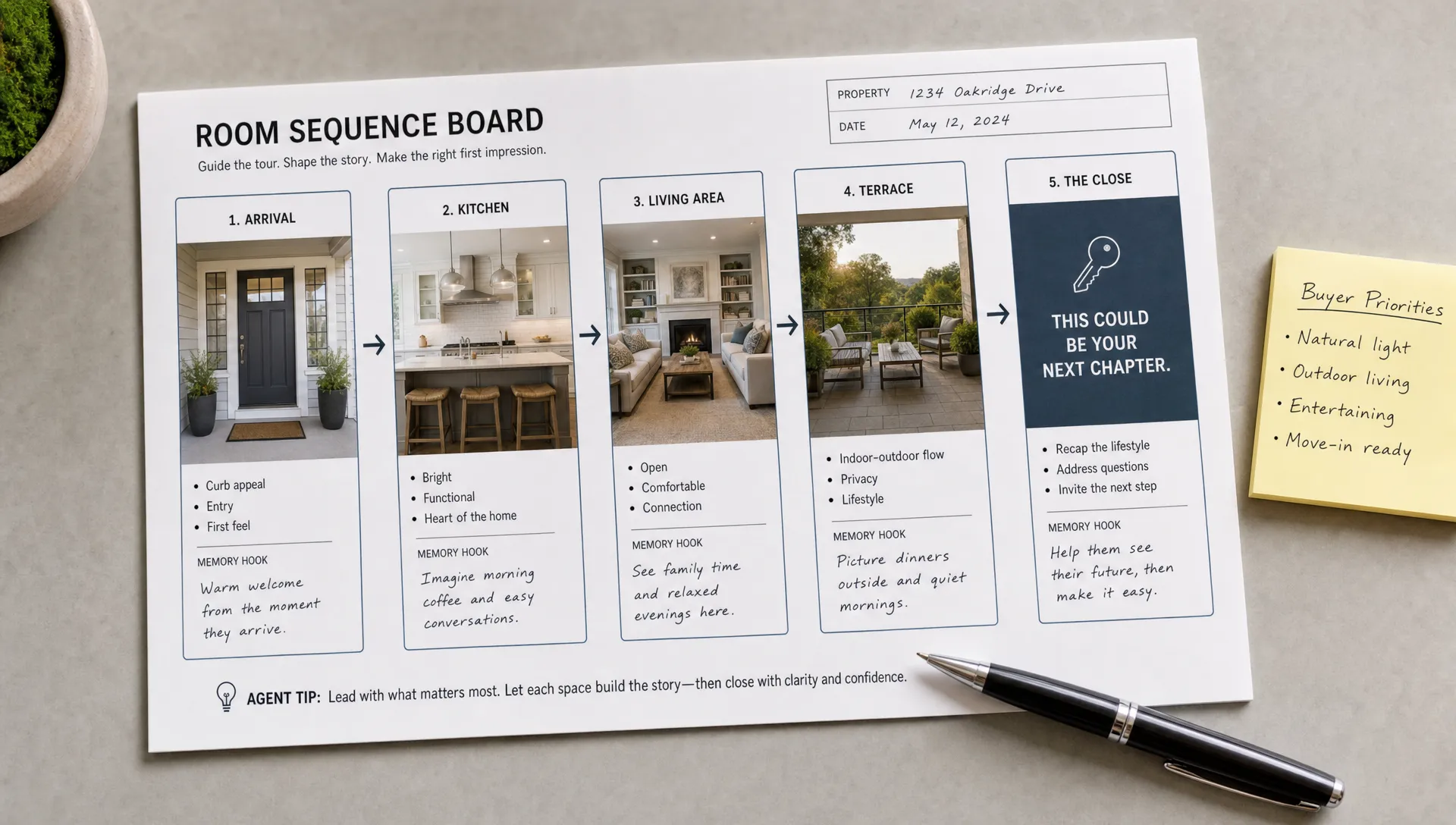
A memorable listing video should feel like a short guided visit, not a slideshow with music. The easiest way to achieve that is to structure the video around how the buyer would actually experience the home.
Start with arrival. Show the exterior, entrance or immediate setting so the viewer has orientation. Then move into the room that carries the strongest emotional or practical value. In many listings, that is the living area, kitchen, terrace, primary suite or garden. After that, show the supporting spaces that make the home work day to day.
A simple structure works for most home listings:
- Arrival: Show curb appeal, building entrance, driveway, street feel or lobby.
- Main living moment: Lead with the space that creates the strongest first impression.
- Functional proof: Show storage, work areas, bedroom separation, laundry or parking.
- Lifestyle context: Include outdoor space, views, nearby amenities or neighborhood feel.
- Next step: End with a clear prompt to book a viewing or request details.
This structure helps buyers build a mental map. It also helps you avoid the common mistake of saving the best feature for too late, when many viewers have already moved on.
Match each feature with a visual memory cue
A buyer remembers a feature more easily when the video makes it concrete. “Spacious living room” is generic. A slow shot from the sofa area toward the dining table helps buyers see how the space might be used. “Great for entertaining” is vague. A sequence from kitchen island to patio doors to outdoor seating makes the claim believable.
Use narration to name the value, then use visuals to prove it. If the visual does not prove the point, either choose a better shot or cut the claim.
| Listing detail | Memorable video cue | Narration angle |
|---|---|---|
| Open-plan living | Move from kitchen to dining to lounge in one continuous sequence | Emphasize flow and everyday connection |
| Natural light | Show the room at its brightest time of day | Mention orientation only if verified |
| Outdoor space | Start inside, then reveal the doors opening to the terrace or garden | Connect indoor living to outdoor use |
| Home office | Show desk placement, outlets, light and separation from common areas | Position it as practical for remote work |
| Energy features | Show panels, insulation upgrades or efficient systems only when documented | Keep claims factual and avoid promising savings |
| Neighborhood access | Use quick exterior context such as sidewalks, shops, transit or parks | Focus on convenience and daily routine |
Energy and sustainability details can make home listings more memorable, especially when buyers are comparing long-term ownership costs. Keep those claims accurate. If you work with property owners or local entrepreneurs who need deeper guidance on energy savings, subsidies or regulations, resources like independent energy advice from REE can help them explore practical next steps before those upgrades are promoted in marketing.
Use narration to guide attention, not fill silence
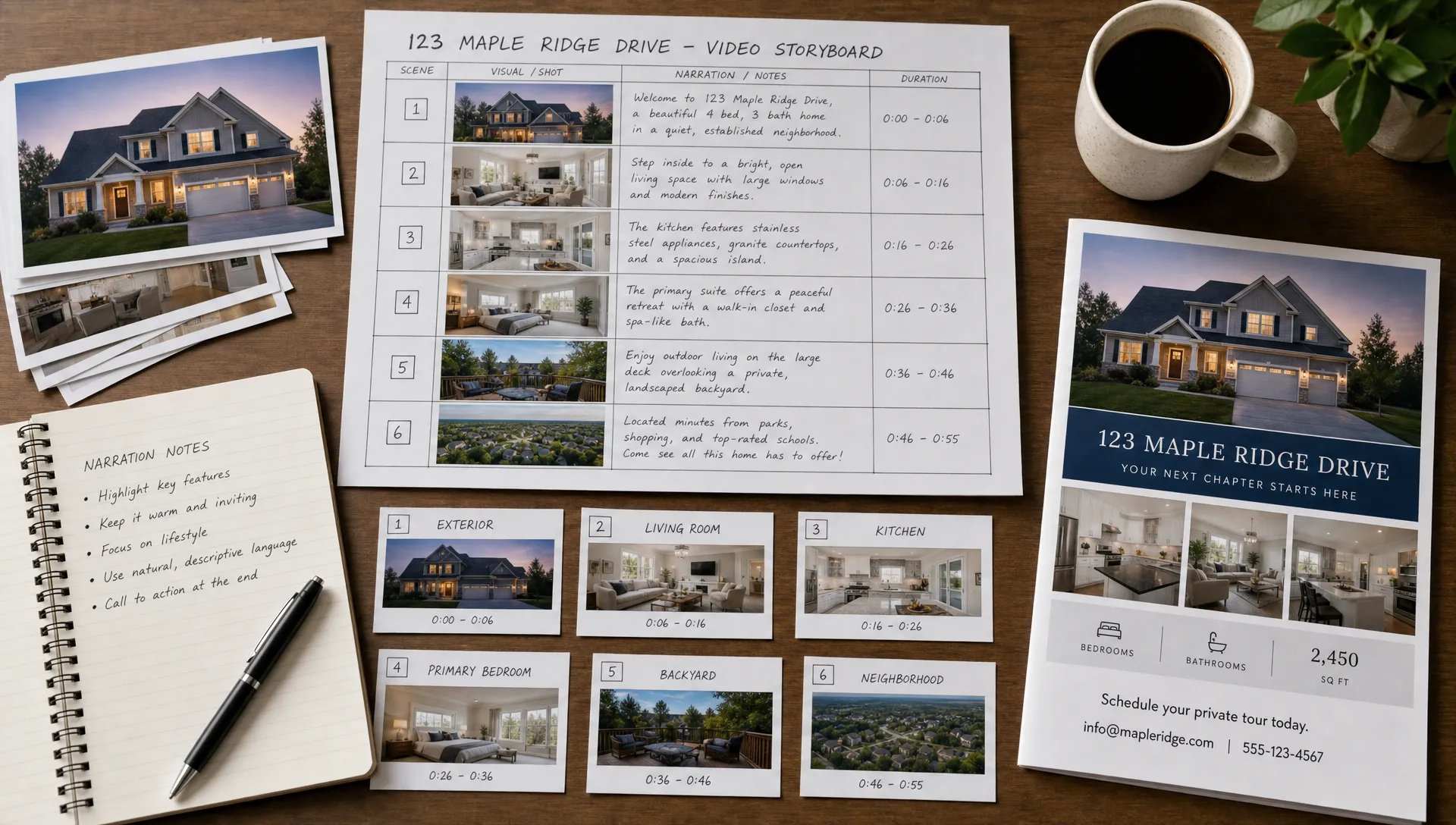
Narration is one of the biggest differences between a nice property video and a memorable one. Music can create mood, but voice gives meaning. It tells viewers what to notice and why it matters.
The best narration sounds like a confident agent walking a serious buyer through the home. It should be concise, specific and buyer-oriented. Avoid reading the listing description word for word. A written description and a spoken script do different jobs.
For example, instead of saying, “This beautiful three-bedroom, two-bathroom home features modern finishes and a spacious layout,” say, “The main living area is designed around the kitchen and garden, so everyday meals, hosting and outdoor time all happen in one connected space.”
That second version is more memorable because it turns features into use cases. It helps the buyer imagine a routine, not just a room count.
If you are building a repeatable video workflow, Diane’s article on how to turn property listings into videos buyers want to watch goes deeper into structure, pacing and buyer expectations.
Design for short attention spans without making the video feel rushed
A listing video does not need to be long to be effective. In fact, shorter formats often work better for social media because they force clarity. The risk is cutting so quickly that buyers cannot understand the home.
Think in terms of useful pacing. Each shot should give the viewer enough time to recognize the space and understand why it matters. A three-second shot of a kitchen can work if the framing is clear. A one-second flash of five different rooms usually feels like noise.
Recommended lengths depend on where the video will appear:
| Use case | Suggested length | Main goal |
|---|---|---|
| Instagram Reel, TikTok or YouTube Shorts | 20 to 45 seconds | Capture attention and drive inquiries |
| Listing page or portal media | 45 to 90 seconds | Explain flow, features and feel |
| Email to buyer list | 30 to 60 seconds | Re-engage qualified buyers quickly |
| Seller presentation example | 60 to 120 seconds | Show your marketing quality and process |
The first three seconds matter most on social platforms. Do not open with a long logo animation or a generic exterior if the strongest feature is inside. Lead with the memory hook, then brand the video subtly once attention is earned.
Make the video recognizable as yours
Memorable home listings also benefit from consistent agent branding. This does not mean covering the video in logos. It means using a recognizable style that buyers and sellers begin to associate with your marketing.
For independent agents and small agencies, this is especially valuable. Sellers want evidence that you will present their property professionally. Buyers who repeatedly see your videos should recognize your tone, format and quality.
Consistent branding can include a clean intro style, a familiar narration voice, the same caption treatment, a closing card with your contact details and a clear visual standard across every listing. Keep it polished but restrained. The property should remain the focus.
This is where AI-assisted production can help. With a platform like Diane, agents can turn listings, photos and property details into ready-to-publish videos with AI narration, avatar presentation, custom branding, multilingual support and social media formats. The value is not only speed. It is the ability to create a consistent video presence across more listings without rebuilding the process from scratch each time.
Adapt one video into several memorable touchpoints
A buyer may not remember a property after one exposure. Repetition across channels helps, as long as each version feels native to the place where it appears.
Create one core listing video, then adapt it for different moments in the buyer journey. The social version might lead with the strongest lifestyle hook. The listing-page version can include more layout context. The email version can be shorter and more direct, with a clear viewing invitation.
You can also reuse the same video in seller conversations. When prospective sellers see that you do not just upload photos and wait, your marketing becomes more tangible. A strong video process can support lead generation because it gives sellers something concrete to compare against other agents. For a deeper look at that angle, see Diane’s guide to video strategies for lead generation in real estate.
Avoid the mistakes that make listing videos forgettable
A forgettable video is not always poorly produced. Sometimes it is technically clean but strategically weak. It looks fine, yet the buyer cannot recall anything specific afterward.
The most common issue is sameness. If every video opens with the same drone shot, uses the same adjectives and gives every room equal importance, no property develops a clear identity. Another issue is overloading the script. Buyers do not remember fifteen features. They remember the two or three that match their priorities.
Watch for these mistakes when reviewing your next listing video:
- Opening with your logo before showing a compelling property feature
- Using generic phrases such as “must-see” or “rare opportunity” without proof
- Cutting too quickly for buyers to understand layout
- Showing rooms in an order that does not match how people experience the home
- Making unverified claims about light, energy performance, views or renovation quality
- Ending without a clear next step for the buyer
A simple review question helps: after watching this once, what would a buyer remember? If the answer is unclear, the video needs a stronger hook, cleaner sequence or more specific narration.
Create a repeatable video checklist for every listing
Memorable listing videos become easier to produce when you stop treating each one as a blank page. Build a checklist that helps you quickly identify the strongest angle, gather the right assets and publish the video in the right formats.
Before producing the video, confirm the property’s main hook, the top three buyer benefits, the best visual proof for each benefit, the correct room sequence, the call to action and the formats you need for social media, listing portals and email.
This process does not remove creativity. It gives creativity a frame. You can still tailor each video to the property, but you are not reinventing your workflow every time a listing goes live.
For busy agents, that consistency matters. A memorable listing video should not require a full production team or days of editing. It should be part of a practical marketing system that helps every good listing make a stronger impression.
Frequently Asked Questions
How long should a video for home listings be? For most social platforms, 20 to 45 seconds is enough to create interest. For a listing page, 45 to 90 seconds usually gives buyers more room to understand layout, features and flow.
Should listing videos replace professional photos? No. Photos and videos work best together. Photos help buyers inspect details at their own pace, while video helps them understand movement, layout and atmosphere.
What should I say in a real estate listing video? Focus on the buyer benefit behind each feature. Instead of reading the property description, explain how the layout, light, location or upgrades improve daily life.
Can AI make home listing videos feel personal? Yes, if the script and structure are specific to the property. AI can speed up narration, editing and formatting, but the most memorable videos still start with a clear buyer-focused hook.
What makes a listing video memorable? A memorable listing video has one strong idea, a logical walkthrough, specific narration, clear visual proof and a next step. Buyers should be able to describe the property in one sentence after watching.
Make your next listing easier to remember
Video helps home listings stand out because it turns property details into a guided experience. Buyers can see how spaces connect, hear why features matter and remember the home by a specific feeling or function.
If you want to create polished property videos without slowing down your listing workflow, Diane can help you turn listings, photos and details into ready-to-publish real estate videos with AI narration, avatars, cinematic editing, branding and social media formats.