
Property Agents Can Create Better Listing Videos in Less Time
For property agents, listing videos have become a practical requirement, not a luxury add-on. Buyers expect to understand a property quickly, sellers expect modern marketing, and social platforms reward motion over static galleries. The problem is time. Traditional video production can pull an agent into scheduling shoots, writing scripts, recording voiceovers, chasing edits, exporting multiple formats, and uploading everywhere manually.
The good news is that better listing videos do not have to take longer. In many cases, the fastest videos perform better because they are more focused. They answer the buyer’s first questions, show the property in a logical sequence, and package the listing in a format people actually want to watch.
For independent agents, negotiators, listing specialists, and agency owners, the goal is not to become a filmmaker. The goal is to turn listing information into a polished, persuasive video workflow that can be repeated for every new property.
Better listing videos start with a sharper promise
A common mistake is treating a listing video like a slideshow with music. That may be easy to produce, but it rarely gives the buyer a reason to keep watching. A stronger video has a clear promise from the first seconds.
Before editing anything, property agents should define the buyer-facing angle. Is this home about walkability? Natural light? A renovated kitchen? Rental potential? A quiet family layout? A premium outdoor space? The video should not simply say, “Here is a house.” It should say, “Here is why this house is worth your attention.”
A helpful way to frame the video is to answer three questions:
- What makes this property different from similar listings nearby?
- What type of buyer is most likely to care?
- What should the viewer remember after 30 seconds?
This small strategic step saves time later because it reduces unnecessary footage, vague narration, and overlong edits. A focused 45-second video can often do more than a beautiful two-minute tour that tries to show everything.
The repeatable workflow property agents need
Speed comes from having a system. If every listing video starts from a blank page, production will always feel slow. The most efficient agents build a repeatable structure that can be adapted property by property.
Here is a simple framework that works for most listing videos:
| Video element | Purpose | Time-saving approach |
|---|---|---|
| Opening hook | Capture attention in the first 3 seconds | Lead with the strongest buyer benefit, not the address |
| Exterior or establishing shot | Set location and property type | Use the best wide image or clip early |
| Main living spaces | Help buyers understand flow | Arrange photos in the order a visitor would experience the home |
| Key differentiator | Make the listing memorable | Highlight one standout feature with narration or text |
| Lifestyle context | Connect the property to daily life | Mention commute, outdoor space, views, or nearby amenities when relevant |
| Call to action | Move the viewer to the next step | Invite a showing, inquiry, or full listing view |
This structure removes guesswork. Instead of asking, “What should I make?” for every property, you are simply filling in a proven sequence.
It also helps you avoid the most common time drain: overediting. Listing videos do not need dozens of visual effects to work. They need clarity, pacing, and a reason to watch until the end.
Use listing materials you already have
Most agents already have enough material to create a strong first version of a video: listing copy, property specs, photos, price details, location context, and seller-approved highlights. The opportunity is to turn those assets into video without rebuilding the listing manually.
This is where AI can change the workflow. Diane, for example, is designed to turn property listings, photos, and details into ready-to-publish real estate videos with narration, avatar presentation, cinematic editing, custom branding, and social media formats. Instead of waiting for a traditional edit, agents can create a polished video while the listing is still fresh.
If your listing is already published, Diane’s one-click listing import can help bring property details and photos into the platform more quickly, reducing the repetitive copy-and-paste work that slows agents down.
The key is not simply “using AI.” The key is using AI to remove the production bottlenecks that do not require an agent’s judgment. Agents should still decide the positioning, the strongest selling points, and the right tone for the market. AI can then help assemble, narrate, format, and prepare the video faster.
If you want a deeper walkthrough of the production process, Diane’s guide on how to create real estate videos for marketing in minutes is a useful companion to this workflow.
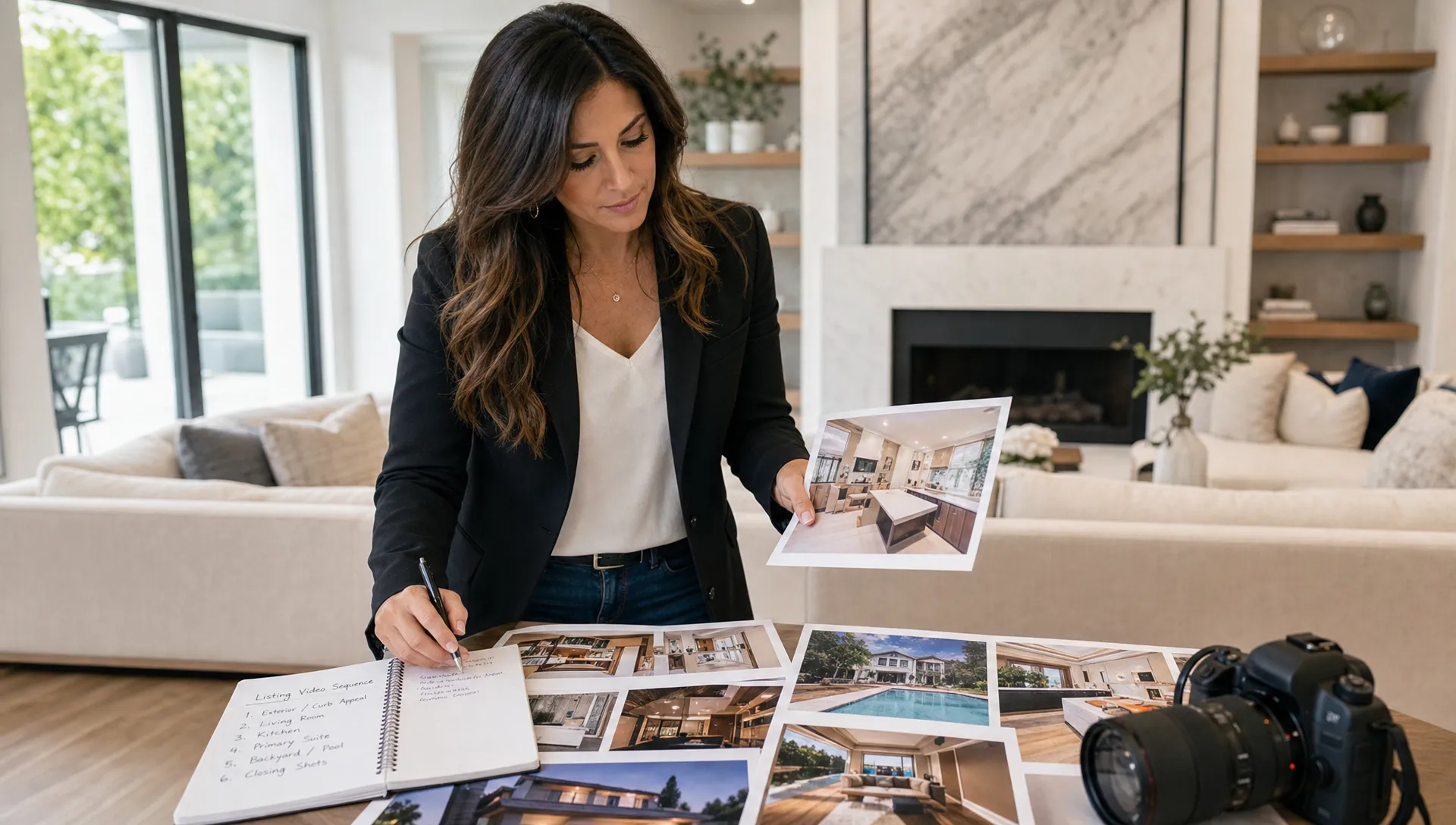
What makes a listing video better, not just faster
Fast production only matters if the result still feels professional. A rushed video can hurt a listing if it looks generic, misrepresents the property, or leaves buyers confused. The best time-saving systems improve consistency without stripping away personality.
A better listing video usually has four qualities.
First, it is buyer-led. It does not repeat every feature from the listing description. It translates the listing into a viewing experience. For example, “three bedrooms” becomes “a layout that separates the primary suite from the guest rooms,” if that matters to the likely buyer.
Second, it is paced for the channel. A portal video, an Instagram Reel, and a LinkedIn post do not always need the same rhythm. Social videos should open faster and get to the strongest visuals quickly. A video embedded in a listing page can take a little more time to build context.
Third, it sounds credible. AI narration, voice cloning, or an avatar can save time, but the script still needs to sound like a real agent speaking to a real buyer. Avoid exaggerated language unless the property genuinely supports it. “Rare,” “stunning,” and “perfect” lose power when they appear in every video.
Fourth, it respects compliance and trust. Use seller-approved information, follow brokerage and MLS rules, and make sure any voice, face, or branding used in a video is authorized. If you use multilingual video support, review the translation for local nuance, especially for legal or financial details.
Match the video style to the listing type
Not every property needs the same video. A studio apartment, suburban family home, luxury villa, and investment property each require a different emphasis. This is where many property agents can improve results without adding production time.
For compact urban homes, focus on efficiency, storage, light, building amenities, and access to transit or neighborhood conveniences. Buyers want to understand how the space lives bigger than it looks.
For family homes, prioritize layout, bedrooms, outdoor areas, school proximity where appropriate, and everyday functionality. The video should make it easy to imagine routines: morning coffee, children playing outside, guests gathering in the kitchen, or working from a quiet room.
For luxury or vacation-oriented properties, the emotional experience matters more. Buyers and investors are not only evaluating square footage. They are evaluating privacy, design, views, amenities, and how the property feels as a destination. Agents can take inspiration from premium hospitality brands and luxury vacation rentals, where the marketing often leads with lifestyle, comfort, and a sense of escape rather than specs alone.
For investment properties, clarity is critical. Keep the video polished, but make sure it supports the buyer’s practical questions. Show condition, location appeal, flexibility of use, and features that may affect demand. Avoid making income claims unless they are accurate, permitted, and properly substantiated.
Create templates, but keep the story specific
Templates save time, but they should not make every listing feel identical. The trick is to standardize the structure while customizing the message.
A good template controls the production steps: intro, room flow, feature highlight, lifestyle context, and call to action. The listing-specific story controls the words, order of visuals, and emotional angle.
For example, two homes may use the same 60-second structure. One video may open with “A move-in-ready home minutes from downtown,” while another starts with “A private poolside retreat built for weekend entertaining.” The format is similar, but the buyer promise is different.
This is also where custom branding matters. Consistent colors, logo placement, typography, and tone make your videos recognizable without requiring a custom design process each time. For independent agency owners, that consistency can make a small team look more polished across every listing.
If you are looking for fresh angles to plug into your templates, Diane’s list of real estate video ideas that help listings get noticed can help you avoid producing the same basic tour over and over.
A practical quality checklist before publishing
A fast video workflow should always include a short review step. This prevents small mistakes from reaching buyers and sellers.
Before publishing, check that:
- The first three seconds show or say something compelling.
- The property details match the approved listing information.
- The photo order feels logical and does not jump randomly between rooms.
- The narration sounds natural, specific, and accurate.
- Text overlays are easy to read on a phone.
- The video is exported in the right format for the channel.
- Branding is visible but not distracting.
- The call to action tells viewers what to do next.
This review does not need to take long. In fact, the same checklist should make approval faster because agents, admins, or agency owners are looking for the same things every time.
Publish where buyers actually pay attention
A listing video only creates value if people see it. Once the video is ready, think beyond the property portal. Short videos can support Instagram Reels, TikTok, YouTube Shorts, Facebook, LinkedIn, email campaigns, paid ads, WhatsApp follow-ups, and seller update reports.
The best agents do not publish once and move on. They create variations. A 60-second listing video can become a 20-second social teaser, a neighborhood-focused clip, a feature spotlight, and a showing reminder. AI-assisted editing and social formats make these variations much easier to produce without starting from scratch.
For agencies, this is where a video system becomes a competitive advantage. If every new listing can be turned into multiple branded assets quickly, the team gains more visibility while spending less time coordinating production.
Frequently Asked Questions
How long should a real estate listing video be? For most social and listing use cases, 30 to 75 seconds is enough. The right length depends on the property and channel, but the video should stay focused on the strongest buyer benefits rather than trying to show every detail.
Can AI-generated listing videos still feel personal? Yes, if the agent controls the strategy and message. AI can help with narration, avatars, editing, formats, and production speed, but the video should still reflect the property’s real strengths and the agent’s market knowledge.
What should property agents prepare before creating a video? Prepare approved listing details, the best photos, the target buyer profile, the top three selling points, and the desired call to action. This makes video creation faster and reduces revision time.
Should every listing have a video? In most cases, yes. Even a simple, well-structured video can make a listing easier to understand and more shareable. Higher-value or visually distinctive properties may benefit from more tailored storytelling, but a repeatable video workflow can support listings at many price points.
What is the biggest mistake agents make with listing videos? The biggest mistake is creating a moving slideshow without a clear buyer promise. A strong video should guide attention, explain what matters, and make the viewer want to take the next step.
Create better listing videos without losing your day
Property agents do not need slower marketing to produce better marketing. With a clear structure, strong buyer positioning, and AI-assisted production, listing videos can become a fast, repeatable part of every launch.
Diane helps agents and agencies turn listings, photos, and property details into polished real estate videos with AI narration, avatar presentation, cinematic editing, multilingual support, custom branding, social formats, and direct publishing. If your listings need better video content without the traditional production delays, explore how Diane can help at diane.estate.