
Reels for Real Estate That Turn Listing Photos Into Stories
A beautiful listing photo can show a room without explaining why it matters. Effective reels for real estate close that gap: they connect individual images into a story buyers can follow, remember and act on. Instead of presenting twelve rooms in quick succession, they give viewers one clear reason to explore the property further.
You do not need a filmed walkthrough to create that story. You need a defensible angle, a deliberate photo sequence and narration that adds context rather than repeating what is already visible. Here is how to build those elements from the listing assets you already have.
A photo gallery shows features. A story connects them.
A listing gallery is usually organized to document the property. Exterior, living room, kitchen, bedrooms and bathrooms all deserve space because buyers need a complete picture.
A short reel has a different job. It introduces a specific benefit and supplies enough evidence to make that benefit credible.
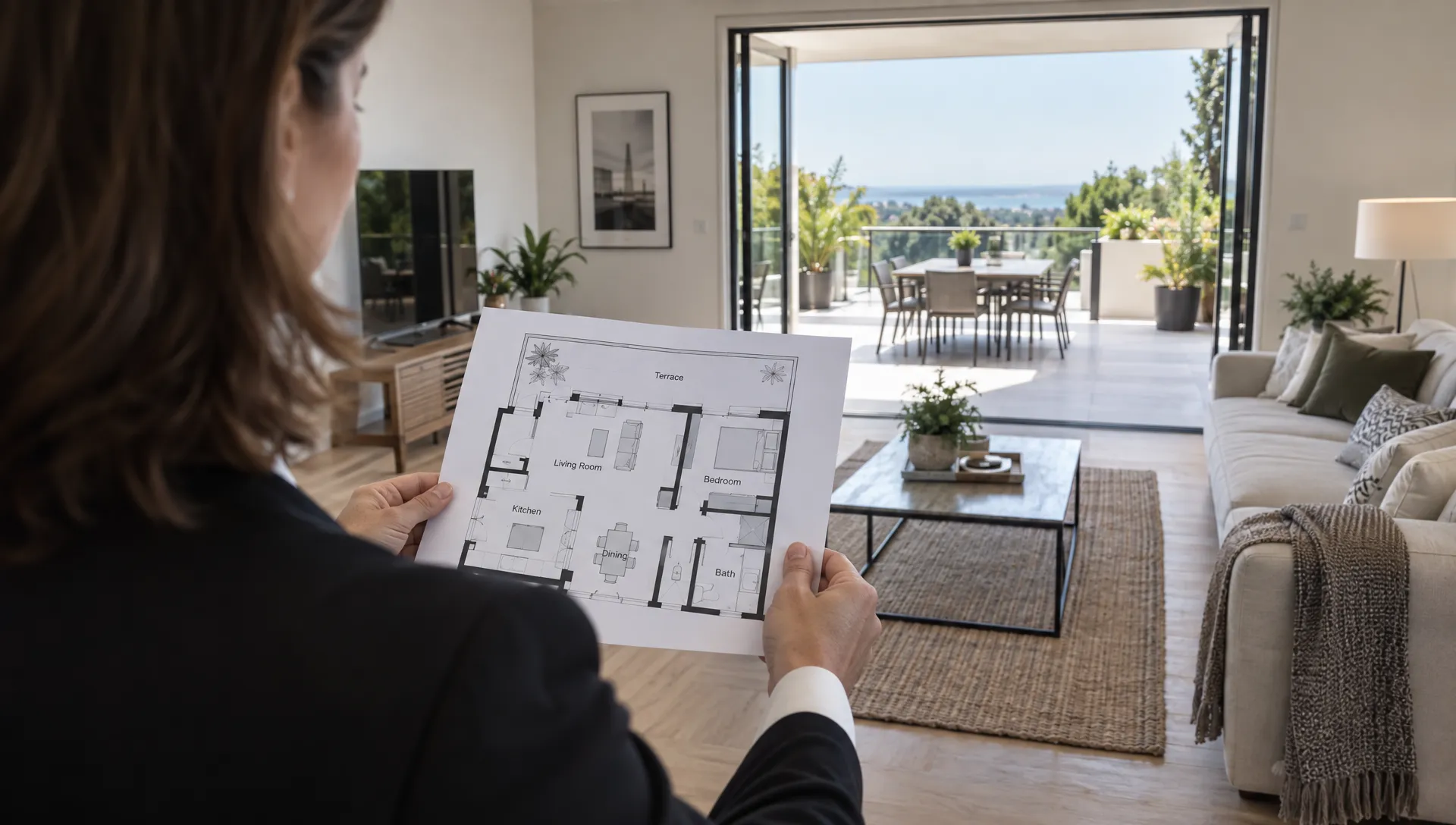
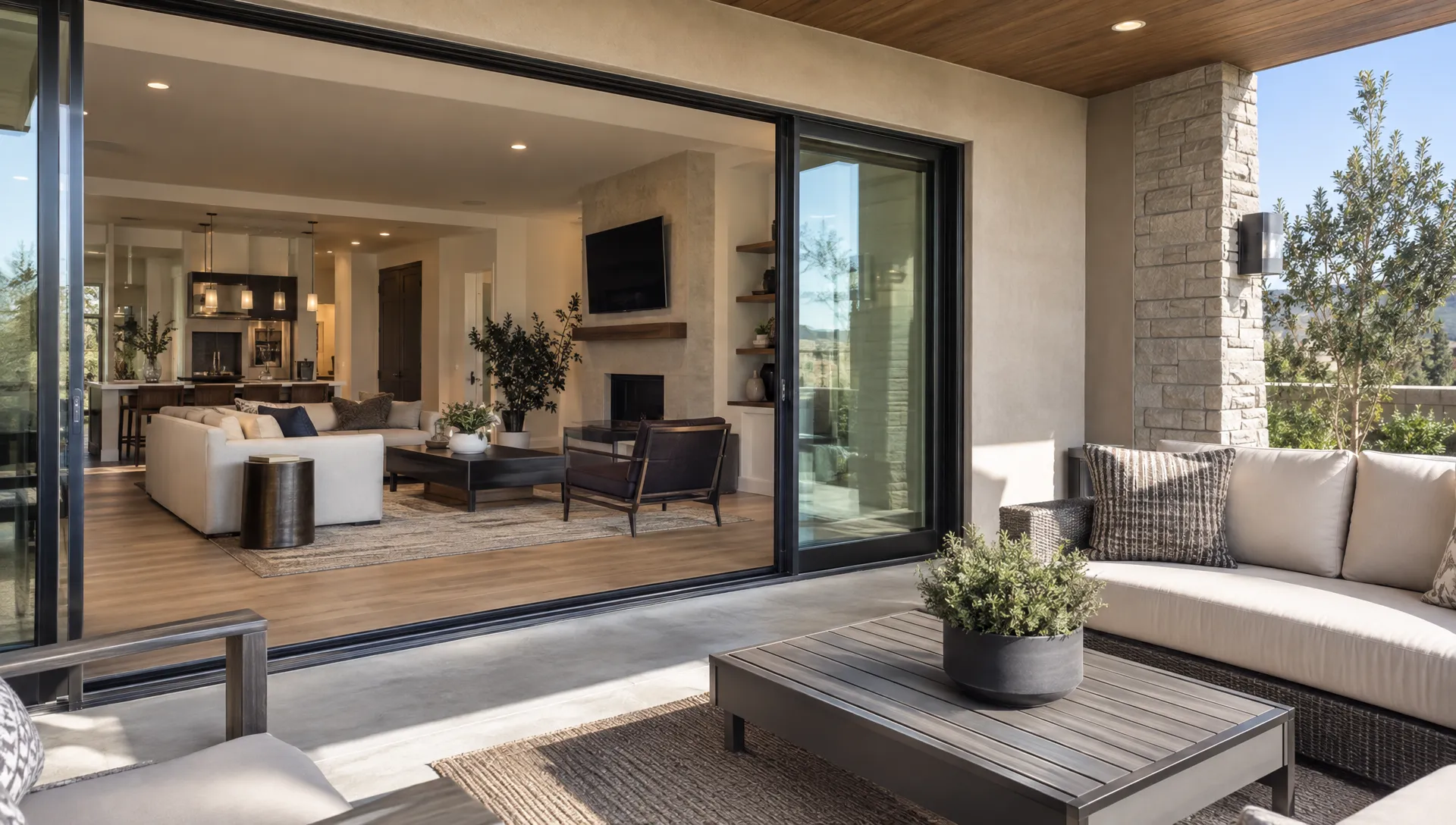
Consider a property with wide patio doors, an adjoining terrace and a kitchen near the living area. A gallery shows three separate features. A story connects them: the main living space extends outdoors, with the kitchen nearby when guests arrive.
That connection is useful because it explains how the spaces work together. It also creates a reason for the next image to appear. Every shot should either introduce the promise, prove it or resolve it. A beautiful photo that does none of those things can stay in the listing gallery.
Give reels for real estate one clear promise
Before choosing music or transitions, finish this sentence: “This video shows how the property makes ______ possible.”
The answer should describe something supported by the listing, such as bringing outdoor space into everyday use, keeping work and living areas separate or making efficient use of a compact layout.
Avoid trying to tell every story at once. Combining renovation details, parking, storage, outdoor space and neighborhood amenities in thirty seconds usually produces a compressed inventory, not a coherent narrative.
Choose the angle using three tests:
- Visible evidence: Can the photos actually demonstrate the benefit?
- Verified context: Do the floor plan and listing details support your interpretation?
- Meaningful distinction: Does this angle explain something buyers might miss in the gallery?
A room photographed with a desk does not automatically establish a dedicated office. A patio image does not prove privacy throughout the day. If the evidence is weak, choose another angle rather than making the narration carry an unsupported claim.
Use a promise, proof and payoff structure
For reels for real estate, a simple story structure is more useful than a complicated editing formula.
The promise gives viewers a reason to watch. “See how this living area opens onto the patio” is specific and testable. “Your dream home awaits” is neither.
The proof connects two or three images that demonstrate the promise. Show the living room, the doors and the patio in an order that makes their relationship understandable. Check the floor plan before implying that spaces connect.
The payoff explains why the sequence matters and offers a next step. That might be requesting the floor plan to understand the layout or arranging a showing to experience the indoor-outdoor connection.
This is not about inventing a lifestyle for the buyer. It is about making the property's actual characteristics easier to understand. Describe what the space enables without assuming who should live there.
Storyboard a 30-second reel before you edit
The following is an illustrative storyboard, not a performance benchmark. It assumes the listing photos and floor plan confirm a living room connected to a patio, with the kitchen nearby.
When planning reels for real estate, assign each image a job before deciding how long it stays onscreen.
| Approximate timing | Listing image | Story function | Suggested narration or text |
|---|---|---|---|
| 0–4 seconds | Living room with patio doors visible | Introduce the connection | “The living space does not stop at these doors.” |
| 4–9 seconds | Second angle showing the doors and seating area | Establish the layout | “Wide doors connect the main room to the patio.” |
| 9–14 seconds | Patio viewed from the doorway | Prove the transition | “Step outside to a separate outdoor seating area.” |
| 14–19 seconds | Kitchen showing its position near the living area | Add practical context | “The kitchen sits close to both spaces.” |
| 19–25 seconds | Wider patio view | Complete the benefit | “Together, they offer more than one place to gather.” |
| 25–30 seconds | Exterior photo with a concise closing overlay | Offer the next step | “Message ‘PATIO’ for the floor plan and showing options.” |
The sequence moves from an initial idea to visible evidence, then to a useful action. It does not need every bedroom or bathroom to accomplish that job.
The timing is adjustable. A complex image may need longer to read, while a redundant second angle may deserve no screen time at all. Keep brokerage branding and required disclosures readable rather than squeezing them into a fleeting final frame.
Write narration that explains what photos cannot
Good narration adds relationships, verified details or practical meaning. Weak narration labels objects viewers can already see: “Here is the kitchen. Here is the patio.”
For reels for real estate, write the voiceover after arranging the images. That makes it easier to keep each sentence attached to visual evidence.
Read the script aloud at a comfortable pace. If the words overrun the sequence, remove a claim or extend the video. Do not speed up the narration until it sounds like a disclaimer.
Use everyday language. “The kitchen connects directly to the dining area” is clearer than “A seamless culinary environment supports elevated entertaining.” Specificity makes the property memorable without inflating it.
Captions should preserve the meaning of the voiceover for viewers watching without sound. Short overlays can highlight a feature or next step, but they should not compete with full captions for the same space. Preview the finished video on a phone and check that text remains legible and clear of interface controls.
Let movement guide attention, not rewrite the property
A still photo can become more engaging through a restrained push-in, a crop that directs attention or a transition that connects related spaces. The movement should help viewers notice something that matters.
For example, slowly moving toward the patio doors reinforces the connection established by the script. An aggressive zoom into a decorative cushion does not, unless the furnishings are genuinely part of the story and included in the sale.
Be particularly careful with AI-generated camera movement. A rendered transition between two photos can suggest a continuous walkthrough even when the images do not establish the route. Inspect the output for altered windows, stretched rooms, disappearing fixtures and invented architectural details.
The strongest reels for real estate use motion to reveal evidence, not manufacture it. If a transition changes the apparent layout or obscures a defect, replace it with a straightforward cut.
A presenter is optional. If the property needs explanation or you want a recognizable introduction, consider how real estate avatars can make listing videos more personal. Keep the presenter from covering the feature being discussed.
Keep the story appealing and accurate
Storytelling does not give an agent permission to turn assumptions into facts. Confirm room uses, included fixtures, dimensions and access arrangements against reliable listing information before publishing.
Distinguish between what is visible, what is verified and what is merely suggested by styling. A staged dining table demonstrates one possible furniture arrangement. It does not establish how many people the room comfortably accommodates.
If you use virtual staging or materially altered imagery, disclose the changes clearly and follow applicable MLS, portal and local requirements. Decorative changes should not conceal condition issues or imply that furnishings are included when they are not.
Accuracy in reels for real estate also includes the language used to describe potential occupants. In the US, the Fair Housing Act prohibits discriminatory housing advertising. Describe property features rather than expressing preferences about who should live there. “Three bedrooms and a fenced yard” communicates facts without labeling the home for a particular household type.
Before publishing, also check rights to the photos and music, consent for any cloned voice or likeness and visible personal information in the images. Mirrors, family photographs and paperwork on counters deserve a closer look.
Publish to learn which story creates interest
Once the reel is live, assess whether viewers respond to its central idea, not just whether it collects views.
Watch for questions that indicate understanding: “Does the patio connect directly to the living room?” is useful feedback. So is a floor-plan request or a showing inquiry tied to the feature you highlighted. Record those responses alongside the platform metrics available to you, without assuming that every inquiry came from the video.
The useful cross-industry lesson in Elia Pay’s guide to social media for travel agencies is to combine engaging content with community interaction and performance review. For an agent, that means answering property questions and using those conversations to improve the next edit.
To refine reels for real estate, change one element at a time. Test a clearer opening or a more specific call to action while keeping the central story intact. Comparing unrelated properties will tell you less about whether the edit itself helped.
One listing can support several truthful angles without producing identical videos. After the indoor-outdoor story, a separate reel might explain the layout or storage. These additional real estate video ideas can help you identify worthwhile follow-up topics rather than reposting the same sequence.
Frequently asked questions
Can I make a compelling reel using only listing photos? Yes, provided the photos support a clear story. Add verified context through narration and captions, then use restrained movement to guide attention. Do not present simulated camera movement as evidence of a filmed walkthrough.
How many photos should I include? Use the fewest needed to establish the promise, prove it and provide a next step. The six-photo storyboard above is one example, not a rule. Similar angles should earn their place by showing new information.
Do reels for real estate need an agent or avatar onscreen? No. A property-led sequence with voiceover and captions can communicate the story. A presenter is useful when their explanation or recognizable presence adds value, but should not obscure the listing images.
What should the call to action offer? Offer something you can actually provide, such as the floor plan, full listing details or available showing appointments. Match it to the story instead of ending every video with a generic request to follow your account.
Turn the storyboard into a publishable video
Start with one listing, one verified benefit and a short sequence of supporting photos. Once the story works on paper, production becomes a more focused task.
Diane turns listing details and photos into marketing videos with AI narration, avatar presentation, cinematic editing and social media formats. Use those capabilities to produce your chosen story, then review the result for factual accuracy, readable captions and a clear next step before publishing.