
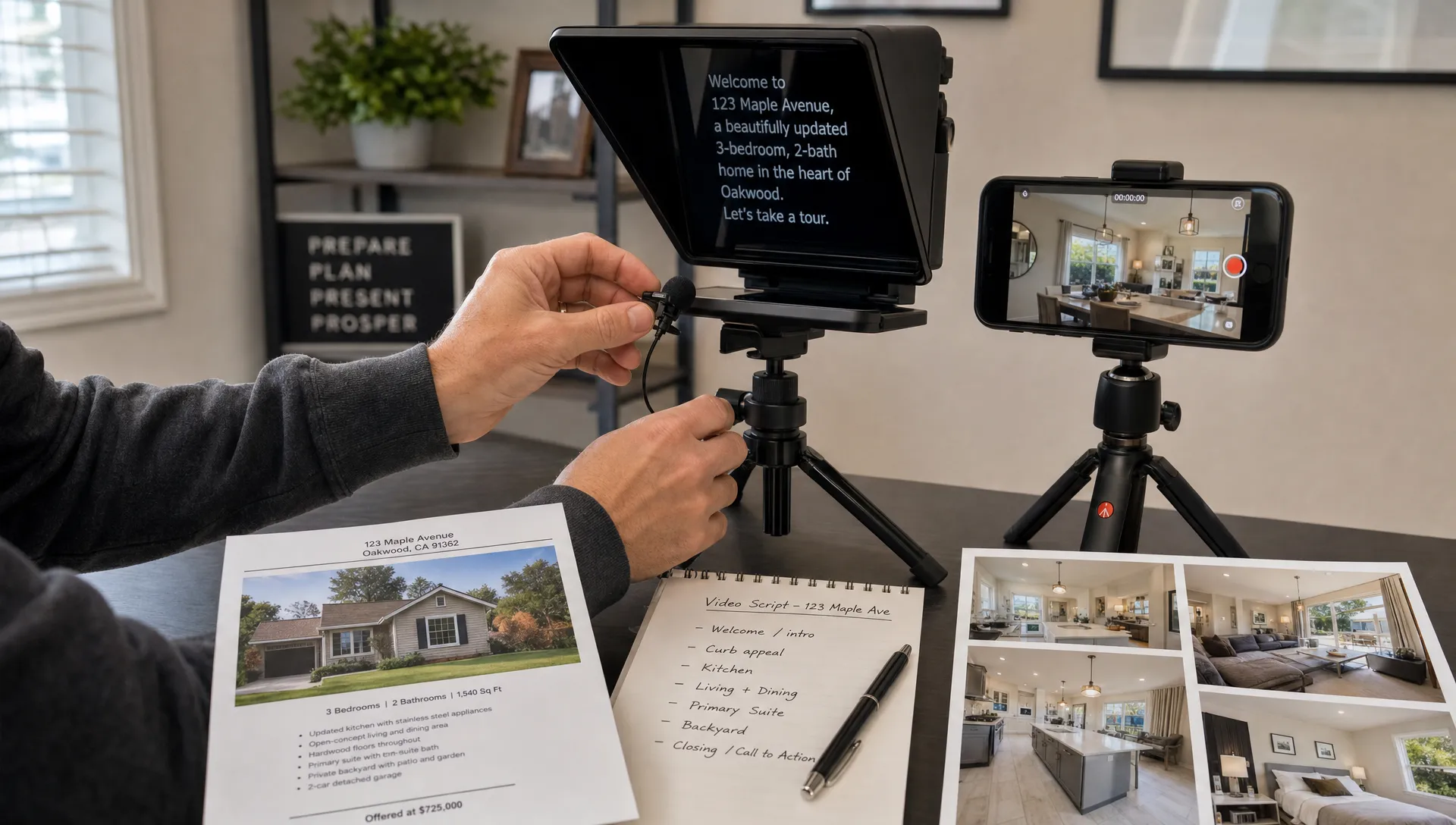
How Real Estate Avatars Make Listing Videos More Personal
Most listing videos are built around the property. That makes sense, but it also explains why so many of them feel interchangeable. A camera pans across the kitchen, glides through the living room, cuts to the garden and ends with a logo. The home may be beautiful, yet the video often lacks the human guidance buyers get during a strong in-person viewing.
A real estate avatar helps close that gap.
Instead of asking buyers to interpret a sequence of images on their own, an avatar gives the listing a presenter, a voice and a point of view. It can introduce the home, explain why certain features matter, guide attention toward practical details and make the next step feel natural. For independent agents and small agencies, that personal layer can make listing videos feel less like generic content and more like a guided conversation.
What is a real estate avatar?
A real estate avatar is a digital presenter used in property marketing videos. Depending on the workflow, it may look and sound like the agent, use an AI-generated presenter or combine an avatar with cloned narration in the agent's own voice.
In listing videos, the avatar does not replace the property. It frames it. The home remains the subject, but the avatar becomes the familiar guide who helps buyers understand the space faster.
That distinction matters. Buyers are not only looking for square footage and room counts. They are trying to answer practical questions: Does this home fit my routine? Can I picture mornings here? Is the layout right for my family? Is the neighborhood convenient? A calm, well-scripted avatar can help connect listing facts to those real buyer questions.
Why personalization matters in listing videos
Online property search is crowded. A buyer may compare ten homes in the same price range within a few minutes. Photos, portals and written descriptions all matter, but they often present information in a detached way. Video adds motion and flow, yet it can still feel impersonal if it is only a slideshow with background music.
Personalization gives the buyer a reason to remember the listing. It can come from the agent's voice, a warm introduction, a specific explanation of the home's strongest use case or a callout that feels relevant to the local market.
For example, compare these two approaches:
| Generic listing video | Avatar-led listing video |
|---|---|
| Shows the kitchen | Explains why the open kitchen works well for hosting or family routines |
| Shows the garden | Points out privacy, orientation or low-maintenance appeal |
| Shows the bedroom count | Clarifies how one room could work as a home office or guest room |
| Ends with a logo | Invites the buyer to book a viewing or ask for the floor plan |
The second approach feels more personal because it interprets the home for the viewer. It gives them context without making them dig through every listing detail alone.
How real estate avatars build trust before the first call
Trust usually starts before a buyer meets the agent. It begins with how clearly the listing is presented, how consistent the branding feels and whether the buyer senses that the agent understands the property.
A real estate avatar can support that trust in several ways.
First, it creates presence. A face or voice gives the listing a host, which is especially useful when the buyer is watching on social media, a property portal or an agency website. Even if the avatar appears only at the beginning and end of the video, it can make the content feel more guided.
Second, it makes expertise visible. Instead of simply showing a renovated bathroom, the avatar can explain that the renovation includes a walk-in shower, storage designed for daily use or finishes that match the rest of the home. These details are often buried in listing copy, but they feel more useful when spoken in context.
Third, it gives the agent a repeatable brand presence. For solo agents and small teams, appearing in every video can be hard. Schedules change, properties are spread across neighborhoods and recording polished footage takes time. An avatar lets the agent maintain a consistent presence without filming a new on-camera segment for every listing.
The best use cases for avatar-led listing videos
A real estate avatar works best when it has a clear role. It should not talk over every shot or repeat what buyers can already see. The goal is to add context at the moments where buyers need guidance.
Strong use cases include:
- Listing introductions: Open with the property type, location and the main reason buyers should pay attention.
- Feature explanations: Highlight practical details such as storage, natural light, layout flow, recent upgrades or outdoor usability.
- Neighborhood context: Add a brief note about transport, schools, shops, lifestyle or commute patterns when those details are relevant and compliant.
- Multilingual presentations: Use narration in more than one language when a listing targets international, relocation or cross-border buyers.
- Social media reels: Add a human opening or closing to make short-form content feel less anonymous.
If you are already exploring ways to turn listing assets into more engaging content, this approach pairs well with broader AI video workflows. Diane's guide on how AI for real estate turns listings into scroll-stopping videos explains how listing data, photos and narration can become a stronger video asset.
What an avatar can say that photos cannot
Photos show what is there. A good avatar explains why it matters.
A photo of a bright living room may catch attention, but narration can add meaning: the south-facing windows keep the room bright through much of the day, the layout creates a natural dining zone or the sightline to the terrace makes the space feel larger.
A photo of a spare bedroom may look ordinary, but the avatar can frame it as a nursery, guest room, dressing room or quiet workspace. That kind of interpretation helps buyers imagine real life in the home, not just the current furniture arrangement.
This is where avatar-led videos can outperform static listing copy. A written description has to compete with photos, map views and portal filters. A short narrated video can deliver the most important interpretation in under a minute.

How to keep avatar videos natural, not artificial
The biggest risk with real estate avatars is not the technology. It is bad scripting. If the script sounds stiff, overpromotional or too generic, the avatar will feel artificial no matter how polished the visuals are.
A good avatar script should sound like a helpful agent talking to a serious buyer. It should be specific enough to feel tailored to the property and concise enough to respect the viewer's time.
Use these principles:
- Start with the buyer's reason to care: Lead with the strongest practical or emotional hook, not a list of specifications.
- Use plain language: Say “a quiet workspace” instead of “a flexible lifestyle environment.”
- Connect rooms to use cases: Explain how the layout supports daily life, entertaining, remote work or downsizing.
- Avoid exaggerated claims: Do not call every listing “rare,” “stunning” or “perfect.” Buyers tune out generic praise.
- End with one next step: Ask viewers to book a viewing, request more details or save the listing.
If the avatar is based on the agent's voice or face, consistency matters even more. The video should reflect how the agent actually speaks to clients. That does not mean it must be casual, but it should feel believable.
Agent avatar, AI avatar or voice clone?
Different agents will use avatars in different ways. The right option depends on brand, comfort level, listing volume and target audience.
| Avatar format | Best fit | Why it feels personal |
|---|---|---|
| Agent likeness with narration | Agents who want a recognizable personal brand | Buyers see and hear the person behind the listing |
| AI avatar presenter | Agencies that need consistent video output across many listings | The brand has a polished host even when agents are busy |
| Voice cloning with property footage | Agents who prefer not to appear on screen often | The listing keeps the agent's voice while focusing on the home |
| Multilingual avatar narration | Listings marketed to buyers in multiple languages | Viewers receive the tour in a language that feels accessible |
None of these is automatically better. A luxury listing may benefit from a calm, premium presenter style. A family home may work better with a warm, approachable voice. A city apartment may need a faster, social-first format. The avatar should match the property and the audience.
Where avatars fit in the listing marketing funnel
Avatar videos are not just for social media. They can support several stages of the buyer journey.
At the awareness stage, a short vertical reel can introduce the listing with a strong hook. On a listing page, a slightly longer video can explain the layout and key features. In follow-up messages, a personalized video can help an interested buyer revisit the home before booking a viewing.
This matters because property discovery is becoming more fragmented. Buyers still use portals, but they also find homes through Instagram, TikTok, agency websites, email alerts, WhatsApp messages and increasingly through AI-assisted search experiences. For agencies thinking about how their brand appears in AI-generated answers, tools such as CapstonAI's AI visibility and optimization platform can help monitor how assistants mention a business and where visibility gaps may exist.
For listing videos themselves, the practical goal is simple: make each property easy to understand wherever the buyer first encounters it. Diane's article on how to turn property listings into videos buyers want to watch is a useful companion if you want to refine hooks, structure and pacing.
Compliance and authenticity still matter
Real estate is a trust-based business, so avatars should be used transparently and responsibly. An avatar should not imply that the agent has personally inspected something they have not verified. It should not exaggerate distances, school access, renovation quality or neighborhood benefits. Any claim that would need care in listing copy also needs care in video narration.
A few practical rules help keep avatar-led content credible:
- Use verified listing details from your property file.
- Keep descriptions accurate and avoid unsupported superlatives.
- Make sure visuals match the rooms being discussed.
- Follow local advertising, fair housing and disclosure rules.
- Review every AI-generated script before publishing.
A personal video is only valuable if buyers can trust it. The avatar may create warmth, but accuracy creates confidence.
A simple workflow for creating avatar listing videos
For busy agents, the workflow has to be fast. If making a personalized video takes half a day, it will only happen for premium listings. The real advantage of AI video is that it can make personalization repeatable.
A practical workflow looks like this:
- Start with the listing assets: Gather the photos, listing description, address details, floor plan notes and any verified feature highlights.
- Choose the buyer angle: Decide whether the video is selling space, location, lifestyle, renovation quality, outdoor living or investment potential.
- Draft a short avatar script: Keep it focused on three to five meaningful points rather than every detail.
- Select the avatar and voice: Use your face, your voice or an AI presenter depending on the property and brand style.
- Create versions by channel: Use vertical formats for social, horizontal or embedded formats for websites and concise versions for messaging.
- Publish and review performance: Track views, saves, inquiries and viewing requests so future scripts improve.
Diane is built around this kind of real estate workflow. It can turn property listings, photos and details into narrated videos with AI avatars, voice cloning, multilingual support, cinematic editing, branding and social formats. For agents who need polished output quickly, that reduces the gap between “this listing needs video” and “this listing has a video ready to publish.”
If speed is your main bottleneck, the guide on creating real estate videos for marketing in minutes goes deeper into building a faster production process.
Common mistakes to avoid
A real estate avatar can make a listing feel more personal, but only if the execution supports the buyer's decision. Many weak avatar videos fail for predictable reasons.
One common mistake is making the avatar the star. The presenter should guide the tour, not compete with the property. Use the avatar strategically at the opening, for transitions or in the closing rather than covering the entire screen for too long.
Another mistake is using the same script structure for every home. Buyers can sense when narration is templated. Even a short custom detail, such as “the second bedroom is set away from the living area, which is useful for guests or remote work,” can make the video feel more considered.
A third mistake is ignoring the viewing context. A social reel may need captions, a stronger first three seconds and a direct CTA. A website video can be slower and more explanatory. A WhatsApp follow-up video should be concise and practical.
Finally, do not publish without reviewing. AI can accelerate production, but the agent remains responsible for the final message.
How avatars help small teams look consistent
Large agencies often have brand systems, content teams and production support. Independent agents and small offices usually do not. A real estate avatar can help level that gap by making video presentation more consistent across listings.
That consistency has real marketing value. When every video uses a similar tone, visual format, logo treatment and CTA, buyers begin to recognize the agent's content. Sellers also notice. A polished avatar-led listing video can strengthen your listing presentation because it shows how you will market the property after you win the mandate.
For agency owners, avatars can also reduce dependency on individual filming schedules. Negotiators can still personalize scripts and listing angles, while the video format remains aligned with the agency brand.
Frequently Asked Questions
What is a real estate avatar used for in listing videos? A real estate avatar is used to present, narrate or guide a property video. It can introduce the home, explain key features, add neighborhood context and invite buyers to take the next step.
Do avatars make listing videos feel less authentic? They can if the script is generic or overproduced. When the narration is accurate, specific and aligned with the agent's real tone, an avatar can make the video feel more personal rather than less authentic.
Should I use my own face or an AI avatar? Use your own likeness if your personal brand is central to your business. Use an AI avatar if you need a consistent presenter across many listings or prefer to keep attention on the property while still adding a human layer.
Can avatar videos help with international buyers? Yes. Multilingual avatar narration can make a listing easier to understand for buyers who prefer another language, especially for relocation, investment or cross-border property searches.
How long should an avatar-led listing video be? For social media, 30 to 60 seconds is often enough. For a property page or follow-up message, a slightly longer version can work if it adds useful detail and stays focused.
Make your listing videos feel more human at scale
Personal listing videos do not have to mean filming yourself at every property or hiring a production team for every new instruction. With the right real estate avatar, agents can add presence, guidance and trust to listing videos while keeping production fast.
Diane helps real estate agents and agencies turn listing information into ready-to-publish videos with AI narration, avatars, voice cloning, multilingual support, cinematic editing and branded social formats. If you want your next listing video to feel more like a guided viewing and less like a slideshow, start with a clear buyer angle, add a human presenter and let the technology handle the heavy production work.