
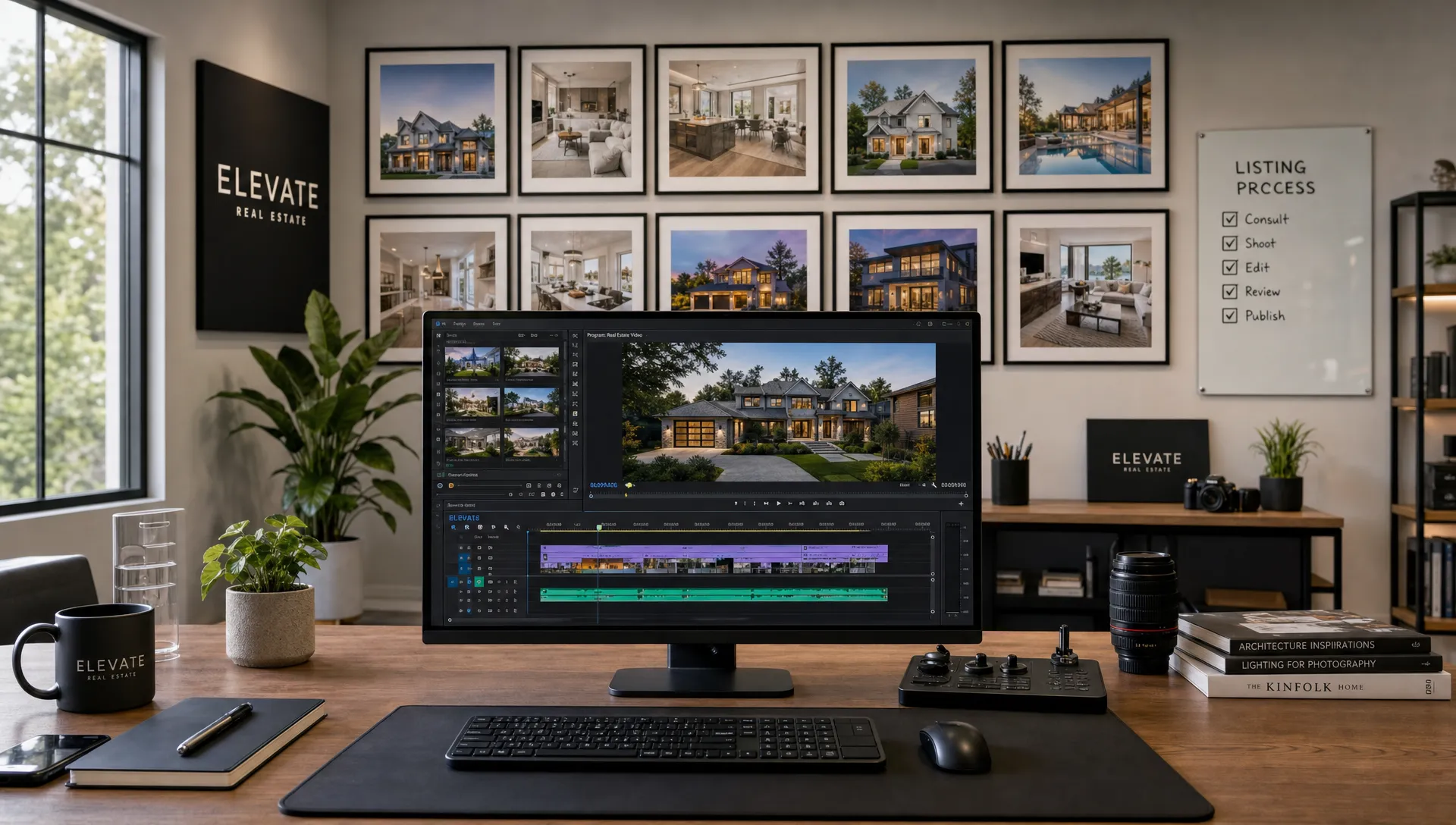
Using AI in Real Estate for Better Listing Video Workflows
A fast listing launch now has to do more than publish photos and a description. Buyers expect motion, narration, vertical formats and enough context to decide whether a showing is worth their time. For independent agents and small agencies, using AI in real estate is no longer only about writing listing copy. It can remove the most repetitive parts of video production, from turning property details into a script to preparing a reel for Instagram, TikTok, YouTube Shorts or listing portals.
The goal is not to replace your judgment as an agent. The goal is to create a cleaner workflow, so every listing gets a professional video without forcing you to spend hours scripting, recording, editing and resizing content for each channel.
Why using AI in real estate improves listing video workflows
Traditional listing video production often breaks down because it depends on too many manual handoffs. Someone writes a script, someone records the voiceover, someone edits the photos and clips, someone exports multiple versions, then someone has to post it. If you are a solo agent, that someone is usually you.
AI changes the workflow because it can turn listing inputs into video outputs faster. A platform like Diane, for example, can use listing details, photos and branding elements to create narrated property videos with AI avatars, voice cloning, multilingual support, virtual staging and social media formats. The practical advantage is simple: you can move from raw listing material to a ready-to-publish reel in minutes rather than treating every property video as a fresh production project.
The real bottleneck is not creativity, it is repeatability
Most agents already know what makes a useful listing video. Show the strongest spaces first, explain the layout clearly, mention the lifestyle benefits and make the next step obvious. The hard part is doing that consistently across every listing, especially when you are managing showings, seller updates, negotiations and lead follow-up.
In practice, using AI in real estate works best when it supports a repeatable process. You still decide the positioning, the key selling points and the compliance boundaries. AI helps you turn those decisions into a polished video faster.
| Workflow step | Manual approach | AI-assisted approach |
|---|---|---|
| Script creation | Write from scratch for each property | Generate a draft from listing details, then edit for accuracy |
| Narration | Record, rerecord and clean up audio | Use AI narration, voice cloning or an avatar presentation |
| Editing | Arrange visuals, transitions and captions manually | Create a cinematic draft from photos and listing assets |
| Formatting | Export separate versions for each channel | Prepare social-ready aspect ratios more quickly |
| Launch | Wait for multiple production tasks to finish | Publish closer to the listing going live |
Build the workflow before you make the video
Better AI video output starts with better input. Before opening any tool, gather the facts and assets you would normally need for a buyer-focused presentation. This keeps the video accurate, reduces rewrites and helps you avoid generic copy.
A strong listing video brief should include the property type, location context, room count, standout features, recent updates, outdoor spaces, parking details, lifestyle angle and the call to action you want viewers to take. It should also include any limits, such as features you cannot claim, neighborhood details that need careful wording or seller preferences around privacy.
If you want a wider view of how AI fits into the launch process beyond video alone, Diane has a useful companion guide on AI for real estate marketing that saves time on every launch.
Start with a buyer-centered video structure
A listing video does not need to show every corner of the home. It needs to help the right buyer understand why the property deserves a closer look. That usually means opening with the strongest visual, moving into the core layout, highlighting the most distinctive features and ending with a clear viewing prompt.
A common mistake with using AI in real estate is treating the generated script as the final message. The first draft should be a base, not the finished voice of the listing. Review it the way you would review a brochure before it goes to print. Remove filler, check every fact and make sure the benefits match the likely buyer profile.
For example, a downtown condo video might emphasize walkability, natural light, storage and a low-maintenance lifestyle. A family home might focus on room flow, garden space, schools only when properly and legally referenced and flexible areas for work or guests. The AI can help assemble the story, but you choose the angle.
Turn listing assets into a repeatable production system
Once your inputs are ready, the workflow becomes much easier to standardize. The aim is to create a process you can reuse whether you are marketing a starter condo, a suburban home or a premium property.
Import, organize and verify the listing details
If your platform supports listing import from portals, start there. Importing structured data reduces copying and pasting, especially when you are working across multiple listings. Still, you should verify every imported detail before the script is generated. Square footage, price, room counts, taxes, HOA details and availability can change quickly.
This verification step matters because AI can make a video faster, but it should not become the source of truth. Your MLS data, seller disclosures, brokerage standards and local rules remain the final authority.
Generate the script and narration
The script should sound natural, concise and specific. Avoid phrases that could apply to any property, such as beautifully appointed throughout or must-see gem, unless you add details that prove the claim. A good AI-assisted script should translate listing facts into buyer-relevant benefits.
When using AI in real estate for video narration, decide whether the listing needs your own voice, a cloned voice, an AI voice or an avatar-led presentation. Your own voice can feel personal for relationship-driven markets. An avatar can help create consistency across an agency or support multilingual versions. AI narration can be useful when speed matters and you need a clean, professional read.

Edit for clarity, not just polish
Cinematic transitions and branded motion can make a listing feel more premium, but clarity should come first. Buyers need to understand how the property flows. If the video jumps from the kitchen to the exterior to a bedroom to the living room without logic, it may look polished and still confuse viewers.
A practical sequence often works better: exterior or hero interior, main living area, kitchen, primary bedroom, additional rooms, outdoor space, location or lifestyle context, then call to action. For a short vertical reel, compress that structure rather than abandoning it.
If you are comparing tools for this part of the process, this guide on how to choose a real estate platform for listing video explains what to look for before adding another app to your stack.
Quality control still belongs to the agent
AI can create the draft, but the agent or agency should own the final review. That review protects your reputation, your seller relationship and your compliance standards.
Check that the video accurately represents the property, does not overstate renovations, avoids unsupported neighborhood claims and uses fair, inclusive language. Confirm that any virtual staging is not misleading and that the final video aligns with your brokerage policies. If the listing has special conditions, such as tenant occupancy, privacy concerns or restricted showing times, keep those details out of public-facing video unless they are appropriate to share.
The best operational benefit of using AI in real estate is speed with control. You should be able to make a draft quickly, then apply professional judgment before anything goes live.
Review playback across the channels buyers actually use
A listing video may look good on your laptop but feel cramped on a phone, slow on a weak connection or awkward on a living room TV. Before publishing, preview the video in the formats you plan to use. Check captions, cropping, logo placement, audio level and whether the first three seconds communicate enough to stop a viewer from scrolling.
Consumer expectations are shaped by streaming platforms as much as by property portals. If you want a quick reference for how resolution, devices and playback setup affect viewing quality, this guide to 4K streaming device compatibility is a useful reminder that the viewing experience depends on more than the file itself.
Create channel-specific versions without rebuilding the video
One reason agents skip video is that one asset rarely fits everywhere. A horizontal listing tour may work on YouTube or a property page, but it will not perform well as a vertical reel without thoughtful reframing. A square feed post may need captions that are larger and simpler than a website video.
AI-assisted tools can help by generating social media formats from the same listing assets. That makes it easier to create a vertical teaser, a slightly longer property walkthrough and a version with branding for the agency or team.
Match each format to one job
Do not make every version do everything. A short vertical reel should earn attention and drive clicks or messages. A listing page video should answer enough questions to qualify the buyer. A seller update video might demonstrate marketing activity and show that the launch is moving.
This is where using AI in real estate can save real time, because the core listing story can be adapted instead of recreated. You can keep the same facts and brand style while changing the pacing, length and call to action for each channel.
For a deeper look at how video supports buyer action, see Diane's guide to video marketing for real estate agents that drives viewings.
A practical AI listing video workflow for agents
You do not need a complex production department to make this work. Start with a simple, repeatable workflow and improve it after a few launches.
Use this as a baseline:
- Gather listing data, photos, property highlights and seller-approved details.
- Choose the buyer angle, such as space, convenience, lifestyle, investment or move-in readiness.
- Generate a script from the listing details, then edit for accuracy and tone.
- Create the video with narration, avatar or branded AI presentation.
- Review the visual sequence, captions, compliance language and calls to action.
- Export versions for the channels you will actually use.
- Track performance and reuse what worked on the next listing.
Keep the workflow short enough that you will actually follow it. If the checklist becomes too detailed, agents will go back to posting photos only.
Track results that connect to listing outcomes
Views alone do not tell you whether a listing video worked. A video can attract thousands of casual viewers and produce few qualified inquiries. For real estate, better signals include saves, shares, direct messages, listing page visits, showing requests, open house attendance and seller feedback.
Using AI in real estate also gives you the chance to test small creative changes without rebuilding the whole asset. You can compare a lifestyle-led opening against a feature-led opening, or test whether an avatar introduction performs better than a voiceover-only version. Keep the tests simple, because the goal is faster learning, not a complicated analytics project.
Common mistakes to avoid
The biggest mistake is publishing AI output without human review. Even a good tool can create phrasing that sounds too broad, too promotional or too detached from the actual property. Another mistake is overproducing the video until it feels like an ad for the agent rather than a useful preview for the buyer.
Agents should also avoid using one generic template for every home. Templates create efficiency, but the story still needs to match the listing. A luxury waterfront property, a compact city apartment and a fixer-upper need different pacing, language and visual priorities.
Finally, do not let video delay the launch. The purpose of using AI in real estate is to reduce friction. If the video workflow becomes another bottleneck, simplify it: shorter scripts, fewer versions, clearer templates and a tighter review step.
Frequently Asked Questions
How can agents start using AI in real estate for listing videos? Start with one listing and one workflow. Gather the property details, generate a draft script, create a short narrated video, review it carefully and publish it on the channel where your audience is most active.
Will AI listing videos replace professional videographers? No. Professional videographers are still valuable for premium shoots, complex properties and brand campaigns. AI is most useful for making polished listing video production faster and more consistent across everyday launches.
What should agents always review before publishing an AI-generated listing video? Review property facts, pricing, room counts, captions, visual order, compliance language, virtual staging accuracy, branding and the call to action. The final video should match the listing and your brokerage standards.
Can AI help with multilingual real estate videos? Yes, if your platform supports multilingual video creation. This can help agents reach more buyers, but translations should still be reviewed for accuracy, local wording and property-specific nuance.
Make listing video a habit, not a last-minute task
A strong listing video workflow should help you launch faster, look more consistent and give buyers a clearer reason to book a showing. AI is useful when it turns the repetitive parts of production into a system while leaving strategy, accuracy and client trust in your hands.
If using AI in real estate is part of your next listing marketing upgrade, Diane can help turn property listings, photos and details into narrated, branded videos ready for the channels where buyers are already watching.