
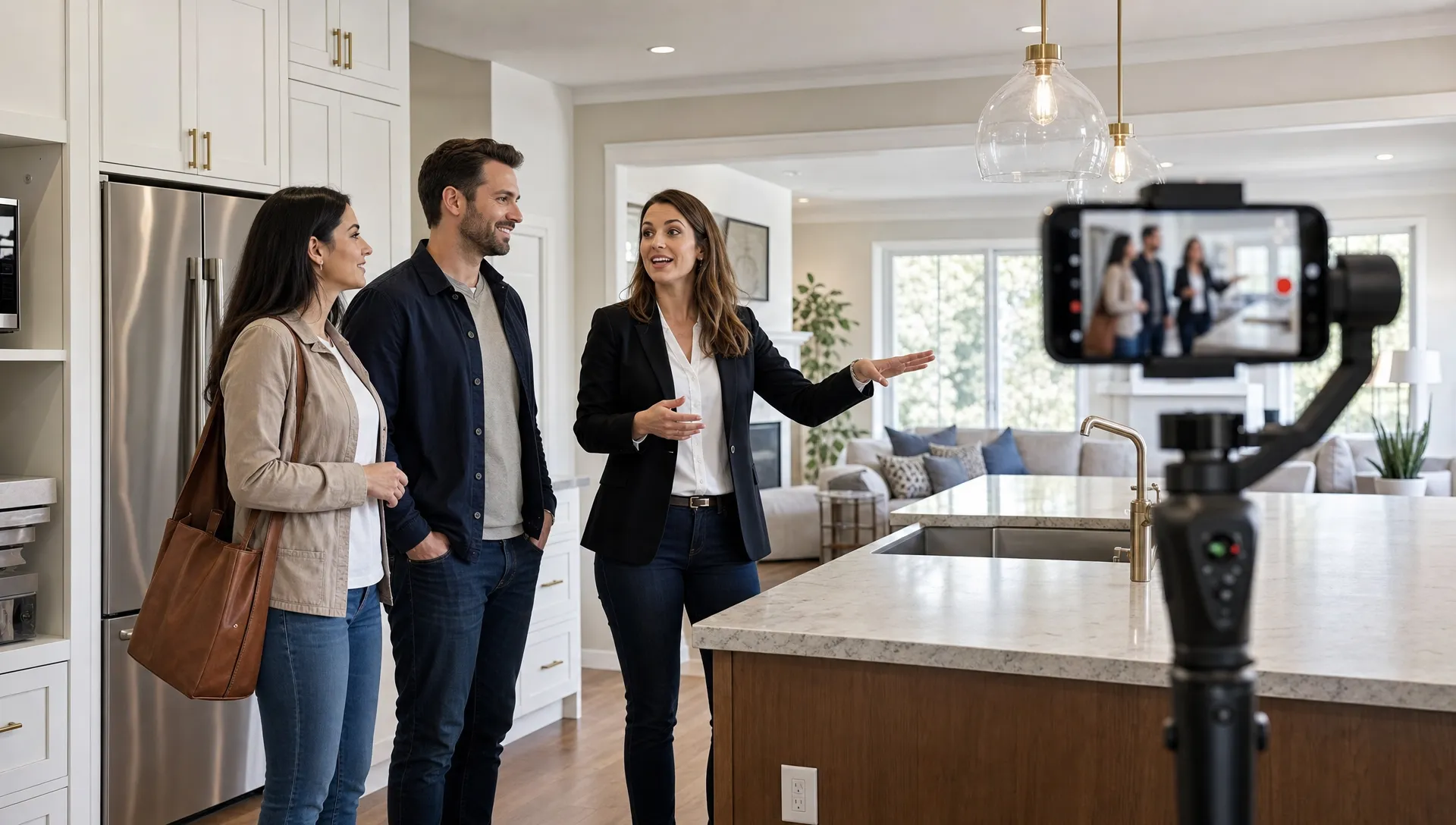
Video Marketing for Real Estate Agents That Drives Viewings
Most buyers decide whether a home is worth seeing before they ever message the agent. That is why video marketing for real estate agents should not be treated as a branding extra or a social media experiment. Done well, it gives buyers enough confidence, context and emotional pull to take the next step: booking a viewing.
The goal is not to collect the most likes. It is to move qualified people from passive scrolling to a concrete action, such as requesting a tour, replying to a follow-up or saving the property for a serious conversation. That requires a different kind of video than a generic slideshow with music.
Why Video Marketing for Real Estate Agents Should Be Built Around Viewings
A property video has one commercial job: reduce uncertainty. Photos can show individual rooms, listing copy can state the facts and floor plans can clarify dimensions. Video connects those pieces into a lived experience. It helps buyers understand how the entrance flows into the living space, whether the kitchen feels social, how natural light moves through the rooms and whether the property feels worth visiting in person.
For independent agents and agency owners, this matters because viewings consume time. A good video should attract the right people and filter out the wrong ones. If a buyer dislikes the layout, location or garden size, it is better for them to learn that before you spend an hour preparing and hosting a visit.
The strongest approach to video marketing for real estate agents is therefore not “make the listing look beautiful at all costs.” It is “make the right buyers feel informed enough to act.” Beauty helps, but clarity drives appointments.
Start With the Buyer Questions That Block a Viewing
Before recording or generating a video, list the doubts a buyer might have after reading the listing. These questions often decide whether someone contacts you or moves on to the next property.
Common viewing blockers include uncertainty about room proportions, noise, natural light, storage, renovation work, parking, commute time and whether the photos have exaggerated the space. Your video should answer the top three to five doubts directly.
For example, a city apartment video should not spend 15 seconds on a coffee table vignette if buyers are likely to care more about storage, sound insulation and distance to transport. A family home video should help viewers imagine daily routines: school mornings, weekend meals, garden use and where guests would sleep.
Used this way, video marketing for real estate agents becomes less about decoration and more about decision support. That is what makes it more likely to produce qualified viewing requests instead of vague interest.
Translate those questions into a shot plan
A practical shot plan keeps the video focused. Instead of filming everything, prioritize scenes that help a buyer decide.
| Buyer question | Video moment to include | Why it helps drive viewings |
|---|---|---|
| How does the home flow? | Entrance to living area, then kitchen and main bedroom | Shows layout better than photos alone |
| Is the space bright? | Wide shots near windows at a realistic time of day | Builds trust by showing natural light honestly |
| What makes this property different? | One or two standout features, such as terrace, view or renovation | Gives buyers a reason to book quickly |
| Are there tradeoffs? | Clear mention of compact rooms, stairs or street-facing windows when relevant | Qualifies buyers and prevents wasted visits |
| What should I do next? | Spoken and visual call to action | Turns attention into a viewing request |
A shot plan also helps agents move faster. When every listing follows a familiar structure, you can produce consistent videos without reinventing the campaign each time.
Build a Listing Video Around a Simple Viewing Journey
The best property videos usually follow the same mental path a buyer takes before booking. They notice the home, understand the fit, imagine themselves inside and then decide whether to act.
For most listings, a 45 to 90 second video is enough for social channels. Longer walkthroughs can work for high-value homes or complex layouts, but the first version should respect the viewer’s attention. If the opening does not feel relevant within the first few seconds, the rest of the video may never get watched.
For solo listing specialists, video marketing for real estate agents works best when each video has one clear promise. Not “beautiful two-bedroom apartment,” but “a renovated two-bedroom apartment within walking distance of the station, with a balcony large enough for outdoor dining.” Specificity attracts serious buyers.
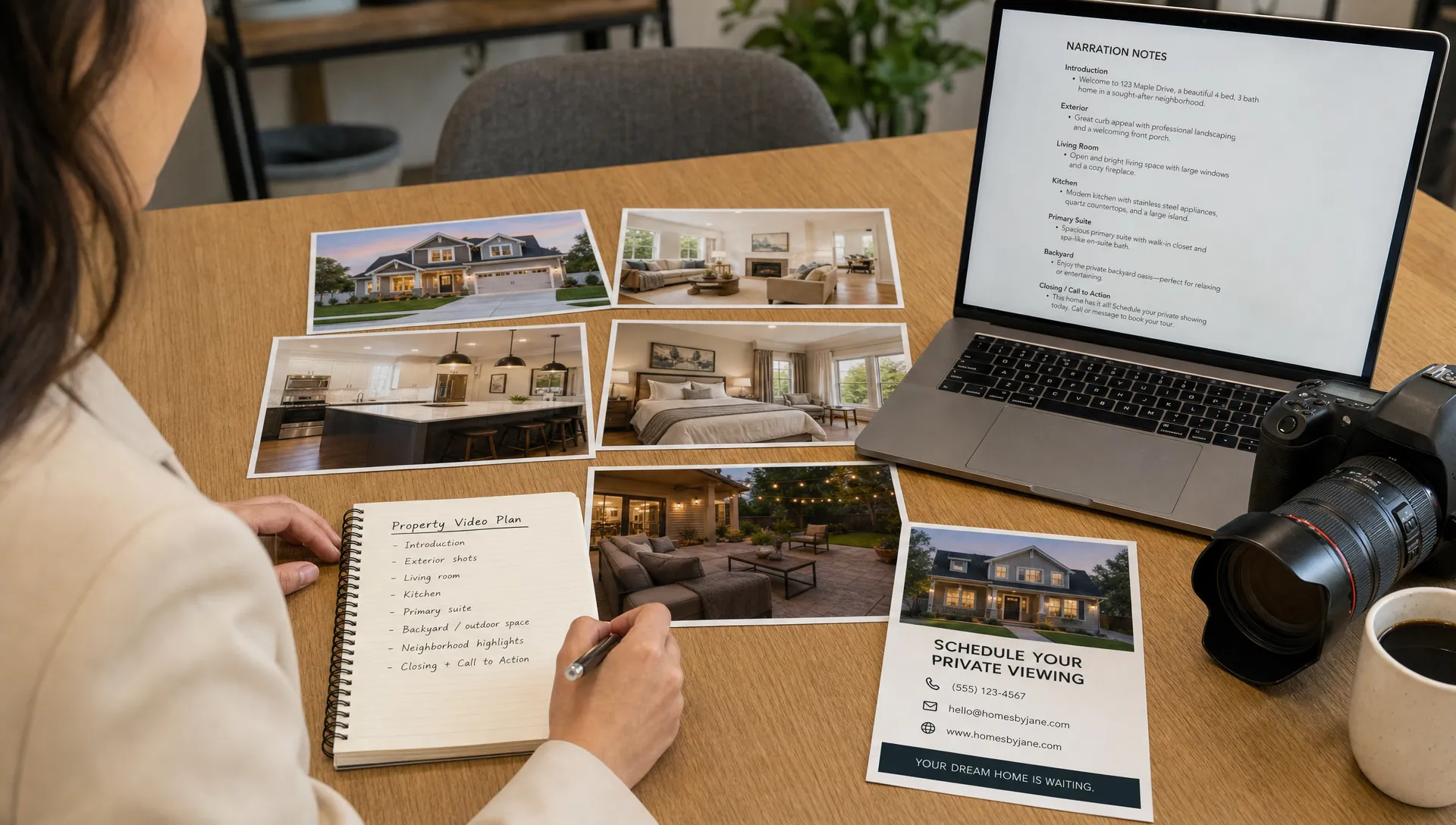
Use a four-part structure
A simple structure helps you keep the video persuasive without making it feel scripted or overproduced.
- Hook: Lead with the strongest buyer benefit, not the address alone.
- Context: Show the exterior, neighborhood clue or entry sequence so viewers know where they are.
- Experience: Walk through the rooms in a logical order and explain how the property lives.
- Action: Tell viewers exactly how to book a viewing or request details.
This structure works for filmed walkthroughs, narrated slideshows, AI avatar videos and short reels. The format can change, but the buyer journey stays the same.
Make the narration useful, not decorative
Narration should add information the viewer cannot get from the visuals alone. Avoid repeating obvious facts like “this is the living room” while showing the living room. Instead, say what matters: “The living room faces southwest, so this is the brightest space in the apartment from mid-afternoon onward.”
A good voiceover also creates momentum. It should guide the viewer from one reason to care to the next, then make the viewing feel like the natural next step.
Publish Where Buyers Already Compare Listings
A strong video loses power if it sits in the wrong place. Buyers rarely evaluate a home through one channel. They move between portals, social feeds, agent websites, email alerts, Google searches and saved messages from friends or partners.
Your distribution plan should match that behavior. Use the listing page for facts and formal details, then use video to make the property easier to understand and remember. If you want a deeper breakdown of how the two work together, Diane has a guide on how to use video alongside real estate listing sites without treating portals and social media as competing channels.
Across every channel, video marketing for real estate agents should create a consistent path back to the viewing. That means the caption, video ending, landing page and follow-up message should all point to one next step.
Adapt the same listing story to each channel
You do not need a completely new concept for every platform. You need versions that fit how people behave there.
A vertical reel can lead with a lifestyle hook and a quick room sequence. A portal video can be more practical, showing layout and finishes. An email video thumbnail can focus on one compelling feature, such as a garden, view or renovated kitchen. A follow-up video can answer a specific objection raised by the buyer.
The message stays consistent, but the edit changes. This saves time and improves recognition because buyers see the same property story in different contexts.
Turn Video Views Into Viewing Requests With Follow-Up
A view is not a lead until there is a next action. This is where many agents lose momentum. Someone watches a property reel, taps through the photos, maybe asks a casual question and then disappears because the follow-up is slow or generic.
The follow-up layer is where video marketing for real estate agents becomes a sales process. If a buyer watches or engages with a listing video, your next message should connect their attention to a viewing slot.
For example, instead of replying, “Let me know if you want more information,” you could say, “Since you looked at the apartment video, would you like to see it on Thursday at 5:30 or Saturday morning? The balcony and light are much easier to judge in person.” This moves the conversation forward without pressure.
Connect video activity to your CRM
Agents who manage multiple listings need a clean way to track who watched, asked, saved, booked and no-showed. A CRM makes this easier because every inquiry can be attached to a stage in the viewing pipeline. If you are comparing pipeline tools, this overview of Pipedrive as a CRM platform for sales teams gives useful context on why visual pipeline management became popular with small and mid-sized teams.
The exact tool matters less than the habit. Every video lead should have a next step, a reminder and a clear status. Otherwise, your best content creates interest that no one converts.
Diane also covers this appointment-focused angle in more detail in its guide on how real estate sales agents can win more appointments with video.
Measure the Metrics That Predict Viewings
Likes and impressions can be useful, but they are not the main performance indicators for a listing video. A video with modest reach can outperform a viral clip if it attracts buyers who actually book.
Track metrics that sit closer to the viewing decision. These numbers help you understand whether your video is creating qualified intent or just attention.
| Metric | What it tells you | How to improve it |
|---|---|---|
| Watch time | Whether the opening and pacing hold attention | Lead with the strongest buyer benefit and cut filler |
| Saves or shares | Whether buyers see the property as worth revisiting | Include practical details buyers discuss with others |
| Click-through rate | Whether viewers want the full listing or booking page | Make the next step visible in caption and final frame |
| Inquiry quality | Whether questions come from realistic buyers | Be clear about price range, location and tradeoffs |
| Viewing conversion rate | Whether video interest becomes appointments | Improve follow-up speed and offer specific time slots |
For an agency owner, these metrics also reveal which agents need support. One negotiator may create strong videos but weak calls to action. Another may generate inquiries but fail to follow up quickly. Measuring the funnel makes coaching easier.
In this sense, video marketing for real estate agents is not only a content tactic. It is a repeatable listing process that connects presentation, distribution, lead handling and appointments.
Produce Videos Faster Without Losing Quality
Traditional video production can be slow. Scheduling a shoot, editing footage, recording voiceover, adding captions and resizing for channels can delay a listing campaign by days. In fast-moving markets, that delay can cost attention.
AI video tools help agents turn listing photos, property details and scripts into polished assets faster. Diane, for example, is built for real estate teams that need ready-to-publish property videos with AI narration, avatar presentation, voice cloning, multilingual support, virtual staging, cinematic editing, branding and social formats. The point is not to replace agent judgment. It is to remove production friction so each listing can get a strong video while buyer interest is fresh.
If speed is your main constraint, this guide on how to create real estate videos for marketing in minutes explains how agents can move from listing materials to usable video assets more efficiently.
When production becomes faster, video marketing for real estate agents becomes easier to apply consistently across every listing, not just premium properties. Consistency is where the compounding benefit appears: buyers begin to recognize your presentation style and sellers see that you market every home with care.
Keep a quality checklist
Fast production still needs standards. Before publishing, check that the video answers buyer questions, uses accurate property information, shows rooms in a logical order, includes captions for silent viewing and ends with a clear booking prompt.
Also check whether the video matches the property’s true positioning. A starter apartment, luxury villa and rural family home should not feel like the same template with different photos. The structure can repeat, but the tone should fit the buyer.
Common Mistakes That Reduce Viewing Requests
The most common mistake is making the video too generic. If the same script could describe five other homes in the area, it will not create urgency. Buyers need to understand why this property deserves a visit now.
Another mistake is hiding tradeoffs. It may feel safer to avoid mentioning a compact bedroom, unusual layout or renovation need, but buyers will notice during the viewing. Clear videos build trust by framing tradeoffs honestly and focusing attention on the right audience.
Agents also weaken results when the call to action is vague. “Contact me for details” is weaker than “Message me to book one of this week’s viewing slots.” The second version tells buyers what happens next.
Finally, do not let the video live in isolation. The listing, caption, email follow-up and CRM stage should all support the same goal. That is how video marketing for real estate agents turns from content creation into appointment generation.
Frequently Asked Questions
How long should a real estate listing video be? For most social and listing use cases, 45 to 90 seconds is enough. Use longer videos when the property has a complex layout, premium features or a buyer audience that expects more detail before booking.
What should agents say in a property video? Focus on information that helps buyers decide: layout, light, standout features, practical benefits, location context and the next step for booking a viewing. Avoid narrating what is already obvious on screen.
Does video marketing for real estate agents work for lower-priced listings? Yes, because the value is not limited to luxury presentation. A clear video can reduce wasted inquiries, answer buyer doubts and help any well-positioned listing stand out in a crowded search.
Should I use an AI avatar or my own face in listing videos? Both can work. Your own face can build personal trust, while an AI avatar can help maintain consistency and speed. The best choice depends on your brand, market and production workflow.
What is the most important metric to track? Viewing conversion rate is the most important commercial metric. Watch time, clicks and inquiries matter, but the clearest sign of success is whether the video helps qualified buyers book appointments.
Make Every Listing Video Work Harder
Great listing videos do not just make properties look polished. They answer buyer doubts, create momentum and make the viewing feel like the obvious next step.
If you want to produce professional property videos faster, Diane helps turn listing details, photos and branding into ready-to-publish real estate reels with AI narration, avatars, multilingual options and social formats. Explore Diane to build a repeatable video workflow for your next listings.