
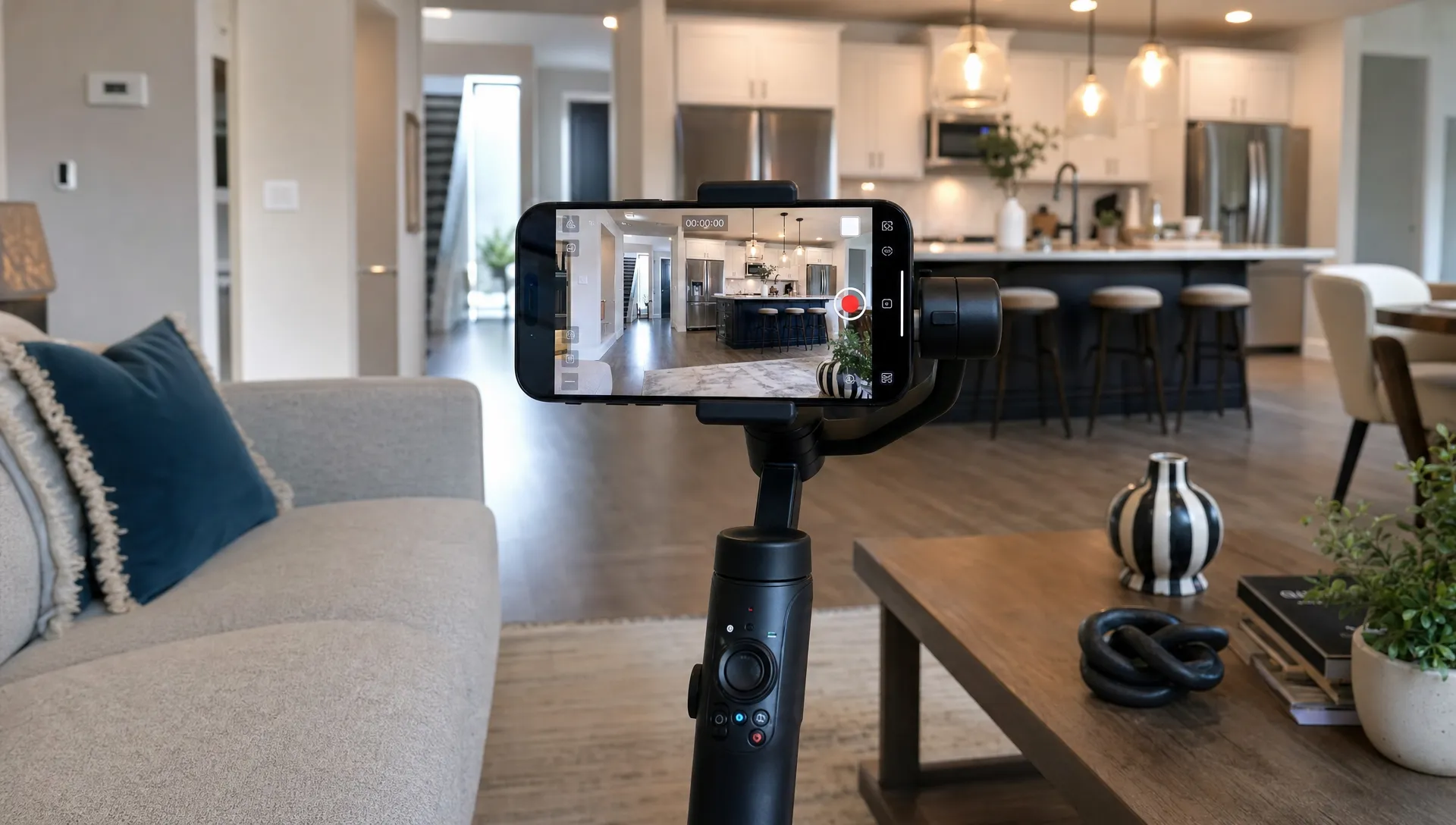
YouTube for Real Estate Agents Who Want More Property Views
Buyers do not only browse portals anymore. They search, compare and shortlist properties across social feeds, Google results and video platforms before they ever message an agent. That is why YouTube for real estate agents should be treated as a serious property discovery channel, not a place to upload the occasional walkthrough and hope it gets noticed.
For independent agents and small agencies, the opportunity is practical. You do not need a studio, a film crew or a celebrity-style channel. You need listing videos that answer buyer questions quickly, titles that match local search intent and a repeatable process that turns every new instruction into a video asset. When done well, YouTube helps more people understand the home, remember your name and take the next step toward a viewing.
Why YouTube for real estate agents works for property discovery
YouTube sits in a useful middle ground between passive social scrolling and high-intent property search. A buyer may open a listing portal to compare prices, but they often turn to video when they want to understand the flow of a home, the feel of a street or the difference between two similar properties.
That makes the platform especially useful for properties where photos do not tell the full story. Layout, natural light, garden position, renovation quality and neighborhood context are all easier to communicate in motion. A two-minute video can reduce uncertainty faster than a gallery of still images.
Used with a clear listing strategy, YouTube for real estate agents can also extend the life of your marketing. A portal listing may disappear after completion, but a neighborhood tour, market update or “what you get for this budget” video can continue earning views and seller awareness long after the original campaign ends.
Set up your channel like a local property resource
A real estate YouTube channel should immediately tell viewers where you work and what kind of property questions you answer. Do not make visitors guess whether you cover luxury homes, first-time buyer apartments, investment properties or family houses in a specific suburb.
Start with a simple channel banner, a professional profile photo and a description that names your service area. Add contact details in the approved YouTube fields and use the same branding you use on your website, property brochures and listing videos. Consistency builds recognition when a buyer sees your content more than once.
Organize your videos into playlists that match buyer intent. Useful playlist themes include property tours, neighborhood guides, market updates, seller advice and buyer tips. If you already use listing videos across portals and social channels, connect your approach with a broader plan for video marketing for real estate agents so each channel has a defined role.
A strong channel makes YouTube for real estate agents feel less like random posting and more like a searchable library of local proof.
Create listing videos that earn clicks and viewings
A good property video does not need to show every room for the same amount of time. It needs to help the right buyer decide whether the home is worth investigating further. Lead with the strongest reason to watch, then support it with the practical details buyers need.
For example, instead of opening with a slow exterior shot, start with the benefit: “A renovated three-bedroom home two minutes from the station, with a south-facing garden and off-street parking.” Then show the spaces in an order that makes sense for a viewing, not in the order the photos were uploaded.
The most effective YouTube for real estate agents content mix usually includes more than one video type. Listing tours bring active buyers. Neighborhood videos attract earlier-stage movers. Market updates keep sellers aware of your expertise.
| Video type | Best use | Ideal length | Main call to action |
|---|---|---|---|
| Listing walkthrough | Promote a specific property | 90 seconds to 3 minutes | Book a viewing |
| YouTube Short | Tease the strongest feature | 15 to 45 seconds | Watch the full tour |
| Neighborhood guide | Build local authority | 3 to 8 minutes | Ask about homes nearby |
| Market update | Attract sellers and landlords | 2 to 5 minutes | Request a valuation |
| Buyer explainer | Answer common questions | 2 to 6 minutes | Speak with an agent |
Keep the script natural. Mention price, location, key features and viewing instructions where appropriate, but avoid overloading the narration with every measurement. The video should create enough confidence to take the next step.
Optimize every upload for search and suggested views
YouTube optimization starts before the upload. Choose one main search angle for each video, such as “two-bedroom apartment in Austin” or “homes near downtown Denver under 700k.” Your title should be specific enough to match real search behavior while still sounding human.
In practice, YouTube for real estate agents needs the same discipline as listing copy. The first line of your description should summarize the property or topic clearly. Add the address area if appropriate, key features, viewing instructions, your agency details and a link to the full listing page when available.
Thumbnails matter because buyers scan quickly. Use a bright, clear property image with a short phrase that adds context, such as “Garden flat in Chelsea” or “Walk to the lake.” Avoid cluttered text, exaggerated claims or tiny details that disappear on mobile.
Captions and chapters can also help viewers navigate. Chapters are useful for longer videos, especially neighborhood guides and market updates. A simple structure might include overview, location, living space, bedrooms, outdoor space and how to book a viewing.
If the property is also on major portals, your YouTube description can support the broader buyer journey. This is where a clear plan for how to use video alongside real estate listing sites helps, because the portal page, YouTube video and social clips should send consistent signals instead of competing with each other.
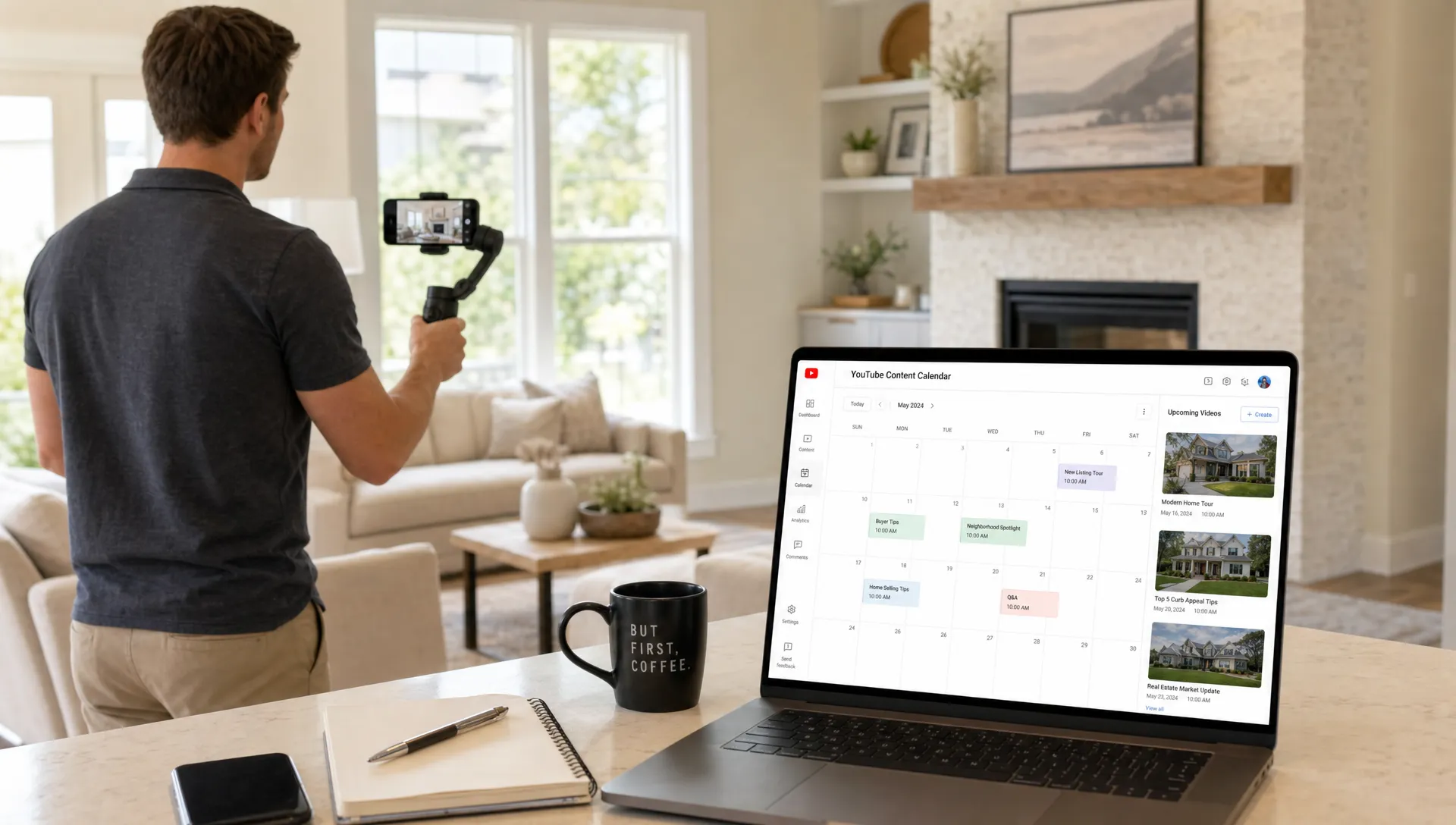
Use Shorts without abandoning long-form tours
Short-form video is useful for reach, but it should not replace deeper property content. A YouTube Short can highlight the kitchen, terrace, view or “before and after” staging moment, then send interested viewers to the full tour or listing page.
For busy agents, YouTube for real estate agents becomes easier when every listing produces multiple assets. One full walkthrough can become a 30-second vertical teaser, a neighborhood clip, a seller proof point and a short email embed. The goal is not to create more work, but to make one property shoot work harder.
Shorts are especially useful when they answer one quick question. Try angles such as “What does 500k buy in this neighborhood?”, “Best feature of this new listing” or “Three things buyers ask about this apartment.” If you want to go deeper on that format, short videos also connect naturally with strategies for advertising real estate with short-form listing videos.
Keep the visual hook immediate. The first second should show the feature, view or movement that makes someone stop scrolling.
Turn viewers into appointments, not just subscribers
Views are useful only if they move the right people closer to action. Every listing video should tell viewers what to do next, whether that is booking a viewing, requesting the full brochure, calling the agent or visiting the property page.
Place the call to action in three places: the narration, the description and the pinned comment. The wording can be simple. “To arrange a viewing, use the contact details below” is clearer than a vague “let us know what you think.” For market updates or neighborhood content, invite viewers to ask about current availability in that area.
YouTube also supports trust when you use it to answer real questions in public. Replying to comments, clarifying details and acknowledging local concerns can make your channel feel more transparent. The same broader shift toward technology-supported participation, visible in civic projects focused on community engagement and direct democracy tools, reflects a principle agents can use locally: people respond when communication is open, accessible and easy to act on.
Stay careful with compliance. Keep language property-focused, avoid assumptions about who a home is “perfect for” and make sure claims about schools, transport, square footage or planning potential are accurate.
Measure what actually leads to more property views
Do not judge your channel by subscriber count alone. For most agents, the more useful question is whether videos increase listing page visits, viewing requests, valuation leads and recognition in your local market.
The advantage of YouTube for real estate agents is compounding data. Over time, YouTube Analytics can show which titles earn clicks, where viewers drop off, which traffic sources matter and which neighborhoods attract the most interest. Use those patterns to improve the next listing video.
Track a few practical metrics each month. Click-through rate can reveal whether thumbnails and titles are working. Average view duration shows whether the opening is strong enough. Traffic source data can show whether viewers are finding you through search, suggested videos, external links or embedded listing pages.
Also compare video performance with real-world outcomes. If a listing video gets modest views but produces qualified viewing requests, it did its job. A viral video that attracts viewers outside your service area may be less valuable than a focused tour watched by 200 local buyers.
Build a repeatable video workflow for every listing
The hardest part of YouTube is consistency. Many agents publish enthusiastically for a month, then stop when listings, viewings and negotiations take over. A lightweight workflow prevents video from becoming another task that depends on spare time.
Create a template for each property category. Your apartment video might follow location, building, living space, bedrooms, amenities and CTA. A house video might follow exterior, entrance, main living space, kitchen, garden, bedrooms, parking and CTA. Reusing structure makes production faster without making every video feel identical.
This is where AI can remove friction. Diane turns property listings, photos and details into ready-to-publish real estate videos with narration, avatars, multilingual support, cinematic editing and social formats. For agents who want a faster way to create polished listing content, Diane can help convert a listing into video assets without starting from a blank timeline.
If you want YouTube for real estate agents to become a reliable source of property views, systemize it around every listing: one full tour, one or two Shorts, one description template, one thumbnail style and one clear CTA.
Frequently Asked Questions
How often should real estate agents post on YouTube? A practical target is one video per active listing plus one local advice or market video each week or every two weeks. Consistency matters more than volume, especially if each video supports a real property campaign or local search topic.
Do I need to be on camera for real estate YouTube videos? No, but showing a human presence can build trust. You can use voiceover, an on-camera intro, an avatar presenter or a mix of formats. The key is clarity, accuracy and a viewing experience that helps buyers understand the property.
Are YouTube Shorts enough for property marketing? Shorts are helpful for reach, but full listing videos are better for serious buyers who need layout, context and details. Use Shorts to attract attention, then direct viewers to the full tour, listing page or viewing request.
What should I put in a property video description? Include the location, key features, viewing instructions, agency contact details and a link to the full listing if available. Keep the first two lines clear because they are the most visible before a viewer expands the description.
Bring more buyers from search to the showing
YouTube is not a magic fix for a weak listing, but it can make a strong listing easier to discover, understand and act on. Treat each upload as part of the property journey: the title earns the click, the video answers the buyer’s questions and the CTA turns attention into a viewing request.
For agents who want a faster production process, AI-generated listing videos can make consistency realistic. With Diane, you can turn listing details and visuals into polished real estate videos built for modern marketing channels, including YouTube, social media and listing promotion.