
How Real Estate Companies Scale Video Across Every Listing
For most real estate companies, the problem is no longer whether video works. The problem is how to make video happen consistently, across every listing, without exhausting agents, delaying launches, or creating a patchwork of off-brand content.
A single polished property video is manageable. Ten per week across different agents, neighborhoods, price points, languages, and channels is an operational challenge. That is where many agencies hit the wall. Video stays reserved for luxury listings, new developments, or homes with unusually strong seller expectations, while the rest of the portfolio relies on photos and a written description.
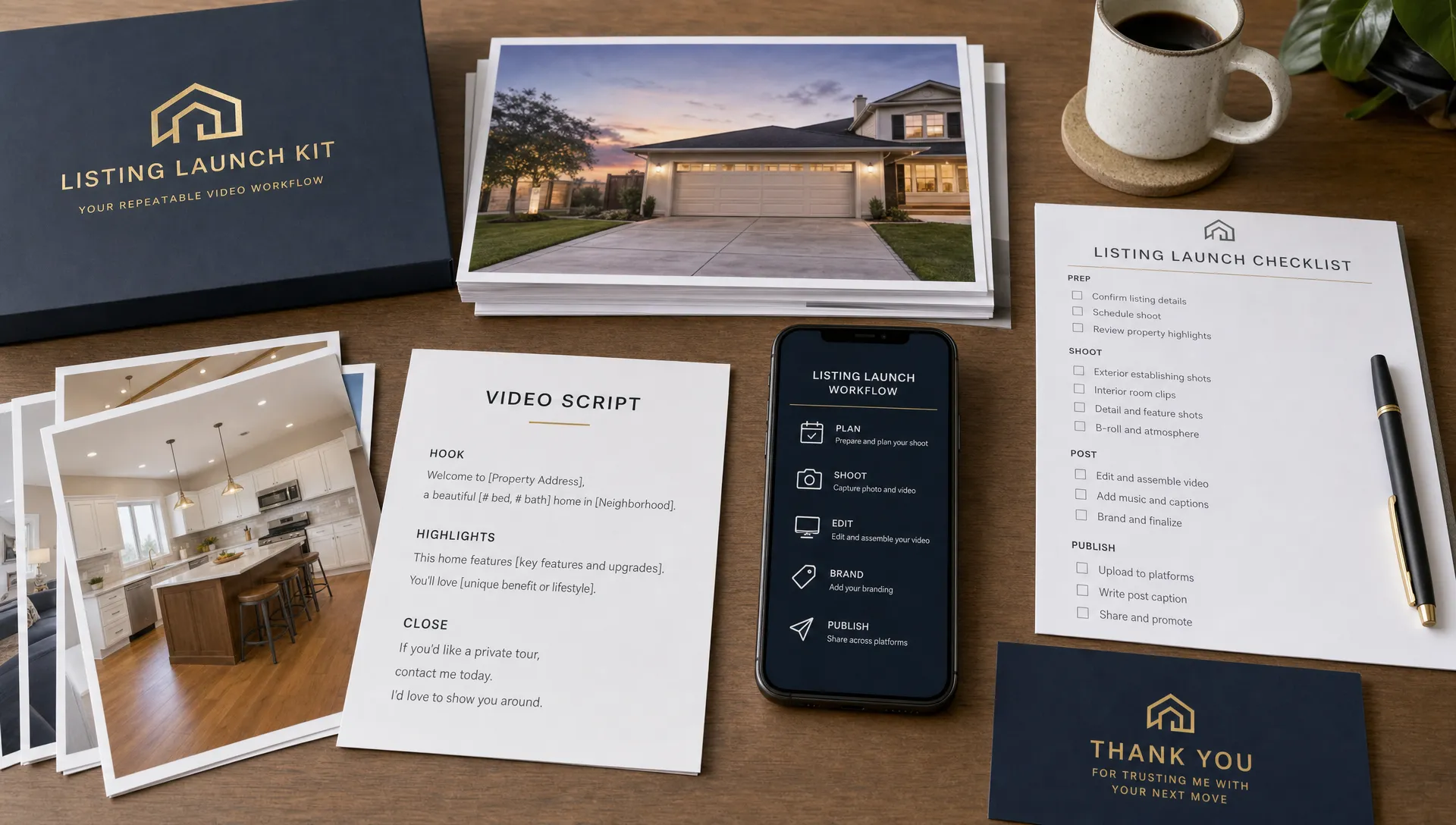
Scaling listing video requires a different mindset. It is not just a creative task. It is a repeatable marketing system that turns listing data, photos, brand standards, agent expertise, and publishing workflows into a reliable output.
Why video is difficult to scale across listings
Real estate companies operate in a high-velocity environment. Listings arrive at different stages of readiness. Photos may be delivered late. Descriptions need compliance checks. Agents are on appointments, negotiating offers, or preparing seller updates. Meanwhile, buyers expect properties to be easy to understand immediately, especially on mobile.
Traditional video production adds friction because it depends on scheduling, filming, editing, voiceover, revisions, and channel-specific formatting. That can work for select properties, but it breaks down when every listing needs a video within hours, not days.
The most common scaling problems are practical:
- Production time varies too much from listing to listing.
- Agents create videos in different styles, which weakens brand consistency.
- Editors and marketing teams become bottlenecks.
- Videos are made for one channel, then awkwardly resized for others.
- Multilingual audiences are treated as an afterthought.
- Lower-priced listings get less marketing support, even when sellers still expect visibility.
For agency owners and team leaders, the bigger issue is predictability. If video depends on individual motivation or manual editing capacity, it will always be uneven. Some agents will publish constantly, others will avoid it, and the company will struggle to present a consistent level of service.
From one-off videos to a video operations model
Real estate companies scale video when they stop treating each listing as a blank creative project. The goal is not to remove creativity. The goal is to put repeatable structure around the parts that should not change, so agents can focus their judgment where it matters.
That lesson is visible outside real estate too. High-visibility event specialists such as Luuk Broos Events turn spectacular productions into carefully managed systems, where planning, sequencing, presentation, and execution all work together. Listing video at scale works the same way. The final result should feel polished, but the process behind it must be structured enough to repeat.
A scalable video operation usually has four layers: inputs, templates, approval, and distribution. Inputs include listing facts, photos, floor plan details, neighborhood context, and agent notes. Templates define pacing, brand assets, calls to action, and formats. Approval keeps claims accurate and compliant. Distribution ensures the finished asset can be published where buyers and sellers actually see it.
What a scalable listing video system needs
A good video system does not simply create more content. It creates the right content faster, with fewer decisions required each time. That means the workflow should answer the same questions for every listing before production begins.
| Workflow element | Why it matters | Scaling question to ask |
|---|---|---|
| Listing data | Prevents inaccurate or incomplete scripts | Can listing facts be imported or reused without manual retyping? |
| Photo selection | Controls pacing and visual quality | Can the best images be organized quickly by room, feature, or story? |
| Script structure | Makes videos clear and consistent | Does every video follow a buyer-friendly narrative? |
| Brand system | Protects company identity | Are logos, colors, intros, outros, and tone standardized? |
| Review process | Reduces compliance risk | Who approves factual claims before publishing? |
| Channel formats | Improves reach and usability | Can one listing become multiple formats for social and listing channels? |
This kind of structure matters because video is not only a buyer engagement tool. It is also a seller confidence tool. When a homeowner sees that every listing receives a polished video plan, the company’s marketing promise becomes more tangible.
Standardize formats before you scale production
Many agencies try to scale video by asking agents to “make more videos.” That usually creates inconsistent output. A better starting point is to define a small set of repeatable video formats.
For example, a company might use a short social teaser for the first day of launch, a narrated listing overview for property portals and seller updates, and a neighborhood-focused clip for buyers who care about lifestyle context. The exact mix depends on your market, but the principle is the same: each format should have a purpose.
If your team needs inspiration, reviewing different real estate video ideas that help listings get noticed can help you decide which formats deserve a place in your standard workflow.
Once formats are standardized, agents do not need to reinvent the concept for every property. They only need to provide the details that make the listing unique: the strongest feature, the buyer profile, the neighborhood angle, and any seller-approved highlights.
Centralize listing inputs so videos start faster
Scaling video often fails because the information needed to make the video is scattered. The property description is in one system. Photos are in a photographer folder. Agent notes are in messages. Brand assets live somewhere else. By the time everything is collected, momentum is gone.
Real estate companies can reduce that friction by creating a single intake process for listing videos. At minimum, the intake should capture the property address, price, key facts, approved description, photo set, agent contact details, preferred language, required disclaimers, and intended publishing channels.
This is where AI-powered workflows can help. When a platform can work from listing details, photos, and portal imports, it reduces the amount of manual preparation needed before a video can be created. For teams that want a tactical walkthrough, this guide on how to create real estate videos for marketing in minutes explains how faster production changes the day-to-day workflow.
Use AI to remove bottlenecks, not human judgment
AI is most useful in listing video when it automates repeatable production steps. It can help generate narration, match visuals to a script, adapt content into social formats, create avatar-led presentations, support multilingual versions, and speed up editing. Those capabilities are especially valuable when a company wants every listing to receive video support, not just the most expensive ones.
But AI should not replace agent judgment. Agents still know which features buyers ask about, which objections need to be addressed, and which claims require caution. The best workflow lets AI handle speed and formatting while humans review accuracy, tone, and positioning.
This balance is important for compliance and trust. A video should not exaggerate square footage, imply a feature that is not present, or oversell a neighborhood. It should make the listing easier to understand, while staying grounded in verified property information.

Keep every video on brand without slowing agents down
When every agent produces video differently, the company brand becomes fragmented. Some videos use the logo correctly. Others do not. Some sound polished. Others feel improvised. Over time, this inconsistency can weaken buyer recognition and seller confidence.
Brand consistency does not mean every video should feel identical. It means the non-negotiables are controlled: logo placement, colors, typography, intro and outro style, tone of narration, call to action, agent information, and required disclaimers.
For larger teams, brand governance becomes even more important. A clear framework for keeping listing videos on brand helps agencies protect quality while still giving local agents room to personalize property messaging.
A scalable approach usually separates brand-controlled elements from listing-specific elements. The company owns the visual identity and structure. The agent contributes property knowledge, local nuance, and seller context.
Build for every channel from the beginning
A listing video is rarely used in just one place. It may appear on an agency website, property portals, social feeds, paid ads, email campaigns, seller reports, and agent profile pages. Each channel has different expectations for length, orientation, pacing, captions, and calls to action.
If channel adaptation happens at the end, it becomes extra work. If it is built into the workflow from the start, one listing can produce multiple useful assets.
A practical publishing plan might include:
- A vertical teaser for social feeds.
- A narrated overview for listing pages.
- A short branded clip for email or seller updates.
- A language-specific version for international or multilingual buyers.
- A square or vertical variation for paid social campaigns.
The key is to avoid making a single “master video” and hoping it works everywhere. Real estate companies scale better when each listing automatically becomes a small content package designed for the channels that matter.
Measure coverage, speed, and adoption
Views and engagement matter, but they are not the only measures of a scalable video program. At the company level, leaders should also track whether video is becoming a standard part of listing operations.
Useful metrics include video coverage rate, average time from listing intake to published video, number of revision cycles, percentage of videos published in multiple formats, agent adoption rate, and seller presentation usage. These metrics reveal whether video is embedded in the business or still treated as an occasional marketing extra.
The most important question is simple: can your company promise a professional video for every listing and deliver it reliably? If the answer depends on who the agent is, how busy the editor is, or whether someone remembers to make a reel, the system is not yet scalable.
Avoid the mistakes that keep video stuck in pilot mode
Many real estate companies start strong with video, then struggle to maintain consistency. The problem is rarely lack of interest. It is usually lack of process.
One common mistake is reserving video only for premium listings. That can make sense for custom cinematic shoots, but it leaves most sellers with a weaker marketing experience. AI-assisted production makes it more realistic to create polished videos across a broader range of properties.
Another mistake is overproducing every asset. Not every listing needs a full cinematic tour. Some need a concise, well-narrated overview that communicates layout, light, location, and buyer fit. Scaling requires matching production depth to the property and channel.
A third mistake is ignoring training. Even with AI tools, agents need to know what inputs matter. A strong agent note about the ideal buyer or the property’s best feature can make the final video sharper and more persuasive.
How Diane helps real estate companies scale listing video
Diane is built for real estate teams that want listing video to become a repeatable part of marketing, not a manual project each time. The platform turns property listings, photos, and details into ready-to-publish marketing reels with AI narration, animated avatars, and cinematic effects.
For agents and agencies, that means the workflow can support listing imports, AI avatar presentation, voice cloning narration, multilingual video, virtual home staging, social media formats, custom real estate branding, and direct social publishing. Instead of starting from a blank timeline, teams can move from listing information to polished video content much faster.
This matters because scale is not just about making more videos. It is about making professional video available across the whole listing portfolio, while protecting brand standards and giving agents more time to focus on clients.
Frequently Asked Questions
Why should real estate companies create video for every listing? Video helps buyers understand a property faster and gives sellers a clearer view of the marketing effort behind their listing. When it is applied consistently, it can also strengthen the company’s brand and listing presentation.
Does every property need a fully produced cinematic video? No. Scaling video means matching the format to the listing and channel. Some properties may justify a premium production, while others need a concise narrated reel that clearly presents the home, location, and strongest features.
How can agencies keep listing videos consistent across agents? Agencies should define brand templates, approved tone, logo usage, calls to action, review steps, and channel formats. This gives agents structure while still allowing them to add local knowledge and property-specific insights.
Can AI-generated real estate videos still feel personal? Yes, if agents provide meaningful inputs and review the final result. AI can accelerate scripting, narration, editing, and formatting, while the agent contributes buyer context, local expertise, and seller-approved details.
What should a company measure when scaling listing video? Track video coverage rate, time to publish, revision cycles, format usage, agent adoption, and seller presentation impact. These metrics show whether video has become a reliable operating system rather than an occasional marketing task.
Make listing video a standard, not a special project
Real estate companies do not scale video by asking already-busy agents to become editors. They scale it by building a workflow that turns listing information into polished, branded, channel-ready content with less friction.
If your agency wants every listing to benefit from professional video, Diane helps turn property details, photos, narration, avatars, branding, and social formats into a faster, repeatable production process.