

How Real Estate Networks Keep Listing Videos On Brand
Listing videos are no longer just a creative extra. For many real estate networks, they are now one of the most visible expressions of the brand: the logo treatment, the pacing, the narration, the tone, the agent presence, the way each property is framed, and even the thumbnail a buyer sees before pressing play.
That creates a real operational challenge. A single agent can keep their own videos consistent with a few habits. A growing brokerage, franchise group, or multi-office agency needs a repeatable system. Without it, every listing starts to look like it belongs to a different company.
The goal is not to make every property video feel identical. Luxury homes, first-time buyer apartments, rural land, and rentals all need different creative choices. The goal is to make every video feel unmistakably connected to the same real estate brand while still giving agents enough flexibility to market each listing well.
Why brand consistency gets harder as video volume grows
Real estate networks usually grow video production in stages. At first, one marketing lead or a few high-performing agents create short listing videos manually. Then more agents see the results and want to do the same. Soon, videos are being made by different people, from different offices, with different tools, editing styles, captions, fonts, music choices, and calls to action.
That is where brand drift begins.
A video might use an old logo. Another might include a low-resolution headshot. A third might open with a dramatic cinematic intro that clashes with the agency's professional tone. One office may add a phone number in the first frame, while another focuses entirely on lifestyle visuals. None of these issues looks catastrophic alone, but together they weaken recognition.
For real estate networks, listing videos need to do more than promote one property. They should also reinforce trust in the network itself. Sellers notice whether their home is marketed professionally. Buyers begin to recognize the brand's style across channels. Agents feel more confident when they have a clear production standard rather than guessing from scratch.
What on-brand means in a listing video
Branding is often reduced to colors and logos, but listing videos carry many more brand signals. A viewer may not consciously identify the font or transition style, yet those details shape whether the video feels premium, local, approachable, modern, or inconsistent.
| Brand layer | What it controls | Why it matters for real estate networks |
|---|---|---|
| Visual identity | Logo placement, fonts, colors, lower thirds, thumbnail style | Helps buyers and sellers recognize the network quickly |
| Narrative style | Opening hook, property description, neighborhood context, call to action | Keeps the message clear and aligned with the brand voice |
| Agent presence | Face-to-camera moments, avatar use, voiceover style, contact details | Balances personal branding with the network's identity |
| Production quality | Photo standards, video pacing, music, transitions, aspect ratios | Protects the perceived professionalism of the listing |
| Compliance and accuracy | Claims, pricing, disclaimers, fair housing language, local rules | Reduces risk and builds seller trust |
A strong brand system gives agents clear defaults. It tells them how the video should open, what must appear on screen, which claims to avoid, how to present price or location details, and how much personalization is appropriate.
Start with a video brand system, not a style guide PDF
Many agencies already have a brand guide. It may include logo files, color codes, font names, photography examples, and writing rules. That is useful, but it is not enough for video.
A listing video moves through time. It needs rules for sequence, rhythm, narration, screen text, sound, transitions, and calls to action. If agents only receive a static PDF, they still have to translate those rules into editing decisions. That is where inconsistency enters.
A practical video brand system should include:
- Approved intro and outro formats for different listing types
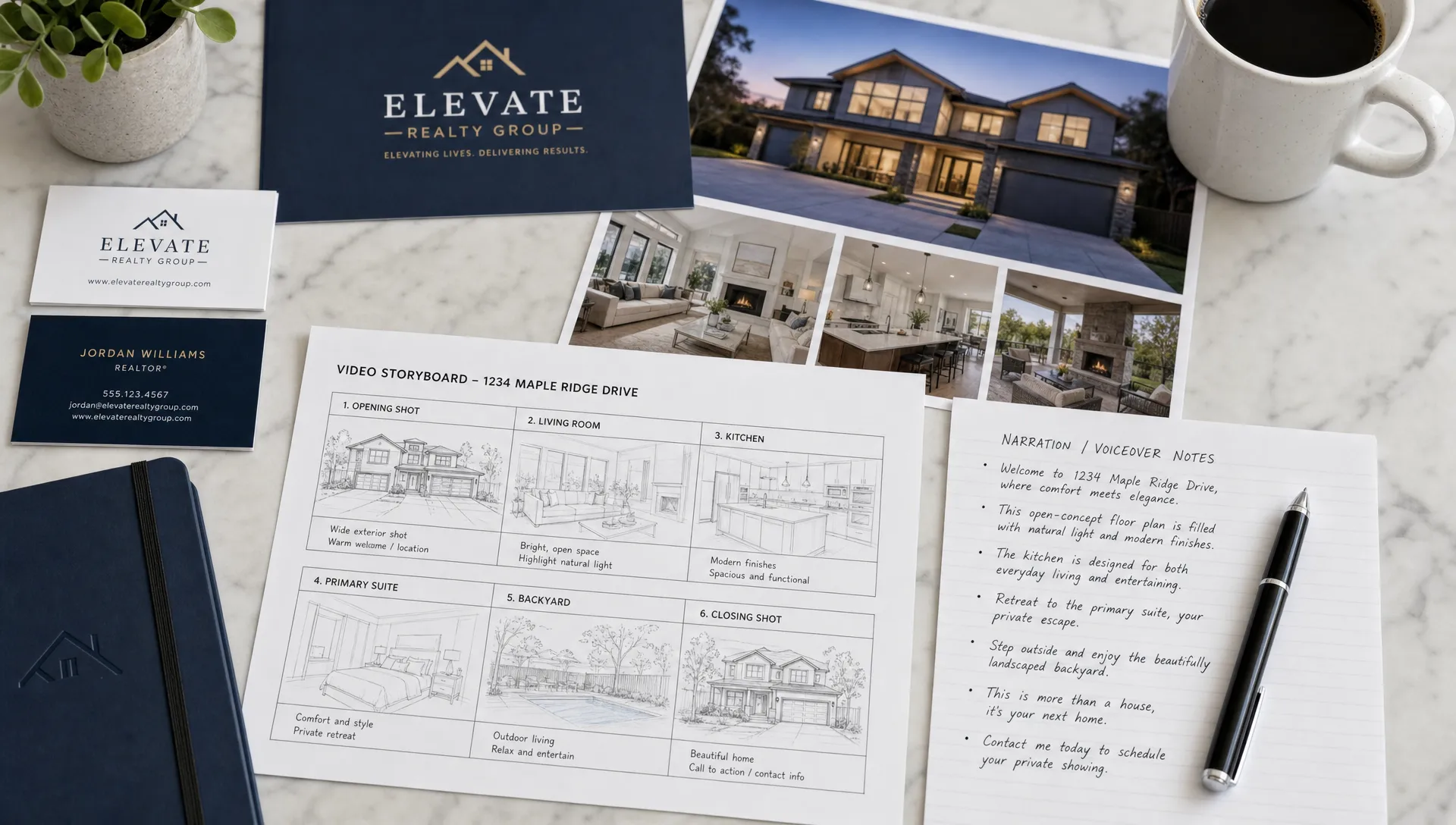
- Template scenes for exterior, interior, amenities, neighborhood, and agent contact moments
- Rules for logo size, placement, and timing
- Approved font, caption, and lower-third styles
- Guidance on music energy, narration tone, and pacing
- Required contact and brokerage information by market
- Examples of videos that are approved, plus examples that miss the standard
This is especially important when choosing technology. A tool that creates videos quickly but cannot preserve brand assets, formats, and repeatable layouts may create more review work later. If you are evaluating options, this guide on how to choose a real estate platform for listing video is a useful companion to the branding process.
Build templates that agents actually want to use
Brand control fails when the approved workflow is slower than the workaround. If agents can produce an off-brand video in 15 minutes, but the official process takes two days, many will choose speed.
The solution is to make templates both branded and practical. A good listing video template should guide the agent through the story without forcing every property into the same mold.
For example, a real estate network might define separate templates for:
- New listing launch videos
- Price improvement videos
- Open house reminders
- Luxury listing showcases
- Rental property reels
- Sold or under-contract recaps
- Neighborhood spotlight clips tied to a listing
Each template can preserve the same brand language while changing the pace and structure. A luxury showcase may use slower movement, fewer captions, and a more editorial voiceover. A first-time buyer condo may use a faster hook, clear affordability cues, and practical layout details. Both can still feel like they came from the same network.
Templates also reduce training needs. New agents do not have to become video editors. They can follow a proven structure, add listing details, review the result, and publish with confidence.
Keep narration and tone consistent
Voice is one of the most overlooked parts of video branding. A listing video can use the right logo and still feel off-brand if the script sounds generic, exaggerated, or inconsistent with the agency's market position.
Real estate networks should define how listings are described. Is the tone polished and understated, or warm and conversational? Should scripts say stunning and must-see often, or should they focus on specific buyer benefits? How should the narration handle schools, commute times, renovations, and neighborhood claims?
A useful script standard includes guidance on:
- Opening hooks that lead with the property's strongest buyer value
- Phrases that match the network's tone
- Phrases to avoid because they feel inflated or risky
- Pronunciation rules for local place names, agent names, and amenities
- How to handle unavailable information without guessing
- How to end with a clear, compliant call to action
AI video workflows can help here because they make narration repeatable. Diane, for example, is designed to turn listing information, photos, and details into narrated real estate videos using options such as AI avatars, voice cloning, multilingual support, and custom branding. The value for networks is not simply speed. It is the ability to make video creation more consistent across many agents and listings.
Set media standards before the edit begins
No video template can fully compensate for weak inputs. If one agent uploads bright professional photos and another uploads dark vertical phone shots, the final videos will not feel equally polished. For brand consistency, real estate networks need media standards before editing starts.
This does not mean every listing needs the same production budget. It means the network should define minimum acceptable inputs by listing tier. A premium listing may require professional photography, aerial footage, twilight exteriors, and staging. A standard listing may require a clean photo set, accurate room order, and a few key lifestyle details.
Common media standards include file quality, image orientation, minimum photo count, room coverage, exterior requirements, staging expectations, and rules for floor plans or maps. Virtual home staging can also help create a more polished look when used responsibly and disclosed according to local rules and platform expectations.
For aerial footage, brand control also includes operational consistency. Networks working with drone teams should standardize when drone shots are used, what angles are acceptable, how neighboring properties and private spaces are avoided, and how flight records are handled. Drone partners often need their own admin layer, and a drone operations management platform can help them plan flights, manage checklists, document risk assessments, and keep logs organized.
Create an approval workflow that does not slow down the listing launch
Approval is where many video programs get stuck. Marketing teams want quality control. Agents want speed. Sellers want their property promoted immediately. If every video needs manual approval from the same person, the process becomes a bottleneck.
A better model is tiered approval.
Low-risk videos can use pre-approved templates, locked brand assets, and automated checks. Higher-risk videos, such as luxury listings, new development campaigns, market claims, or multilingual versions, can receive human review before publishing. This gives the network control where it matters most without turning every standard listing video into a production queue.
A strong approval process should answer five questions clearly. Who can create a listing video? Which templates are approved for which listing types? What can an agent edit, and what is locked? Which details require review before publishing? Who has final approval when local office branding differs from network branding?
This clarity prevents last-minute disagreements. It also makes it easier for new agents to adopt the process quickly.
Balance network branding with agent personality
Real estate is personal. Sellers often choose an agent, not only a brokerage. That means overly rigid video branding can backfire if it erases the agent's local reputation or on-camera style.
The best real estate networks use a layered brand approach. The network identity stays consistent, while the agent has controlled areas for personalization. For example, the logo system, fonts, colors, thumbnail frame, and outro structure may be fixed. The agent's headshot, voice, face-to-camera intro, local insight, or personal sign-off can vary.
This balance matters for independent agency owners too. Even a small team needs a recognizable agency brand, but each negotiator may serve a slightly different patch, property type, or client base. Controlled flexibility lets the agency scale video without making every agent sound identical.
The key is to define what is flexible and what is not. If everything is locked, agents may resist. If everything is editable, the brand weakens. The middle ground is where scale happens.
Adapt the same brand system to every channel
A listing video rarely lives in one place. The same property may need a vertical reel for Instagram and TikTok, a square or vertical version for paid social, a horizontal cut for YouTube or email, and a shorter teaser for stories. If each channel version is rebuilt manually, brand inconsistencies multiply.
Real estate networks should define channel-specific rules inside the same brand system. The core identity stays the same, but the format changes.
| Channel need | Brand decision to standardize | Practical benefit |
|---|---|---|
| Vertical social reels | Safe zones, caption size, first-frame hook | Keeps videos readable on mobile |
| Listing portals | Clear property order and minimal distractions | Helps buyers understand the home quickly |
| Email campaigns | Strong thumbnail and concise runtime | Improves click interest without overwhelming recipients |
| Paid ads | Fast opening, compliant claims, clear CTA | Reduces revision time for campaigns |
| Agent profiles | Consistent intro and contact treatment | Builds recognition across the network |
If your team is trying to increase output without losing quality, this walkthrough on creating real estate videos for marketing in minutes explains how listing materials can become usable video assets faster.
Measure consistency, not just views
Views, watch time, and engagement matter, but they do not tell the whole story. A video can get attention and still weaken the brand if it uses poor design, unclear claims, or a style that does not fit the network.
Real estate networks should review video performance through two lenses: marketing effectiveness and brand consistency. The first tells you whether the video attracts attention. The second tells you whether the video strengthens trust.
A simple monthly scorecard can help marketing leaders spot patterns.
| Review area | What to look for | Action if inconsistent |
|---|---|---|
| Visual identity | Correct logo, colors, fonts, layout | Update locked templates or asset access |
| Script quality | Clear buyer benefit, accurate details, brand tone | Improve script prompts or agent guidance |
| Media quality | Strong images, complete room coverage, good sequence | Refresh photography standards |
| Agent personalization | Professional presence without overpowering listing | Clarify editable sections |
| Channel fit | Correct size, captions, thumbnail, CTA | Create better format presets |
This is not about policing creativity. It is about finding the repeatable issues that slow teams down or dilute the brand. If many videos fail in the same area, the system needs improvement, not just the individual agent.
Common mistakes real estate networks should avoid
The most common mistake is making brand control feel like extra admin. If the video process adds friction, agents will avoid it or build their own shortcuts.
Another mistake is over-branding. Buyers care about the property first. A video that spends too long on logos, animated intros, or corporate messaging can feel more like an agency ad than a listing presentation. The brand should frame the property, not compete with it.
Networks also run into trouble when they approve too many disconnected tools. One office uses a freelancer. Another uses a mobile app. Another uses an editor with custom templates. Quality may look fine in isolation, but the portfolio becomes fragmented. A central video workflow helps keep creative standards aligned.
Finally, some teams forget to refresh their templates. A video brand system should evolve as platforms, buyer behavior, and listing strategies change. Review templates quarterly or after major brand updates so agents are not stuck using outdated creative assets.
For teams looking for fresh concepts within a consistent system, these real estate video ideas that help listings get noticed can be adapted into branded templates rather than one-off experiments.
Frequently Asked Questions
Why do real estate networks need branded listing video templates? Branded templates help agents create professional videos faster while keeping logos, colors, captions, pacing, and calls to action consistent across offices and channels.
Should every listing video in a network look the same? No. The brand system should be consistent, but the creative treatment should fit the property, market, and buyer audience. The best approach is controlled flexibility.
How can agents personalize videos without weakening the brand? Give agents approved areas for personalization, such as a short introduction, voiceover, local insight, or contact panel, while locking core brand assets and layout rules.
What should be reviewed before a listing video is published? Review the accuracy of property details, visual brand elements, narration tone, required brokerage information, media quality, and any claims that may need compliance checks.
Can AI help real estate networks keep videos on brand? Yes, when AI is used with approved templates, brand assets, narration standards, and review rules. AI can reduce manual editing while making video output more consistent across teams.
Make listing video consistency easier to scale
Keeping listing videos on brand is not about limiting agents. It is about giving them a faster, clearer way to produce marketing that sellers trust and buyers recognize.
If your network wants polished, ready-to-publish listing videos without rebuilding every asset by hand, Diane helps turn property listings, photos, and details into AI-powered real estate videos with narration, avatars, branding options, social formats, and multilingual support. The result is a more scalable video workflow that protects the brand while helping agents move faster.