
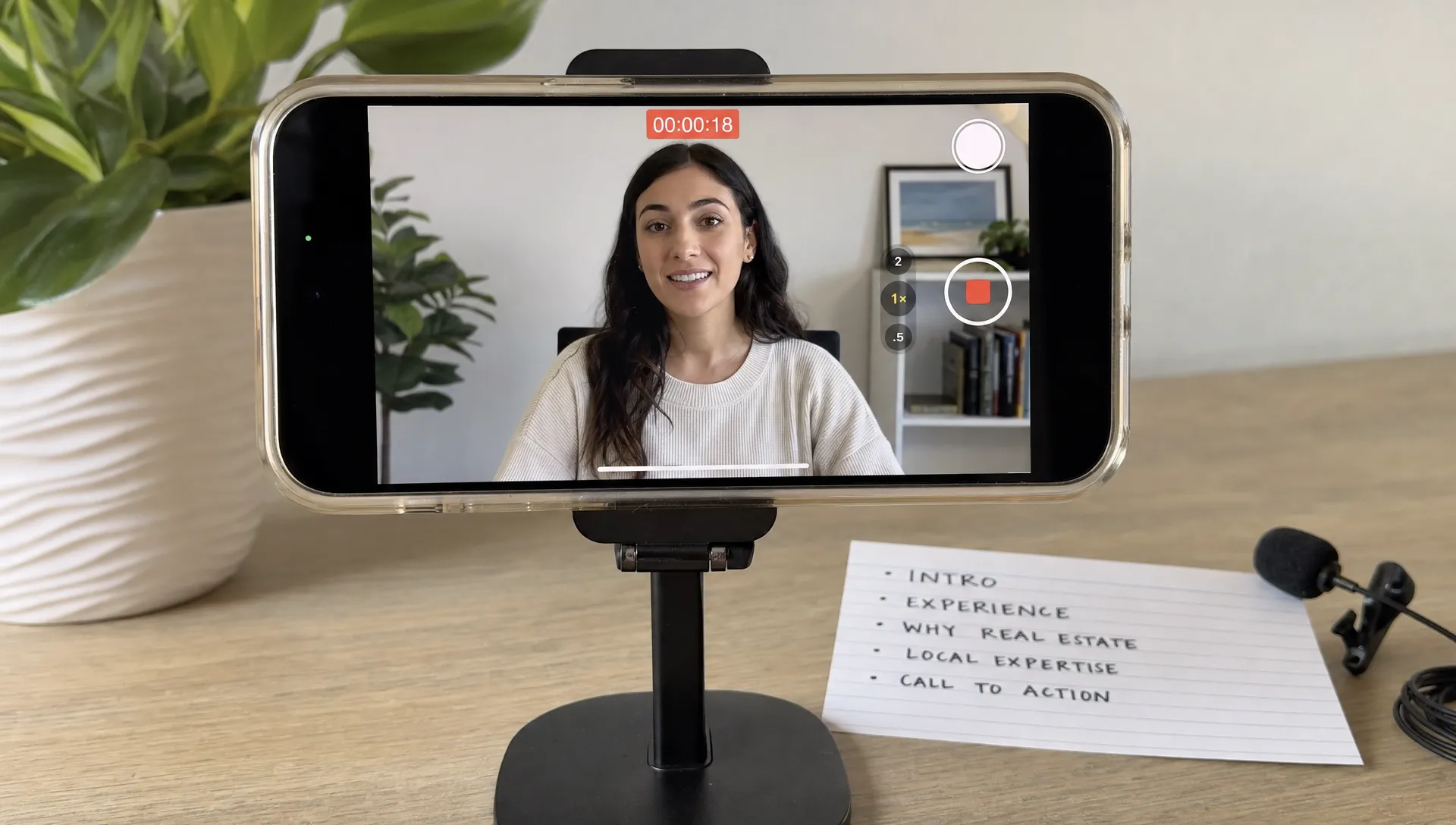
How to Create a Realtor Introduction Video That Feels Natural
A realtor introduction video should make a stranger feel comfortable contacting you before they ever meet you. It is not a mini commercial, a résumé readout or a performance. It is a short, honest video that answers the question every buyer or seller is quietly asking: “Can I trust this person with a major decision?”
That is why the most effective introduction videos usually feel simple. They sound like a real conversation, show a clear point of view and give the viewer one easy next step. For independent agents, listing specialists and small agency owners, that natural feeling matters more than perfect studio production.
What a realtor introduction video needs to communicate
A natural introduction video has a job to do. It should not try to cover every award, every neighborhood, every testimonial and every service you offer. Viewers need just enough information to understand who you help, how you work and why it would be easy to start a conversation with you.
Think of the video as a first handshake. You are not closing the deal yet. You are reducing uncertainty.
| Message element | What viewers need to hear | What to avoid |
|---|---|---|
| Who you are | Your name, market and role | A long career biography |
| Who you help | Buyers, sellers, investors, downsizers or another clear audience | Trying to speak to everyone |
| How you work | One or two practical things clients can expect | Generic phrases like “full service” without detail |
| Why you care | A grounded reason you enjoy the work | Overly polished mission statements |
| What to do next | Book a call, send a message or view your listings | Multiple competing calls to action |
A strong realtor introduction video gives viewers a quick sense of your working style. Are you calm and analytical? Warm and local? Fast-moving and investor-focused? Your words should make that clear without needing to announce it directly.
Start with a message, not a memorized speech
The most common mistake agents make is writing a script that sounds like a brochure. The sentences look fine on paper, but they become stiff when spoken aloud. Natural video starts with a message, not a script.
Before you write anything, answer three questions in plain language:
- What kind of client do I most want to attract?
- What do those clients usually worry about before contacting an agent?
- What do I do that makes that concern easier to handle?
For example, if you work with first-time sellers, the main concern might be not knowing where to start. Your message could be: “I help homeowners understand what their property is worth, what to fix before listing and how to move without feeling rushed.” That is more useful than saying you offer “exceptional service and market expertise.”
Once you know the message, the script becomes easier. You are not trying to sound impressive. You are trying to sound clear.
Write a script that sounds like you
For a realtor introduction video, aim for 45 to 75 seconds. That is long enough to say something specific and short enough for a website, social profile, email signature or listing presentation follow-up.
A simple structure works well:
- Open with who you help: “I help homeowners in Austin prepare, price and market their homes with less guesswork.”
- Name the problem you solve: “Most sellers know their home has value, but they are not always sure which updates matter or how to time the move.”
- Explain your approach: “My process starts with a practical pricing review, a walkthrough and a marketing plan built around the buyer most likely to act.”
- Add a human detail: “I like making the process feel organized, because selling a home is already a big enough life event.”
- Give one next step: “If you are thinking about selling this year, send me a message and I will help you understand your options.”
Read the script aloud before recording. If you stumble over a phrase twice, rewrite it. People rarely say “leveraging innovative strategies” in real conversation. They say “I use video, strong photos and clear pricing to help the right buyers understand the home faster.”
Record it like a conversation, not an audition
When your realtor introduction video feels awkward, the issue is often not the script. It is the way the agent records it. Looking directly into a lens can make even confident professionals sound rigid, especially when they are trying to remember exact lines.
Use a few simple recording habits. Stand or sit as you would with a client. Keep your shoulders relaxed. Look at the camera as if you are talking to one person, not an audience. Record in short sections instead of forcing a perfect one-take delivery.
This advice applies to many trust-based services, not only real estate. A local wellness professional, for instance, has to communicate warmth, credibility and personal attention before a consultation is booked, which is why service pages like Tracey Warren Nutrition lead with a clear human presence rather than hiding behind generic claims. Real estate agents face the same trust challenge.
Do not chase “TV presenter” energy unless that is truly your personality. A calmer delivery can feel more credible, especially for sellers making a high-stakes decision.
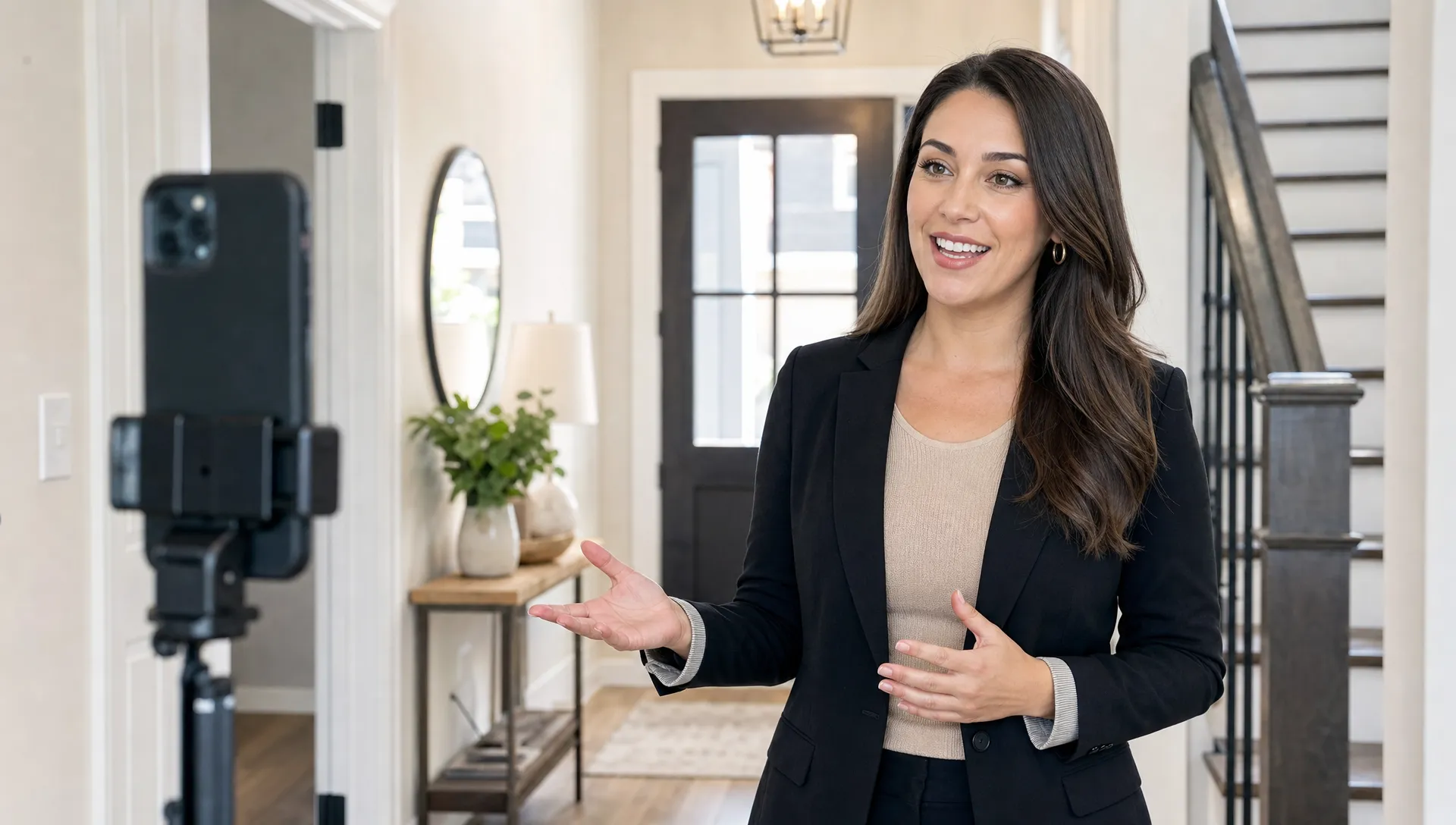
Choose the right format for where the video will live
A natural introduction depends partly on context. A video on your website can be slower and more complete. A social media version needs a faster opening. A video sent in a direct message should feel more personal and less produced.
| Placement | Best length | Best opening | Main goal |
|---|---|---|---|
| Agent website bio page | 60 to 90 seconds | “I help…” | Build trust with warm traffic |
| Instagram or TikTok profile | 30 to 45 seconds | “Thinking of selling in…” | Make your niche obvious quickly |
| Email signature | 30 to 60 seconds | Friendly self-introduction | Add personality to follow-up emails |
| Listing presentation | 45 to 75 seconds | Seller-focused value statement | Reinforce your process |
| LinkedIn profile | 45 to 60 seconds | Professional positioning | Support referrals and local credibility |
If you plan to use video across several channels, build a small system instead of recording random clips each time. Diane’s guide to planning realtor videos for marketing across every channel is a useful next step once your introduction is ready.
Use AI without losing your personality
AI can make video production faster, but the human element still has to come from you. If you use an AI avatar for your realtor introduction video, the message should still reflect your real tone, your market and your client experience.
This is where agents can use technology selectively. Diane can help create real estate videos with AI narration, animated avatars, voice cloning, multilingual support, custom branding, cinematic editing and social media formats. For an introduction video, that means you can produce a polished version without booking a studio shoot or trying to edit everything manually.
The key is to avoid generic copy. AI can help shape the video, but you should feed it details that only you would know: the neighborhoods you work in, the concerns your clients bring up most often, the way you explain pricing and the tone that matches your real conversations.
If you are considering an on-screen AI presenter, read Diane’s article on how real estate avatars make listing videos more personal. The same principle applies to introductions: an avatar should add clarity and familiarity, not replace your professional identity.
Editing choices that make the video feel natural
Good editing removes friction without making the video feel artificial. Cut out long pauses, repeated words and sections where your attention drops. Keep the natural rhythm of your speech. If every breath is removed, the video can feel robotic.
Use captions, especially for social media. Many viewers watch with sound off first, and captions also make your message easier to follow. Add a few simple visual cutaways if they support the story, such as local streets, property details, a sold sign or a clean shot of you walking through a home. Avoid filling the video with random stock footage that has nothing to do with your market.
A realtor introduction video should look polished enough to earn trust but not so polished that it feels disconnected from the person a client will meet. Keep colors, fonts and logo use consistent with your real estate brand. If your brand is understated, the video should be understated. If your brand is energetic and social-first, the editing can move faster.
For agents who want to create more than an introduction, Diane also covers how to create real estate videos for marketing in minutes, including listing-focused content that can support your broader marketing.
Mistakes that make introduction videos feel fake
The fastest way to make an intro feel unnatural is to over-explain. You do not need to prove every credential in the first minute. Viewers are looking for confidence, relevance and a reason to continue.
Watch for these common issues:
- Leading with awards before explaining who you help
- Using phrases you would never say in a client meeting
- Speaking too quickly because you are trying to fit in too much
- Recording in a distracting space with poor lighting or echo
- Ending with a vague line like “reach out anytime” instead of a clear next step
Also be careful with humor. A light, relaxed tone can work well, but forced jokes or trending audio can age quickly. If the video will sit on your website for months, choose clarity over a trend.
A simple script template you can adapt
Use this as a starting point, then rewrite it until it sounds like you. The goal is not to copy the template word for word. The goal is to keep the structure focused.
Hi, I’m [Name], a real estate agent helping [type of client] in [market].
Most of the people I work with are trying to [main goal], but they are also worried about [main concern].
My role is to make that process clearer. I help with [specific service], [specific service] and [specific service], so you can make decisions with better information.
What I enjoy most is [human reason connected to your work].
If you are thinking about [buying, selling or investing] in [market], send me a message and I’ll help you understand the best next step.
Read it once as written, then record a second version where you only follow the idea. Most agents sound better in the second take because they stop performing and start explaining.
Frequently Asked Questions
How long should a realtor introduction video be? A good length is usually 45 to 75 seconds. Shorter versions can work for social media, but your main website or profile video should be long enough to explain who you help and how you work.
Should I mention my awards and sales volume? Mention them only if they support the message. For example, a short line about local experience can help, but a long list of achievements can make the video feel less client-centered.
Do I need professional equipment? Not necessarily. Good natural light, clear audio and a steady camera matter more than expensive gear. If production slows you down, an AI video workflow can help you create a polished result faster.
Can I use the same video everywhere? You can use the same core message, but create different cuts for different channels. A website version can be longer, while a social profile version should open faster and get to the point quickly.
Create one natural introduction and build from there
Your first introduction video does not need to be perfect. It needs to be clear, honest and useful to the kind of client you want to attract. Once you have that foundation, you can adapt it for social media, listing presentations, email follow-ups and multilingual audiences.
If you want to turn your real estate message into polished video content faster, Diane helps agents create ready-to-publish real estate videos with AI narration, avatars, voice options, branding and social formats. Start with a natural introduction, then use the same voice and positioning across the rest of your video marketing.