
Real Estate Home Videos That Inspire More Property Viewings
Most buyers decide whether a home is worth seeing long before they speak to an agent. They scan the photos, skim the description, check the map and compare it with five other properties in the same session. If your listing feels clear, credible and emotionally easy to understand, it earns a place on the shortlist. If it feels vague, the buyer moves on.
That is why real estate home videos are so powerful when they are built around viewings rather than views. A polished video should not only make a property look good. It should help the right buyer imagine arriving, moving through the rooms, using the space and taking the next step.
For independent agents and agency owners, this matters because viewings are expensive in time. Better videos can filter out poor-fit inquiries, warm up serious buyers and give sellers more confidence in your marketing.
Why video can influence viewing decisions
A property viewing is an act of commitment. Buyers need to give up time, travel to the home and often coordinate with a partner, family member or adviser. Before they do that, they want enough certainty that the visit will not be wasted.
Photos are excellent for detail. Floor plans are useful for structure. Listing copy can explain features and location. Video connects those pieces into a sequence. It shows how the hallway leads into the living space, how daylight moves through the kitchen, how the garden relates to the main rooms and how the property feels when experienced as a whole.
This is where many listing videos fall short. They show a montage of attractive shots but fail to answer the buyer’s practical questions. A cinematic pan across a countertop may look premium, but it will not always tell a buyer whether the kitchen opens to the dining area, whether there is storage near the entrance or whether the outdoor space suits their lifestyle.
The best real estate home videos create a bridge between online attention and real-world action. They reduce uncertainty, frame the strongest reasons to visit and make the call to book a viewing feel natural.
Start with the buyer’s viewing trigger
Before you write a script or choose shots, define the reason a buyer would book an appointment. Every property has a viewing trigger. It might be the school district, the work-from-home setup, the turnkey renovation, the garden, the privacy or the potential to downsize without sacrificing comfort.
A generic video says, “Here is the house.” A stronger video says, “Here is why this home is worth seeing in person.”
For example, a downtown apartment might lead with walkability and light. A suburban family home might lead with flexible living space, parking and garden access. A rural property might lead with quiet, views and usable land. A specialist community needs a different approach again. For an appointment-only development such as luxury park home bungalows in Warfield, Berkshire, a video should help buyers understand the lifestyle fit, the private estate setting and the practical reasons to arrange a visit before focusing only on finishes.
This simple shift changes the entire creative direction. Instead of trying to include every feature, you prioritize the details that move a buyer closer to the viewing.
| Buyer question | Video moment that answers it | Why it helps viewings |
|---|---|---|
| Is this home right for my lifestyle? | Open with the strongest daily-life benefit | Gives the buyer a reason to keep watching |
| Can I understand the layout? | Move through rooms in a logical walkthrough order | Reduces confusion and unnecessary follow-up |
| Does the home feel as good as the photos suggest? | Show light, flow, scale and transitions | Builds trust before the appointment |
| What should I do next? | End with a clear viewing invitation | Turns interest into action |
If you want a broader framework for shaping videos around buyer intent, Diane’s guide to turning property listings into videos buyers want to watch is a useful companion piece.
Use a structure that builds confidence
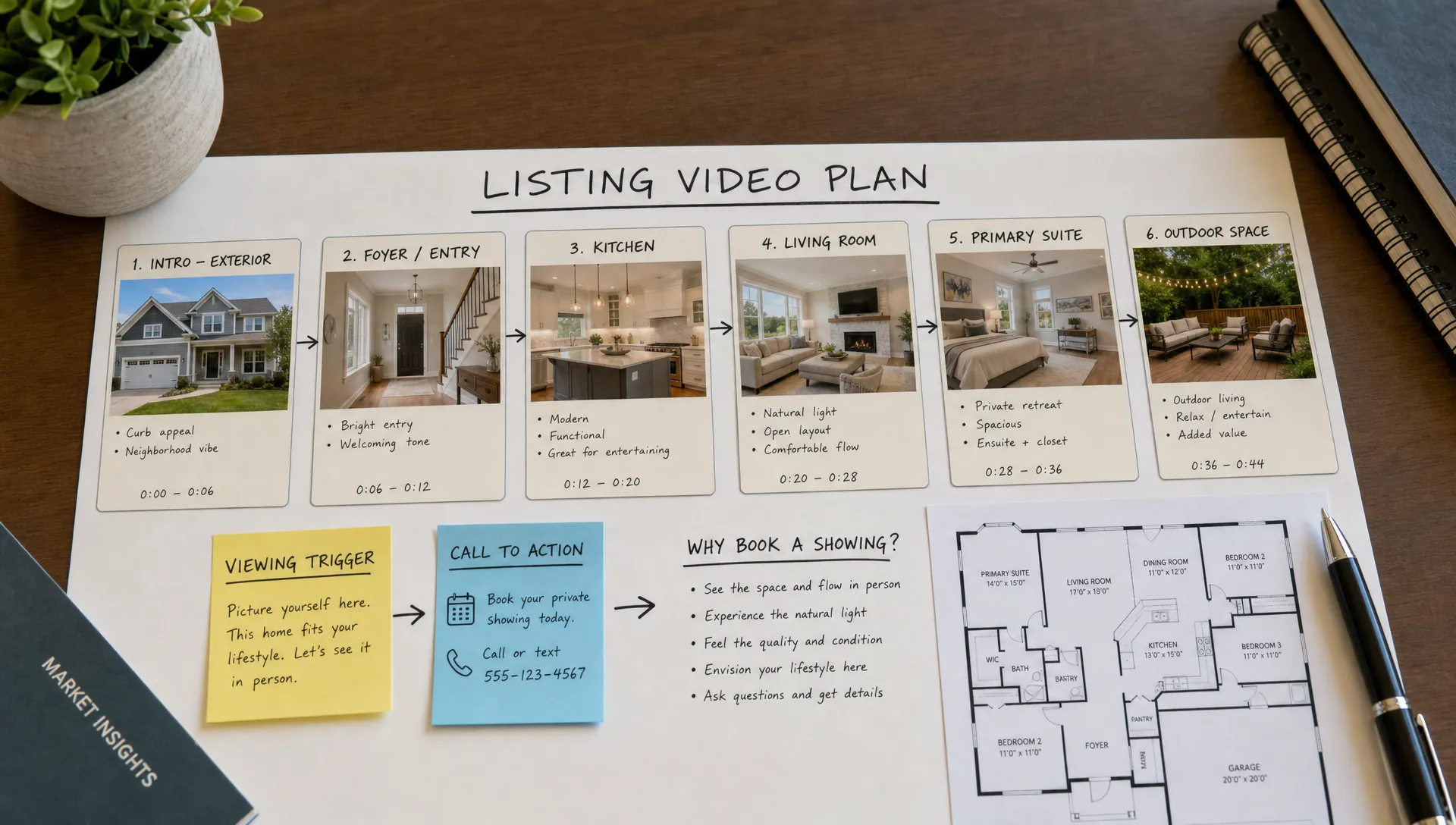
A viewing-focused video does not need to be long. In many cases, 45 to 90 seconds is enough for a social reel or listing preview. What matters is the order of information.
A weak structure jumps from room to room based on which clips look nicest. A stronger structure follows the buyer’s mental journey: first impression, location or exterior context, main living areas, private spaces, standout details and viewing invitation.
Here is a simple structure agents can reuse:
| Video section | Purpose | Example content |
|---|---|---|
| Opening hook | Give buyers a reason to watch | “A move-in ready three-bedroom home with a south-facing garden and open-plan kitchen.” |
| Arrival context | Show setting and first impression | Exterior, entrance, street feel, driveway or building lobby |
| Main living space | Explain daily use | Kitchen, dining, lounge and how these spaces connect |
| Bedrooms and flexible rooms | Match buyer needs | Primary bedroom, guest room, nursery, office or studio |
| Outdoor or standout feature | Reinforce the viewing trigger | Garden, balcony, terrace, view, renovation quality or storage |
| Call to action | Prompt the next step | “Message us to arrange a private viewing this week.” |
This structure gives viewers a sense of progression. It also helps agents avoid the common mistake of front-loading the video with decorative details while delaying the information buyers actually need.
Show flow, not just finishes
Beautiful finishes attract attention, but layout often drives viewing decisions. Buyers want to know how the property works. Can they host friends while cooking? Is there separation between bedrooms and entertaining areas? Does the garden connect easily to the kitchen? Is the office far enough from the main living room to feel quiet?
Your shots should make those answers visible. Instead of filming isolated room fragments, use transitions that show movement through the home. Start at the entrance and continue naturally. Film from doorways to show how rooms connect. Use slow, stable motion rather than fast spins or heavy effects.
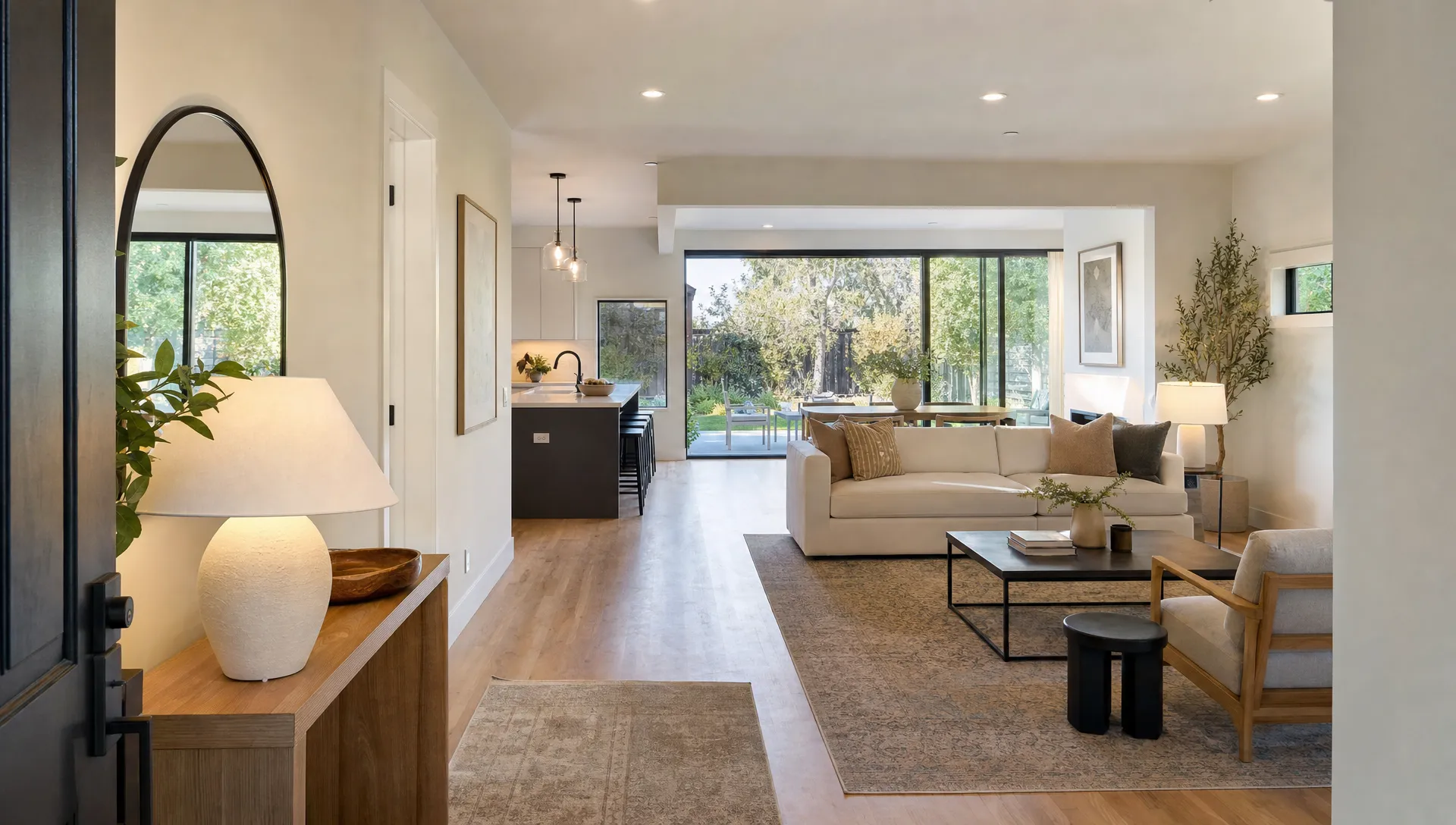
A good rule is to include at least a few “orientation shots” in every listing video. These are the shots that may not be the most glamorous but help buyers understand scale and flow. A hallway view, a wide living room angle or a kitchen-to-garden transition can be more persuasive than another close-up of a tap or light fixture.
For homes with unusual layouts, video becomes even more valuable. Photos can make split-level spaces, extensions and converted rooms hard to understand. A clear walkthrough can turn uncertainty into curiosity, which is exactly what you need before a viewing.
Write narration that sells the visit
Narration should do more than repeat the listing description. If the visuals show the kitchen, the voiceover does not need to say, “This is the kitchen.” It should explain why the kitchen matters.
Compare these two lines:
“The property has a modern kitchen with fitted appliances.”
“The kitchen sits at the heart of the home, with space to cook, dine and stay connected to the garden.”
The second line helps the buyer picture how they would live there. It translates a feature into a benefit.
Strong narration also controls pacing. Buyers are processing visuals quickly, so the script should be calm, specific and easy to follow. Avoid overloading the video with every measurement or technical detail. Save deeper specifications for the listing page, brochure or conversation after the buyer expresses interest.
Useful narration angles include:
- How the home supports a specific lifestyle
- What makes the layout convenient
- Which features are difficult to appreciate from photos alone
- Why the property is worth seeing in person
- How to book a viewing or request more details
For agents who do not enjoy recording voiceovers, AI narration can remove friction. Diane, for example, can generate narrated real estate videos from listing details and photos, with options such as AI avatar presentation, voice cloning and multilingual support. That helps teams keep video production consistent without waiting for a perfect recording session.
Match the format to the channel
A video that performs well on Instagram Reels may not be the same version you embed on a property page. Social viewers are distracted and need a fast hook. Website visitors are often warmer leads and may want a clearer walkthrough.
This does not mean you need to create every video from scratch. You can adapt one core listing video into several versions:
- A vertical reel for Instagram, TikTok, Facebook and YouTube Shorts
- A slightly longer version for the property page
- A square or vertical teaser for paid social ads
- A branded version for seller updates and agency marketing
For social media, lead with the viewing trigger in the first few seconds. Do not open with a logo animation that delays the property. For the listing page, give the viewer a more complete sense of layout and include a clear inquiry path near the video.
If your agency site is part of your conversion journey, Diane’s article on adding listing videos to your real estate website explains how to place videos where they support buyer action rather than distract from it.
Keep the video credible
A listing video that overpromises can create more problems than it solves. Buyers may book a viewing, but if the home feels smaller, darker or less polished than expected, trust erodes quickly. That can waste your time and weaken your relationship with the seller.
Credibility is especially important now that AI tools can improve visuals, staging and editing. Used well, these tools help buyers understand potential. Used carelessly, they can make marketing feel misleading.
If you use virtual staging, keep it realistic and aligned with the property. Do not hide meaningful flaws. Avoid extreme wide-angle shots that distort room size. Make sure any AI-enhanced visuals still represent the property honestly. The goal is not to trick more people into attending. The goal is to attract better-fit buyers who arrive with the right expectations.
Credible videos also help agents sound more professional. A calm, accurate presentation can be more persuasive than hype. Buyers are used to marketing language. What they respond to is clarity.
Use calls to action that fit the buyer’s readiness
Many property videos end with a generic “contact us today.” That is fine, but it can be sharper. The call to action should match the level of intent the video has created.
For a hot listing, a direct viewing CTA works well: “Book your private viewing this week.” For a high-value or niche home, a softer step may be better: “Request the full brochure and viewing availability.” For a new instruction where the goal is to build early demand, you might say: “Message us to be notified when viewing slots open.”
The CTA should also appear in the caption, listing page and any follow-up message. A buyer who watches on social media may not have sound on. A buyer who watches on your website may be ready to click immediately. Make the next step obvious in every context.
Good CTAs are specific, low-friction and tied to the property:
- “Arrange a viewing for this three-bedroom home in [area].”
- “Ask for the floor plan and viewing times.”
- “Message us to see the garden and layout in person.”
- “Book a private tour before the weekend open house.”
Small wording changes can make the video feel less like an advert and more like an invitation.
Measure what happens after the view
View count can be useful, but it is not the main metric. If your goal is more property viewings, measure whether the video changes buyer behavior.
Track the number of viewing requests before and after adding video. Watch for better-qualified inquiries. Notice whether buyers ask more specific questions about layout, outdoor space or availability. Compare completion rates across different openings and CTAs. If a video gets many views but few inquiries, the hook may be too broad or the CTA may be weak.
Agents can also use video feedback in seller conversations. Instead of saying “marketing is working,” you can show which clips attracted attention, which platforms produced inquiries and how video supported viewing activity. This is especially useful when winning future instructions because sellers want evidence that their home will be marketed actively, not just uploaded to portals.
For agents who need to produce videos across multiple listings, a repeatable workflow matters. Diane’s guide on how property agents can create better listing videos in less time covers ways to standardize production without making every property feel identical.
A quick checklist for viewing-focused real estate home videos
Before publishing your next property video, review it against a simple standard: would this help the right buyer feel confident enough to book?
Your video is more likely to inspire viewings if it:
- Opens with a clear reason to care
- Shows the layout in a logical order
- Connects features to daily-life benefits
- Uses narration to clarify rather than repeat
- Keeps visuals honest and realistic
- Matches the format to the platform
- Ends with a specific viewing-related CTA
- Gives sellers confidence in the quality of your marketing
You do not need a film crew for every listing. You do need a clear message, a buyer-first structure and a reliable way to publish consistently.
Frequently Asked Questions
What makes real estate home videos effective for getting more viewings? Effective real estate home videos answer the buyer’s practical questions, show the flow of the home and give a clear reason to book a viewing. They are not just visual tours. They connect features to lifestyle and reduce uncertainty.
How long should a real estate home video be? Many listing videos work well between 45 and 90 seconds for social media, with a slightly longer version possible for a property page. The right length depends on the property, but the video should stay focused on the viewing trigger and avoid unnecessary filler.
Should agents use narration in property videos? Yes, when narration adds clarity. A good voiceover explains layout, lifestyle benefits and standout details that may not be obvious from visuals alone. It should not simply read the listing description word for word.
Can AI-generated videos still feel personal? They can, especially when the script is specific to the property and the branding feels consistent with the agent or agency. Tools that support voice cloning, avatars and custom branding can help agents scale video while keeping a recognizable presentation style.
Where should agents publish listing videos? Publish videos where buyers already discover and evaluate homes: social media, listing pages, agency websites and follow-up messages. Use shorter vertical cuts for social channels and a more complete walkthrough on the property page.
Turn more listings into viewing-ready videos
Diane helps real estate agents and agencies turn listings, photos and property details into ready-to-publish videos with AI narration, avatar presentation, cinematic editing, multilingual support, social formats and custom branding.
If you want to create polished listing videos faster and give buyers more reasons to book, visit Diane and start turning your property listings into videos built for action.