
Video Marketing Tips for Real Estate by Owner
Selling a home without a traditional listing agent can save commission, but it also puts the marketing burden on you. Photos and a written description are still essential, yet they rarely communicate the feel of a home on their own: the morning light in the kitchen, the flow from living room to patio, the quietness of a street or the scale of a primary bedroom.
That is where video can help a real estate by owner listing compete with more polished agent-led campaigns. A good property video does not need to look like a luxury commercial. It needs to help buyers understand the home faster, trust what they are seeing and take the next step with confidence.
For independent agents, this is also useful when advising owner-sellers, winning expired FSBO opportunities or creating faster video packages for budget-conscious listings.
Start with the buyer, not the camera
The biggest mistake in real estate video marketing is filming the home room by room with no plan. Before you shoot anything, decide who the most likely buyer is and what they need to understand within the first few seconds.
A first-time buyer may care about storage, monthly costs, commute time and how much work the home needs. A downsizer may care more about single-level living, parking, low maintenance and nearby services. A family buyer may want to see bedroom separation, outdoor space and school or neighborhood context.
Your video should answer one central question: why should the right buyer book a showing instead of saving the listing for later?
That answer becomes the spine of your video. It also keeps you from cramming every feature into one clip. A video that says “three-bedroom home with renovated kitchen, private backyard and five-minute access to downtown” is clearer than one that tries to mention every cabinet, window and appliance.
Use a simple video mix for a real estate by owner listing
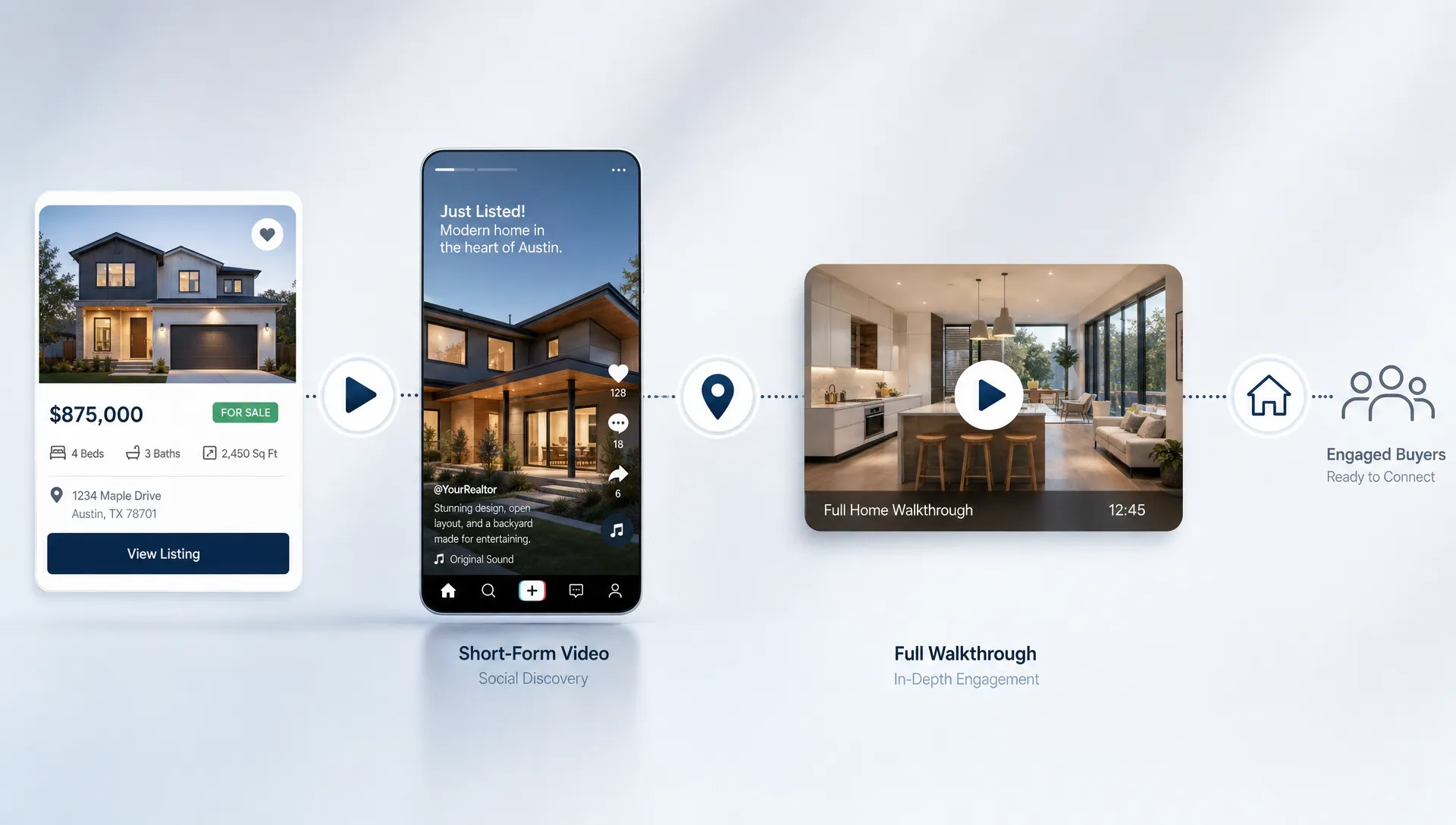
One video is helpful. A small set of videos is better because each platform and buyer stage needs a different format. The same property can be marketed through a quick social teaser, a more detailed walkthrough and a practical FAQ clip.
| Video type | Best use | Ideal length | Main goal |
|---|---|---|---|
| Social teaser | Instagram Reels, TikTok, Facebook, YouTube Shorts | 15 to 30 seconds | Stop the scroll and create curiosity |
| Guided walkthrough | Listing page, property website, YouTube, email | 60 to 120 seconds | Help buyers understand layout and condition |
| Feature spotlight | Social posts, retargeting, follow-up messages | 20 to 45 seconds | Highlight one selling point, such as kitchen, yard or view |
| Neighborhood clip | Social media, buyer follow-up, relocation buyers | 30 to 60 seconds | Add lifestyle and location context |
| Owner or agent intro | Website, email, direct messages | 30 to 60 seconds | Build trust and explain the next step |
If you are already publishing on major property portals, video should support those listings rather than replace them. A portal gives buyers the facts. Video gives them motion, flow and emotion. For a deeper channel strategy, Diane’s guide on using video alongside real estate listing sites explains how listing pages and video assets can work together without duplicating the same message everywhere.
Write a script before you film
A script does not make a property video feel stiff. It prevents rambling and keeps the buyer focused. For a real estate by owner video, your script should sound helpful rather than salesy.
Use this structure for a 60 to 90 second walkthrough:
- Opening hook: Name the strongest reason to watch, such as location, layout, renovation, outdoor space or price position.
- Buyer context: Say who the home may suit, without referencing protected classes or making discriminatory statements.
- Layout flow: Move through the home in the order a buyer would experience it during a showing.
- Proof points: Mention practical details buyers care about, such as storage, natural light, updates, parking, workspace or outdoor use.
- Clear call to action: Tell viewers how to request a showing, ask for disclosures or get the full property details.
For example: “Welcome to 24 Maple Street, a move-in ready home with a bright open living area, updated kitchen and private fenced yard. As you enter, the living room connects directly to the dining space, which keeps the main floor easy to use for everyday living and entertaining. The kitchen has been updated with quartz counters, stainless appliances and direct access to the deck. Upstairs, three bedrooms sit on the same level, including a primary bedroom with two closets. To schedule a private showing or request the full information packet, send a message through the listing.”
Notice what this does not do. It does not exaggerate, call the home “perfect for families” or waste time with empty adjectives. It gives buyers a guided understanding of the property.
Shoot for clarity, not cinema
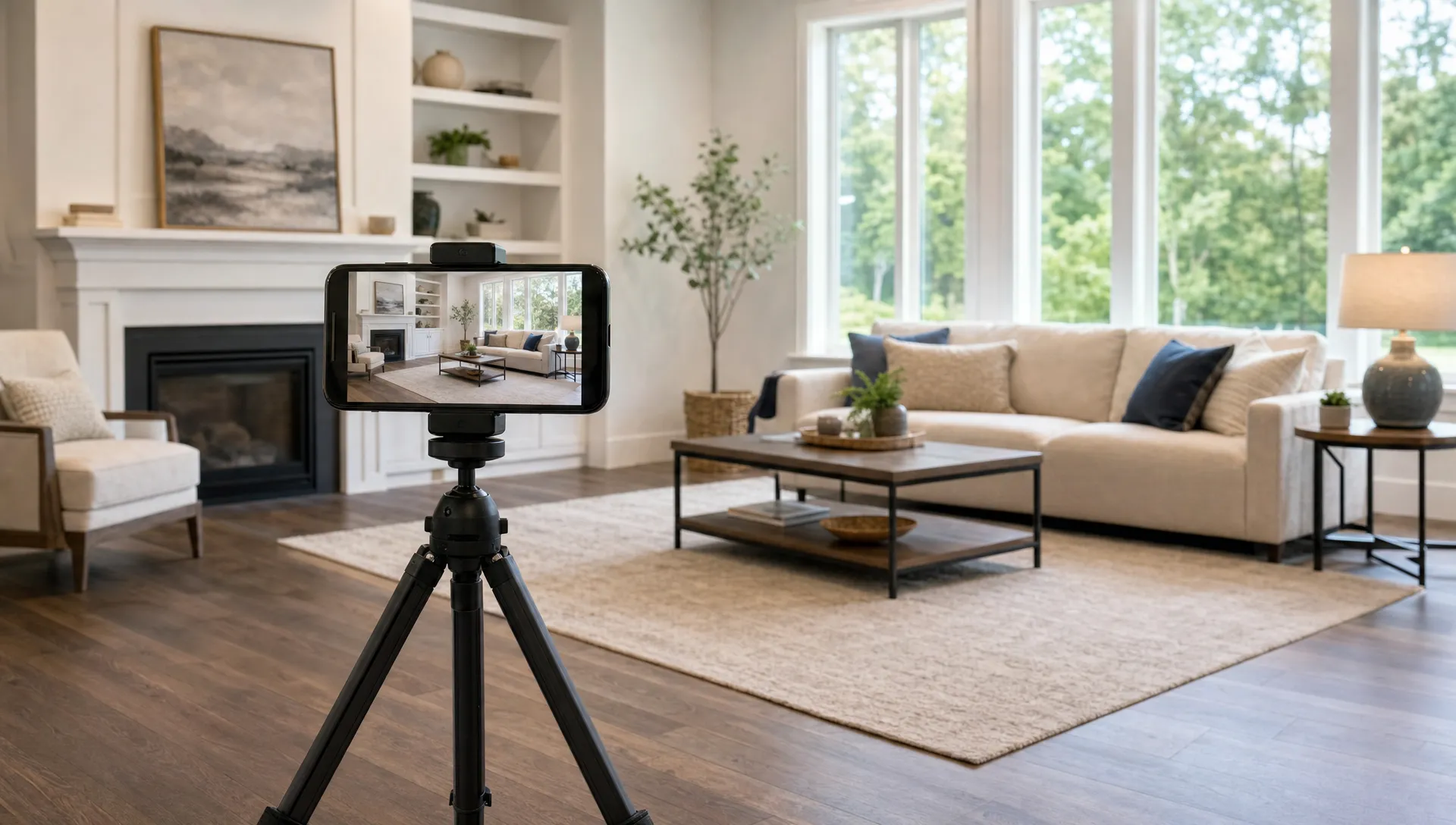
You do not need a full production crew to create a useful property video. A modern smartphone, clean lens, steady hands and natural light can do a lot. The goal is to make rooms understandable, not to create dramatic mystery.
Film during the brightest part of the day, open curtains and turn on interior lights if needed. Move slowly. Fast pans make rooms feel smaller and can cause viewers to miss important details. Start each room from the entrance or a corner, then pan gently to show proportions.
Keep vertical footage for social platforms and horizontal footage for listing pages, websites or YouTube when possible. If you only have time for one format, vertical is often the most flexible for short-form social distribution. Still, a horizontal walkthrough can feel more natural for buyers watching on desktop or embedded in a property page.
Pay attention to sound if you record live narration. Avoid filming while the dishwasher, HVAC, traffic or lawn equipment is loud. If the property is empty or echoey, record the voiceover separately after filming. This usually sounds more professional and gives you more control.
Make the video polished without hiding reality
Real estate video should improve presentation, not mislead buyers. Brightening a dark clip, stabilizing movement or adding captions is normal. Editing out cracks, changing room dimensions or using unrealistic staging without disclosure creates trust problems and may create compliance issues depending on your market.
Virtual staging can be valuable for empty rooms, especially when buyers struggle to understand scale. Use it to show plausible furniture layouts and disclose it wherever required. The same principle applies to AI-generated narration, avatars or translated versions: make the content useful, accurate and aligned with the listing.
For owner-sellers and agents who need speed, AI can turn listing details, photos and property footage into structured videos much faster than manual editing. Diane’s article on creating real estate videos for marketing in minutes is a useful next step if you want a repeatable production workflow instead of starting from a blank timeline each time.
Add captions, branding and a strong call to action
Many buyers watch videos with the sound off, especially on social media. Captions make the video understandable in silence and help viewers catch property details quickly. They also make your video feel more finished.
Branding matters too, even for a real estate by owner listing. That does not mean filling the screen with logos. It means consistent colors, a clean title card, property address or neighborhood label and a simple end screen with the next step. If an agent is helping the seller, the agent’s contact details should be clear without overwhelming the property.
Your call to action should match the buyer’s level of interest. “Book a showing” is appropriate for a walkthrough video. “Save this home for the backyard alone” may work better for a short social teaser. “Message for the disclosure packet” can attract more serious buyers who are past the browsing stage.
Distribute the video where buyers already spend time
Publishing once is rarely enough. A real estate by owner seller should think of video distribution as a small campaign, not a single upload.
Start with the listing itself. If the platform allows video, add the walkthrough there. Then post short versions to social media, embed the main video on a property page if you have one and use clips in direct follow-up messages. If you are working with an agent or agency, ask how the video will be reused across email, retargeting, social posts and buyer nurture.
A simple distribution plan might look like this:
| Channel | Best video format | Practical tip |
|---|---|---|
| Listing portals | Full walkthrough | Keep the video factual and focused on layout |
| Instagram or TikTok | Vertical teaser | Open with the strongest visual feature in the first two seconds |
| Teaser plus neighborhood context | Use local groups carefully and follow group rules | |
| YouTube | Full walkthrough or neighborhood video | Use a descriptive title with property type and location |
| Email or text follow-up | Short feature clip | Send the clip that answers the buyer’s specific question |
| Property website | Full video plus photos | Place the video near the top of the page, close to the inquiry form |
Search visibility can also matter, especially if you create a standalone property page or market a niche local listing. The same local SEO fundamentals for small businesses, such as clear location signals, page speed and consistent business information, are the kind of work a local SEO agency would prioritize for discoverability. For property marketing, keep the page title, neighborhood description and video title clear rather than clever.
Keep the content compliant and buyer-safe
Owner-created property videos can feel casual, but they still sit inside a regulated transaction. Avoid statements that could violate fair housing rules, misrepresent the property or create unsupported claims.
Do not describe the “ideal” buyer in a way that references protected characteristics. Instead of saying “perfect for young families,” say “three bedrooms on one level with a fenced backyard.” Instead of “safe neighborhood,” which can be subjective and risky, point buyers toward public resources where they can research the area themselves.
Also avoid promises about appreciation, rental income, school admission or future development unless you can support them and your market rules allow the claim. Video feels personal, which can make casual comments seem harmless. Treat every line as part of the listing record.
Measure what leads to showings, not just views
High view counts can feel encouraging, but the point of real estate video marketing is not entertainment. The point is qualified buyer action. Track the numbers that connect video to inquiries and appointments.
Useful metrics include:
- Video completion rate, especially on walkthroughs
- Saves and shares on social media
- Clicks from video posts to the listing or property page
- Direct messages asking for details
- Showing requests after video views
- Questions repeated by buyers after watching
If several buyers ask the same question, create a follow-up clip. If viewers drop off after the first few seconds, rewrite the opening. If a feature spotlight gets more saves than the main walkthrough, use that feature as the hook in your next post.
For agents and agency owners, this is where video becomes more than listing decoration. It becomes a lead generation asset. Diane’s guide to video strategies for lead generation in real estate goes deeper into matching video formats with buyer and seller intent.
Repurpose one shoot into a week of content
A real estate by owner campaign becomes much easier when you stop thinking of video as one finished file. One filming session can produce multiple assets: a main walkthrough, a kitchen highlight, a backyard clip, a street or neighborhood clip, a price update, an open house reminder and a short FAQ answer.
This matters because buyers may not see your first post. Even if they do, they may need repeated exposure before they click through. Repetition is not spam when each clip answers a different question or highlights a different reason to care.
If you need more creative angles, Diane’s list of real estate video ideas that help listings get noticed can help you move beyond the standard room-by-room tour.
Frequently Asked Questions
How long should a real estate by owner video be? A social teaser should usually be 15 to 30 seconds, while a walkthrough can run 60 to 120 seconds if it stays focused. Longer videos can work for unique or luxury properties, but only if each section adds useful buyer information.
Do I need to appear on camera when selling real estate by owner? No. You can use a voiceover, text captions or an avatar-style presenter if you prefer not to be on camera. What matters most is that buyers receive accurate information and know how to schedule a showing or request details.
Should I use vertical or horizontal video for a home listing? Use vertical video for social media and short-form discovery. Use horizontal video for websites, YouTube and listing pages when you want a more complete walkthrough experience. If time is limited, create the walkthrough first, then cut shorter vertical clips from it.
Can AI help create real estate listing videos? Yes. AI can help turn listing details, photos and footage into narrated property videos, captions, social formats and branded edits. The key is to review the final video for accuracy before publishing.
What should I avoid saying in a property video? Avoid unsupported claims, exaggerated descriptions, misleading edits and language that could violate fair housing rules. Focus on verifiable property features, layout, condition, location context and the next step for interested buyers.
Turn listing content into publishable video faster
A strong real estate by owner video does not need to be complicated. It needs a clear buyer, a focused script, honest visuals and a distribution plan that puts the home in front of the right audience more than once.
If you want to create professional property videos without spending hours editing, Diane turns listing details, photos and property content into ready-to-publish real estate videos with AI narration, avatar presentation, multilingual support, cinematic editing, branding and social media formats. For agents, agencies and owner-supported listing campaigns, it makes polished video easier to produce at the speed real estate marketing now requires.